
Massachusetts Tackles Rising Antisemitism in Schools: A State Commission's Bold Report and Contentious Recommendations
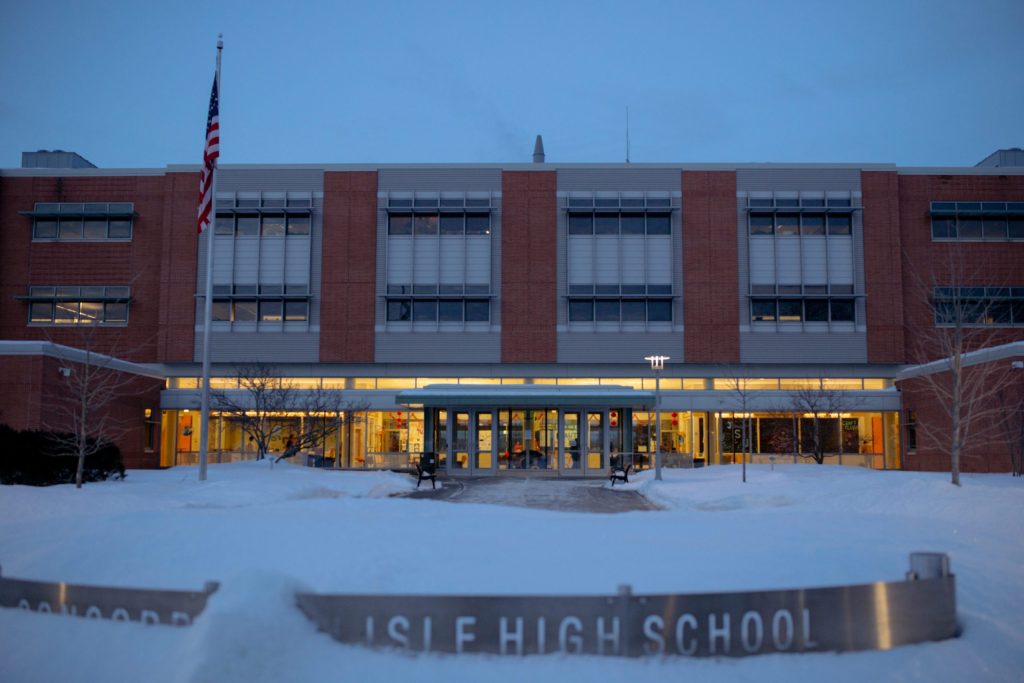
In the affluent town of Concord, Massachusetts, renowned for its historical significance and highly-rated public schools, a disturbing incident has ignited a statewide conversation about antisemitism. A federal complaint filed last June detailed allegations of persistent antisemitic bullying against a former student within the Concord-Carlisle school district, spanning middle school through high school. The complaint, brought forth by the Anti-Defamation League and the Louis D. Brandeis Center for Human Rights Under Law, paints a grim picture of swastikas defacing school property and the pervasive use of hateful slurs.
This case, tragically, is not an isolated one. The surge in antisemitic incidents nationwide, particularly following the events of October 7, 2023, and the subsequent conflict in Gaza, has left many schools struggling to find effective responses. From New York City's launch of an anti-hate hotline to California's new legislation establishing an antisemitism prevention coordinator, states are grappling with this complex challenge.
Massachusetts, home to one of the nation's largest Jewish populations, has taken a unique and comprehensive approach. The state has established a Special Commission on Combating Antisemitism, the only legislative body of its kind in the country dedicated to this issue. After an extensive 13-month period of public hearings, the commission released its final report on December 1, offering a series of recommendations aimed at fostering safer and more inclusive educational environments.
A State Responds: The Genesis of the Commission
The creation of the Special Commission on Combating Antisemitism was a direct response to growing concerns about the prevalence of antisemitism in schools. The Concord-Carlisle incident served as a stark catalyst, but the commission's mandate extended to addressing a broader pattern of bias and discrimination affecting Jewish students across the state.
The commission's work unfolded against a backdrop of national political discourse. While Massachusetts is a reliably progressive state, the commission's report and recommendations are being released at a time when federal administrations have intensified scrutiny on educational institutions' handling of antisemitism. This heightened awareness has led to investigations into alleged antisemitism in public school districts in other states, even as enforcement of other civil rights protections has seen shifts.
The Commission's Blueprint: Key Recommendations for Schools
The Special Commission's final report, the culmination of over a year of deliberation, outlines a multi-faceted strategy for schools to combat antisemitism. These recommendations are designed to be implemented at the district and school level, encouraging a proactive and educational approach.
Enhancing Education and Awareness
A central tenet of the commission's report is the call for increased educational initiatives. This includes urging schools to incorporate more comprehensive lessons on antisemitism, Jewish history, and the complexities of the Israeli-Palestinian conflict into their curricula. The goal is to equip students with a deeper understanding of the historical roots and contemporary manifestations of antisemitism.
The commission also advocates for the creation of new resources and the formation of advisory councils dedicated to Holocaust and genocide education. This aims to ensure that these critical historical events are taught with sensitivity and accuracy, providing essential context for understanding contemporary issues.
Strengthening Reporting and Response Mechanisms
Recognizing the importance of timely and effective intervention, the report emphasizes the need for robust systems to report and track incidents of antisemitism. This includes developing clear protocols for students, staff, and parents to report instances of bias, harassment, or discrimination.
Furthermore, the commission recommends that schools make stronger and more frequent public statements condemning antisemitism. This visible stance from school leadership is intended to signal a clear commitment to creating an environment where such behavior is unacceptable and will not be tolerated.
Fostering Inclusive School Climates
Beyond specific educational content, the commission's recommendations touch upon the broader school climate. The report encourages the establishment and support of student-led groups, such as Jewish Student Unions, to provide spaces for community and cultural expression. This is seen as a vital component in fostering a sense of belonging and countering feelings of isolation.
Navigating Controversy: Definitions and Debates
The commission's work, while well-intentioned, has not been without its critics. The very definition of antisemitism, a cornerstone of the report, has become a focal point of debate, raising complex questions about free speech and academic freedom.
The IHRA Definition: A Point of Contention
The commission's report suggests that schools embrace the definition of antisemitism developed by the International Holocaust Remembrance Alliance (IHRA). This definition, which includes 11 examples of antisemitism, has been adopted by both the Trump and Biden administrations. However, several examples within the IHRA definition have been interpreted as potentially conflating criticism of the state of Israel with antisemitism.
Critics argue that this broad definition could stifle legitimate discourse about Israeli policies and inadvertently silence dissenting voices. A "shadow report" issued by Concerned Jewish Faculty and Staff, a group of Massachusetts-based experts, voiced significant concerns, noting that even one of the IHRA definition's lead drafters has warned against its "weaponization."
Teachers affiliated with groups like Massachusetts Teachers Association Rank and File for Palestine have expressed worries that the IHRA definition is too vague and could lead to the suppression of criticism of Israel, effectively conflating Zionism with Judaism. This has created a chilling effect, with some educators feeling hesitant to engage in discussions about the Israeli-Palestinian conflict for fear of being accused of antisemitism.
The Nuance of Criticism: Israel, Zionism, and Antisemitism
Commission co-chair Representative Simon Cataldo, who is Jewish and grew up in Concord, defended the inclusion of the IHRA definition. He argued that for many Jewish individuals, their connection to Israel is deeply intertwined with their religious identity. He also acknowledged that anti-Zionist rhetoric can, at times, be employed in an antisemitic manner, highlighting instances where political slogans are directed aggressively at visibly Jewish individuals.
However, the debate highlights the delicate balance schools must strike. The challenge lies in distinguishing between legitimate political criticism and genuine expressions of hatred or prejudice against Jewish people. This distinction is crucial for fostering an environment where all students feel safe to express their views without fear of reprisal.
The Classroom Conundrum: Teaching Sensitive Topics
The heightened focus on antisemitism has created a complex environment for educators attempting to teach about sensitive historical and contemporary issues. The desire to prevent antisemitism must be balanced with the need to provide students with a comprehensive and honest education.
Holocaust Education: A Necessary but Insufficient Tool
Massachusetts, like many states, mandates Holocaust education. However, some experts argue that focusing solely on the Holocaust, without providing broader context about Jewish life and contemporary issues, may not be sufficient to combat antisemitism effectively. Journalist and author Dara Horn suggests that teaching about Jews primarily as historical victims can, paradoxically, exacerbate the problem by failing to address the lived experiences of Jewish people today.
Experts like Ron Avi Astor from UCLA, who studies school violence and bias, echo this sentiment. He notes that while Holocaust museums are valuable, students may leave with a limited understanding of Jewish identity, knowing more about the suffering of Jews than about who they are as a people. This can lead to questions like, "What did the Jews do?" – revealing a gap in knowledge that goes beyond historical atrocities.
Fear of Engagement: The Silence in Classrooms
The increased scrutiny surrounding antisemitism has led to a palpable sense of caution among educators. Many teachers report feeling hesitant to discuss topics related to the Israeli-Palestinian conflict, fearing accusations of bias or antisemitism. This reluctance can result in a vacuum of information, leaving students to form their understanding from less reliable sources, such as social media.
Jamal Halawa, an English as a Second Language teacher in Somerville, observes that a significant portion of his colleagues are "terrified to touch it." He notes that students are constantly exposed to inflammatory content online, and the lack of classroom discussion creates a "cognitive dissonance." Halawa, who is Palestinian-American, views the commission's work as potentially silencing discussions about Palestinian rights, a concern shared by many in his community, including Jewish individuals who advocate for Palestinian liberation.
Astor emphasizes that the primary goal for schools should be to facilitate respectful dialogue. The focus, he asserts, must remain on how students feel and what they genuinely think about different groups, ensuring that classroom discussions are inclusive and empathetic.
The Concord-Carlisle Case: Divergent Perspectives
The incident that brought national attention to Concord-Carlisle highlights the complexities of identifying and responding to antisemitism within a school community. While the federal complaint detailed specific instances of bullying, reactions from within the school community reveal a range of experiences and perceptions.
Allegations and Rebuttals
The Title VI civil rights complaint alleged a pattern of antisemitic bullying that created a hostile environment for a Jewish student. The Anti-Defamation League pointed to incidents like "Heil Hitler salutes in the hallways" as evidence of widespread antisemitic sentiment affecting Jewish students broadly.
However, some students and staff at Concord-Carlisle have expressed surprise and disagreement with the characterization of the school as having pervasive antisemitism. Mack Rottenberg, a former student who is openly Jewish, stated he felt "nothing but love and support" during his time at the school. Another teacher, who requested anonymity, dismissed the claims as "overblown," suggesting they implied systemic issues where only isolated incidents of childish behavior occurred.
A Student's Experience: Fear and Caution
Despite some denials, other students and parents have shared experiences that lend credence to the concerns. Melinda Kulish, mother of twins attending Concord-Carlisle High School, noted that her daughter, Gwen Sodergren, stopped wearing her Star of David necklace to school after October 7th. Gwen felt it was safer not to "broadcast that I'm Jewish" for fear of being associated with the conflict and becoming a target.
Kulish also pointed out that the school has faced similar high-profile cases of other forms of bias, including racist bullying against a Black student. This suggests that the school community may struggle with addressing various forms of prejudice, not just antisemitism. The general atmosphere, according to Gwen, is one where "anything political, people are kind of scared to talk about it."
Moving Forward: Implementing Recommendations and Building Bridges
The Massachusetts Special Commission's report, while not legally binding, provides a framework for action. The challenge now lies in how communities and school districts will translate these recommendations into tangible change.
Community-Led Initiatives and Dialogue
In Concord-Carlisle, parents and community members have formed a group called Concord-Carlisle Against Antisemitism. Brian Farber, a father of two students, emphasizes the importance of teaching children not to be bullies and to stand up for those who are being targeted. He has observed the district becoming more responsive, including plans to incorporate religion into its annual school climate survey.
Farber also highlights the positive impact of non-Jewish allies offering solidarity. He is actively involved in the town's diversity, equity, and inclusion commission, aiming to enhance awareness of how to report bias against all groups. The overarching goal, he states, is to make Concord and Carlisle "safer, more inclusive, for everybody."
Student Voices: The Power of Allyship
The establishment of a Jewish Student Union at Concord-Carlisle High School, initially met with resistance, now serves as a symbol of progress. Mack Rottenberg, who co-founded the union, noted that administrators changed their minds after the ADL complaint. The union, which now includes non-Jewish allies, meets weekly and has become a space for students to "rise up against the hate," regardless of the target.
This student-led initiative, supported by allies, underscores the power of collective action and mutual support in fostering a more inclusive and equitable educational environment. As communities across Massachusetts begin to implement the commission's recommendations, the focus remains on building bridges, fostering understanding, and ensuring that every school is a safe haven for all students.





 Explore AI Teaching Tools
Comments (0)
Please login to comment
No comments yet
Be the first to comment on this article