
Navigating Modern Math Education: A Parent's Guide to New Approaches in California and Beyond
The start of a new school year often brings a focus on academic routines, with parents eagerly anticipating updates on reading and writing assignments.However, for many, the prospect of assisting with math homework can evoke a sense of apprehension.
Research indicates that a significant portion of the population experiences math anxiety.
Fortunately, in California, parents can find reassurance as the state embraces innovative educational strategies.
A newly implemented math framework is designed to alleviate anxiety for both students and families, deepen children's comprehension of this vital subject, and foster much-needed improvements in academic achievement.
The Current Landscape of Math Proficiency
Recent national assessments highlight a concerning trend: only about one in five U.S. high school seniors demonstrate proficiency in mathematics.At the state level, data reveals that approximately one-third of California's fourth graders are performing at a proficient level in math, according to national reports.
The new California math framework serves as a crucial guide for adopting updated curricula and instructional methodologies.
However, it is imperative that educational leaders actively support parents in understanding that these modern methods may differ significantly from their own experiences in school.
Understanding the "Why" Behind New Math Practices
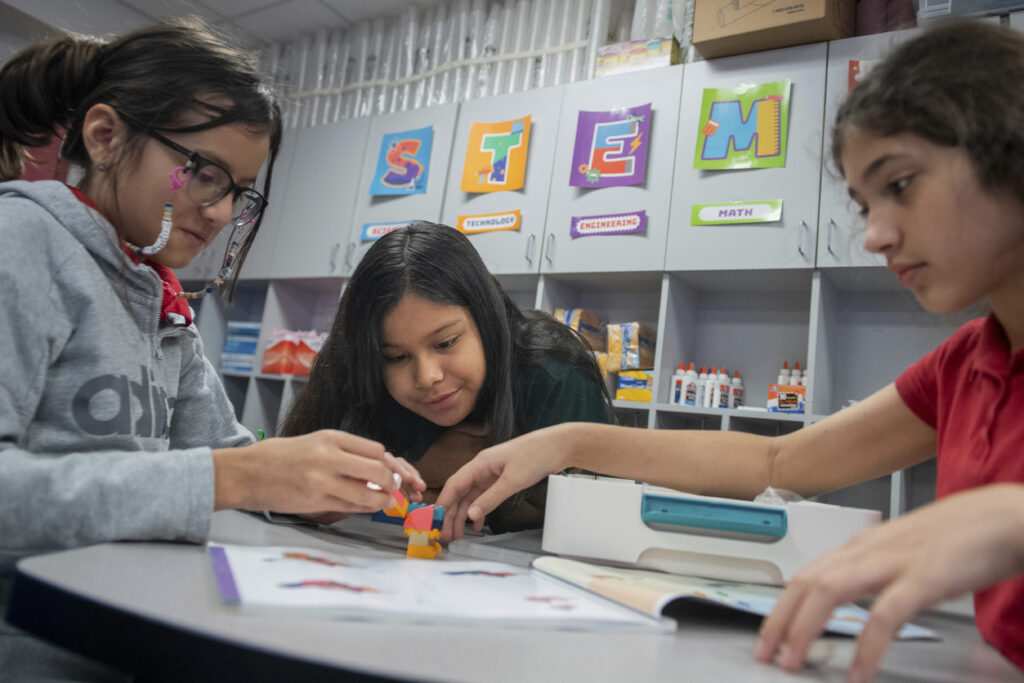
Many parents express curiosity, and sometimes concern, about the evolving classroom environment.Common questions include, "Why are my kids playing with what look like toys in math class?" and "Why is there so much discussion among students?" schools play a vital role in addressing these inquiries by explaining the pedagogical intent behind these approaches.
The Role of Manipulatives in Deepening Understanding
When educators utilize objects like blocks, tiles, or dice, they are not facilitating free play.Instead, research shows that children develop a more profound grasp of mathematical concepts, such as place value, when they can interact with concrete materials.
Parents should actively look for these tools, especially in the early grades.
If they are absent from the classroom, it is appropriate for parents and caregivers to inquire about their integration.
These hands-on experiences are fundamental to building a strong mathematical foundation.
Visualizing Math Through Drawings and Models
teachers are increasingly guiding students to represent mathematical problems visually through hand-drawn models.For instance, a student might create a tape diagram—a rectangular bar divided into segments—to illustrate the parts of a whole and solve word problems.
Employing a variety of methods, in addition to traditional algorithms and equations, cultivates flexible thinking in kids.
This approach ensures that they are better equipped to tackle more complex mathematical challenges without becoming discouraged.
The Power of Collaborative Learning in Math
The perception of quiet, individual work in math class is being replaced by an understanding of the benefits of collaborative learning.Today's classrooms often feature students working together, sharing their thought processes, and engaging in mathematical discourse.
This dynamic environment allows kids to learn from each other, articulate their reasoning, and develop a more comprehensive understanding of the subject matter.
The increased "decibel level" is a sign of active engagement and shared learning.
Empowering Parents to Support Math Learning at Home
The new framework places significant emphasis on involving families in the learning process.Schools are encouraged to host "math nights" and select instructional resources that include activities parents can easily implement at home.
This partnership between schools and families is essential for reinforcing classroom learning and building confidence.
Integrating Math into Everyday Life
Even at the youngest ages, children possess an innate understanding of mathematical ideas like counting, sharing, and comparing sizes.Parents can nurture this intuitive grasp by incorporating math into daily routines.
Simple activities, such as breaking a banana into pieces and discussing which are the same size or larger, help build foundational concepts of fractions and ratios.
Observing everyday objects for different shapes is an excellent way to practice geometric thinking.
These informal learning opportunities, aligned with modern educational frameworks, prepare kids for more formal instruction.
Staying Curious and Involved
Parents do not need to be math experts to effectively support their children's learning.The key is to remain curious, stay involved, and trust that learning alongside their children is a valuable endeavor.
By fostering a positive attitude towards math and engaging with their kids' schoolwork, parents can significantly impact their children's academic success and their overall relationship with the subject.
The Future of Math Education: A Collaborative Vision
Districts that are early adopters of these research-based approaches are already observing positive outcomes.For example, some districts in California have aligned their instruction with the new framework and are reporting notable academic gains.
This progress underscores the effectiveness of embracing modern pedagogical strategies.
When schools and families collaborate, they can cultivate a generation of kids who not only understand math but also find purpose, meaning, and joy in it.
This holistic approach to math education is crucial for shaping a brighter future for all learners.
The goal is to move beyond rote memorization and foster genuine comprehension and enthusiasm for mathematics.
This is the kind of comprehensive education that Mentofy champions, providing resources and support for learners and educators worldwide to navigate these evolving educational landscapes.
Conclusion
The evolution of math education presents an opportunity for parents to embrace new approaches that are designed to enhance understanding and reduce anxiety.By understanding the rationale behind manipulatives, visual representations, and collaborative learning, parents can become active partners in their children's mathematical journey.
In California and beyond, the focus is shifting towards making math accessible, engaging, and relevant for all kids.
Through curiosity, involvement, and a willingness to learn alongside their children, parents can play a pivotal role in building a generation that thrives in mathematics, finding not just proficiency, but also purpose and joy in this fundamental subject.







 Explore AI Teaching Tools
Comments (0)
Please login to comment
No comments yet
Be the first to comment on this article