
Oakland Schools Unveil Groundbreaking Curriculum for Immigrant Students Bridging Years of Lost Education
Imagine arriving in a new country at 11 years old, facing the daunting task of learning a new language while simultaneously grappling with fundamental academic skills you never had the chance to acquire. This is the reality for many newcomer students in Oakland, California, where a pioneering educational initiative is rewriting the rules for those with interrupted formal schooling.
For students like Maribel, who arrived in Oakland from Guatemala after missing years of education due to school closures and limited access in her home country, the journey is one of profound transformation. Her previous schooling consisted of a single room, often disrupted by an absent teacher, leaving her unable to read. Now, in an Oakland middle school, she is not only mastering English but also building a foundational academic skillset from the ground up.
A Curriculum Born from Necessity
Urban Promise Academy, one of four middle and high schools in Oakland Unified piloting this innovative approach, is at the forefront of this educational shift. The curriculum is specifically designed for students who have experienced significant gaps in their schooling, a demographic often referred to as Students with Interrupted Formal Education (SIFE).
This past school year, approximately 3,300 students in Oakland Unified, nearly 10% of the total student body, immigrated to the United States within the last three years. A significant portion of these students, at least 600, faced more than two years without attending school in their home countries. The reasons for these educational interruptions are diverse, ranging from geographical isolation and dangerous living conditions to the necessity of working to support their families.
The Challenge of Bridging Gaps
Educators have long grappled with the complex needs of SIFE students. When these students arrive without proficiency in their native language's academic reading, writing, or math, the challenge of absorbing middle or high-school level content, all while learning English, becomes immense.
Shannon Darcey, an English teacher at Urban Promise Academy, vividly recalls the frustration of teaching recent immigrant students with vastly different academic backgrounds. Some students might have been reading at a seventh or eighth-grade level in their native tongue, while others had no reading skills at all.
“I had one kid… Every single day for six months, he was like, ‘I can’t read. Why are you giving me this?’” Darcey shared, recounting the student’s profound sense of being left behind. “He felt like, ‘Everyone else in here knows what is happening, and I have no idea what this is. Why are you telling me to have a book in my hands?’”
For years, Darcey and her colleagues sought specialized curriculum materials to address these unique learning needs. They had heard of a program called Bridges, developed by researchers at the Graduate Center at the City University of New York, but access was limited, primarily to educators within New York.
Julie Kessler, director of newcomer and English language learner programs for Oakland Unified, echoed this sentiment. "Many teachers she has worked with in Oakland Unified and San Francisco Unified were frustrated at not being able to access the Bridges curriculum," Kessler stated. "And so it's like, who's got a bootleg copy of it? And it's just been inaccessible to the field."
Kessler observed that students with significant educational gaps often appeared disengaged in the classroom. "They are experiencing sometimes an alternate assignment, sometimes sitting with like a Disney book or a children's book, when even the scaffolded newcomer curriculum is inaccessible to them," she explained. "We were seeing a lot of that because teachers didn't have a way to connect them to what was happening."
A Collaborative Solution Emerges
The landscape began to change last year when Kessler secured crucial funding from the California Department of Social Services' California Newcomer Education and Well-Being program. This funding enabled the development of a new curriculum tailored to the specific needs of Oakland’s newcomer population, while also aligning with California's English Language Development standards.
Kessler collaborated with some of the original authors of the Bridges curriculum, who have since established an organization known as the SIFE Equity Project. The result is the Curriculum for SIFE Equity, an open-source resource now freely available to educators worldwide via the internet.
Beyond Oakland, this vital curriculum is being adopted by schools in San Rafael, Elk Grove, San Diego, and Vista within California. Its reach extends to New York City and Prince William County, Virginia, demonstrating its broad applicability and impact.
“We’re hearing a lot of gratitude from teachers who are like, ‘Oh my God, finally something that I can use with this group of students that feels worthy of their time, that feels respectful of them and feels like it’s doing the skill building that we know that they need,’” Kessler shared.
Currently, the Curriculum for SIFE Equity provides approximately 50 days of instruction, representing less than a third of a full school year. The district is actively pursuing additional funding from the Department of Social Services to expand the curriculum to a full 180 days, ensuring comprehensive support for a complete academic year.
Re-Engaging Students, Building Futures
For teachers like Shannon Darcey, this new curriculum has been a game-changer. She now leads dedicated English classes specifically for students who have experienced significant educational interruptions, allowing for targeted instruction.
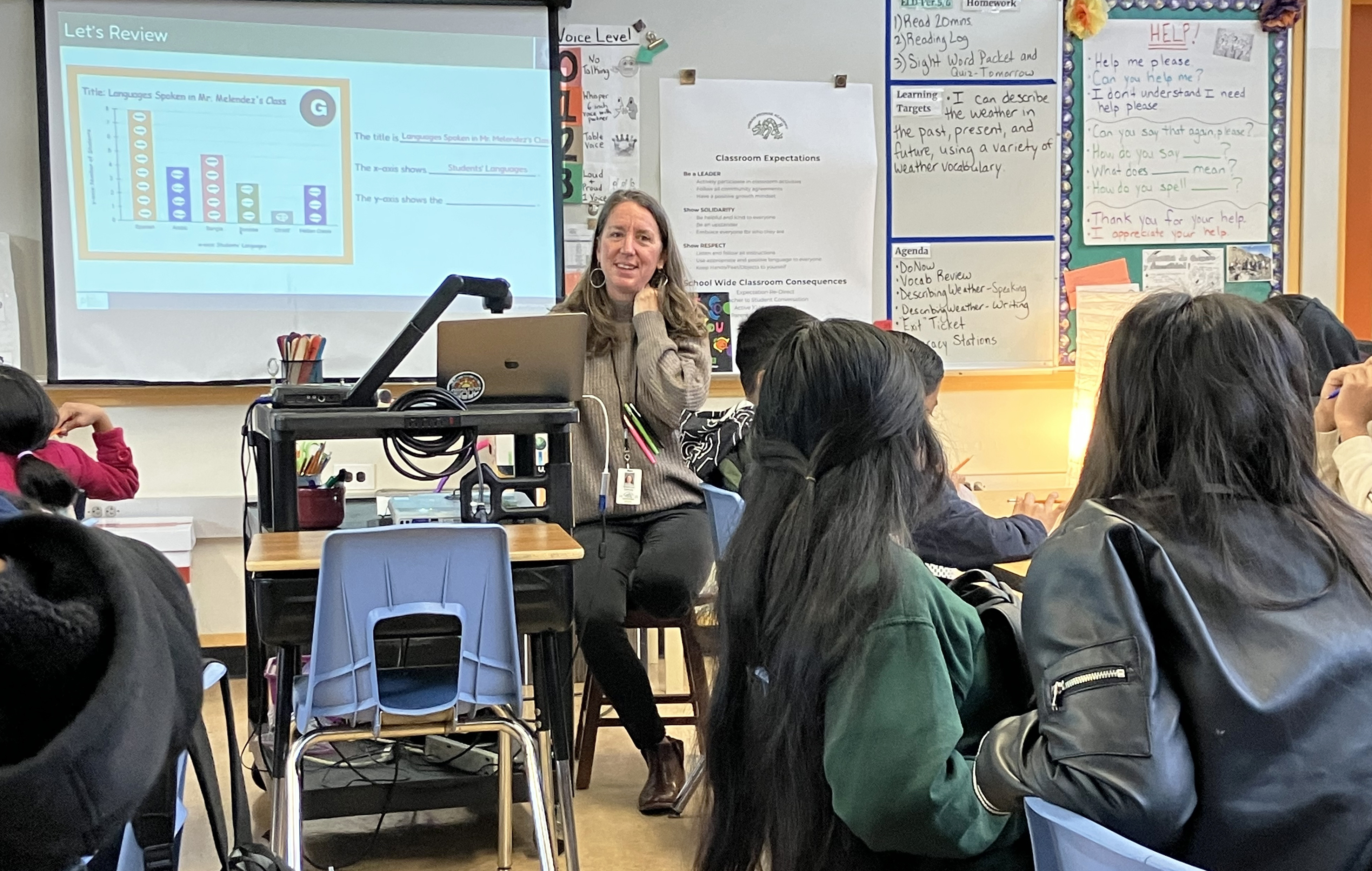
The school year at Urban Promise Academy began with an engaging unit focused on identity. Students learned essential skills such as introducing themselves, stating their age, sharing their origin, and identifying their home language.
A key component of this unit involved creating "identity maps." These visual tools feature the student's name at the center, with spokes radiating outward to include details about their hometowns, ages, family responsibilities, and personal interests like favorite foods and activities. Students then transformed this information into slideshow presentations, enhanced with personal photographs.
Fourteen-year-old Anallely, for instance, created an identity map that highlighted her fondness for salad, fish, and marimba music. She shared that she speaks the indigenous language Mam in addition to Spanish, and her hometown, located in the mountainous and rainy regions of Guatemala, is characterized by its forests.
Anallely’s formal schooling in her hometown ceased after third grade, as she began working alongside her father on a coffee farm. She expressed that she had never encountered concepts like graphs or maps for organizing information prior to her arrival in Oakland.
“It’s very useful, because you can use them to define how many people like something or which is their favorite, or where they are from,” Anallely explained in Spanish, underscoring the practical application of these new skills. Her aspirations include becoming a doctor to care for infants and the sick, alongside a desire to travel the world.
Recognizing that many of Darcey’s students are new to reading in any language, she also works with them in small groups. Using a modified version of the UFLI Foundations curriculum, adapted by teachers at Oakland International High School for recent immigrant students, Darcey focuses on fundamental phonics: teaching letter sounds, syllable blending, and the pronunciation of single-syllable words like "tap," "nap," and "sat."
Arturo, another student at Urban Promise Academy, had never attended school before enrolling at age 14. Darcey reflected on the profound difference the new curriculum makes.
“In previous years, a kid like that in my class, I would’ve felt like, ‘Oh my God, they’re like totally lost, and it feels like they’re just sitting there 80% of the time,’” Darcey admitted. However, with the current approach, she feels a sense of optimism for Arturo.
“He is engaged, he’s trying. Can he read the words on the page yet? No. But he’s still able to follow what’s happening,” she stated, highlighting his active participation and growing comprehension.
Darcey expressed deep gratitude for the opportunity to work with these resilient students. “They bring such an eagerness and excitement, a willingness to try new things that maybe other kids their age are not as enthusiastic about,” she observed. “They often bring a work ethic that I think can really help a lot of them be successful in school.”
Providing these students with the tools to navigate their new environment and future is paramount, Darcey emphasized, as they are already integral members of society. “We’re going to prepare them to be successful in their lives,” she affirmed.
Maribel, who initially harbored fears about attending school in the United States, now looks forward to her classes. “The teacher speaks some Spanish and she always helps us if we need anything,” Maribel shared. “I can write some words in English now, and I’m writing more in Spanish, too. And I’m learning to read.” This sentiment encapsulates the hope and progress being fostered within Oakland’s innovative educational landscape.






 Explore AI Teaching Tools
Comments (0)
Please login to comment
No comments yet
Be the first to comment on this article