
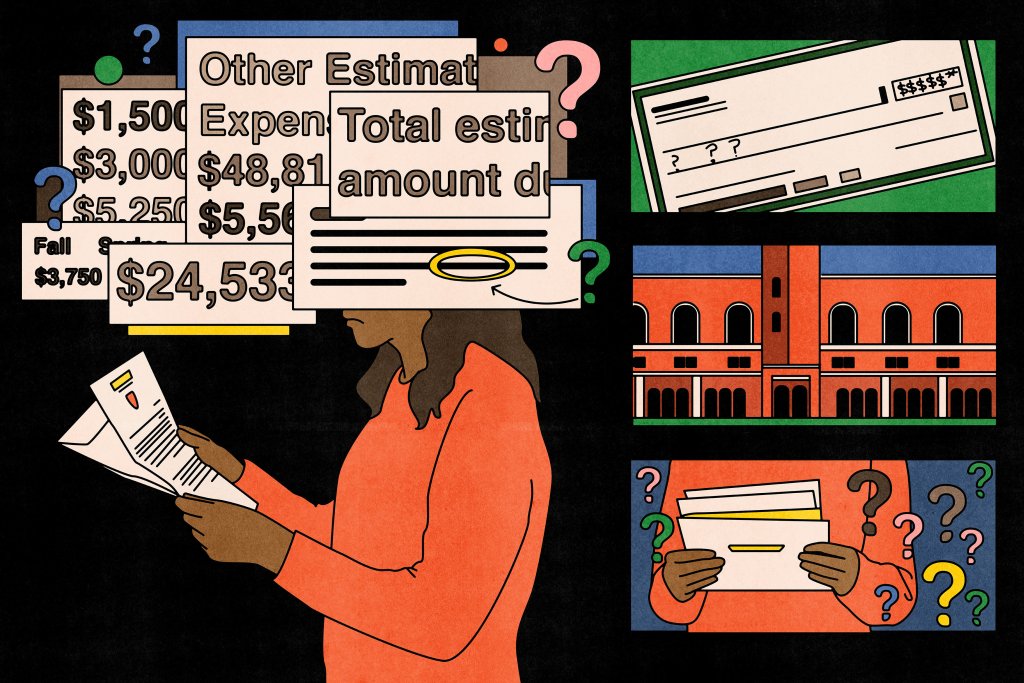
The Great College Cost Conundrum: Why Your Financial Aid Letter Might Be a Maze
For countless families, the financial aid offer letter is the golden ticket, or perhaps the red flag, that dictates a student's post-secondary path. It's meant to be a clear roadmap to the true cost of attending college, a crucial piece of information that can make or break a student's dreams. Yet, for many, these letters are less a guide and more a cryptic puzzle, leaving them bewildered about the actual financial burden.
A Patchwork of Promises and Puzzles
The intention behind financial aid letters is noble: to illuminate the path forward for aspiring students. However, the reality is often a confusing jumble of terms, formats, and missing information. This inconsistency transforms a critical decision-making tool into a source of significant anxiety and misunderstanding for families navigating the complex world of college financing.
Advocates argue that the current system is not just confusing, but potentially deceptive. The lack of a standardized approach means each college crafts its own unique financial narrative, employing a vocabulary that can be as varied as the institutions themselves. This makes the fundamental question—"How much will this truly cost me?"—a daunting challenge to answer accurately.
The Call for Clarity: A Decade-Long Battle
For over ten years, a persistent movement has been advocating for a legislative solution: a standardized form for all financial aid offers. The vision is akin to the nutrition labels found on food packaging, providing an easy-to-understand, comparable breakdown of costs. This would empower families to make informed decisions by directly comparing offers from different colleges.
However, this push for transparency has met significant resistance. Various college associations and other stakeholders have actively worked to block the implementation of such a standardized form, contributing to the ongoing confusion families face when trying to decipher the true cost of college.
Unpacking the Numbers: Where the Confusion Lies
Examining actual financial aid offer letters reveals a consistent pattern of ambiguity. Many letters fail to explicitly state the student's out-of-pocket expense, instead presenting a blend of grants and loans without clearly delineating the difference. This is a critical oversight, as loans represent a debt that must be repaid with interest, a stark contrast to grants, which directly reduce the cost of education.
The complexity escalates when different types of loans are presented. For instance, Parent PLUS loans are often included, even if a family might not qualify. Furthermore, the fact that interest on these loans accrues while the student is still in school is frequently omitted, leading to a significant underestimation of the total repayment amount. A $19,072 Parent PLUS loan for just one year of college could balloon to over $29,000 with a standard 10-year repayment plan, a detail often lost in the aggregate loan figures.
The Illusion of Work-Study
Another area of confusion is the inclusion of "work-study" as guaranteed income. While presented as part of the financial aid package, these funds are contingent on the student securing a qualifying job. If a job isn't found, the student is still responsible for covering that portion of their expenses, turning an apparent benefit into a potential shortfall.
The terminology used to describe the final cost also varies wildly. Terms like "remaining direct and indirect costs," "estimated net price," "estimated outstanding costs," and "costs after gifts and loans" are used interchangeably, or with different meanings, across different colleges. This linguistic labyrinth makes direct comparison between institutions nearly impossible, leaving families to navigate a sea of differing financial language.
The Price of Ambiguity
The lack of a universal standard for financial aid offer letters creates an uneven playing field. Families without the resources or expertise to meticulously dissect each letter are at a distinct disadvantage. This ambiguity can lead to students choosing less expensive, but potentially less suitable, institutions, or worse, foregoing higher education altogether due to perceived insurmountable costs.
The core issue remains the presentation of financial aid. When grants and loans are lumped together, the true financial obligation is obscured. Understanding the difference between money that reduces the cost and money that must be repaid is fundamental to making sound financial decisions about college. The current system, with its varied formats and opaque language, actively hinders this understanding.
A Call for a Universal Language of College Costs
The desire for a standardized financial aid offer letter is not merely about convenience; it's about equity and informed decision-making. A clear, consistent format would allow families to accurately assess the financial implications of attending different colleges, empowering them to choose the best path for their student without being tripped up by confusing jargon or missing information.
The ongoing debate highlights a critical need for greater transparency in college financing. Until a standardized approach is adopted, families must be diligent in scrutinizing every detail of their financial aid letters, seeking clarification on any ambiguous terms, and understanding the true cost of their student's college education, including the long-term implications of student loans.







 Explore AI Teaching Tools
Comments (0)
Please login to comment
No comments yet
Be the first to comment on this article