
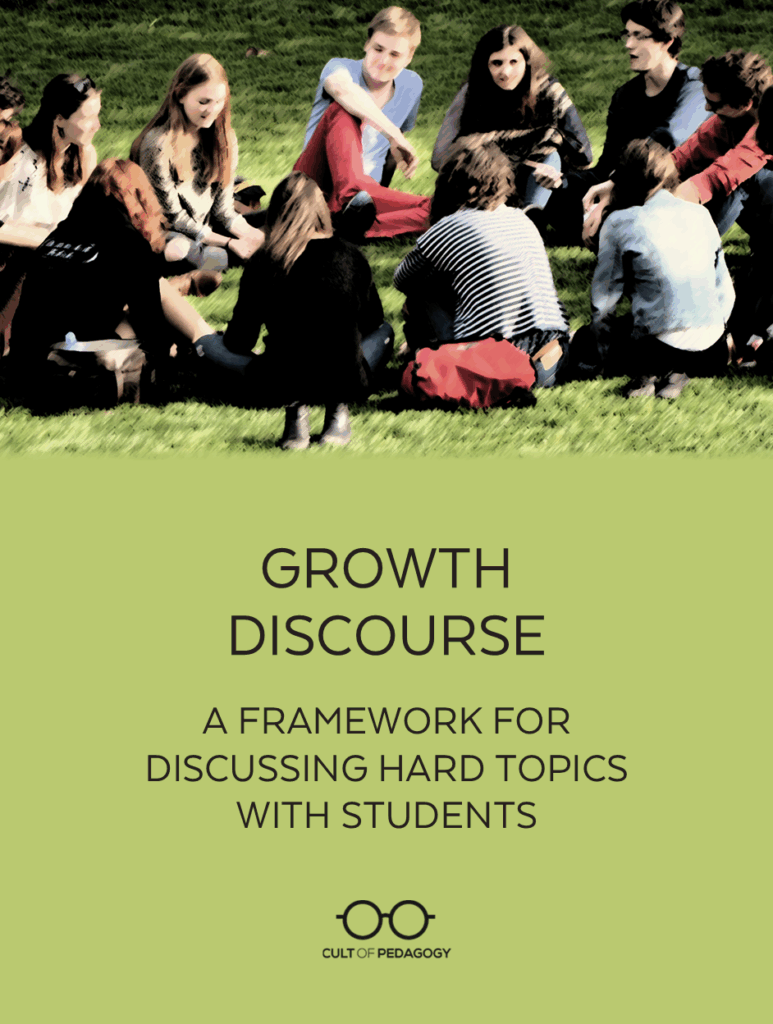
Navigating Difficult Conversations: A Growth Discourse Framework for Students
In today's world, discussing sensitive or controversial topics can feel like walking through a minefield.Differences of opinion, even on seemingly minor subjects, can quickly escalate into emotional turmoil and fractured relationships.
This challenge is particularly acute in educational settings, where fostering critical thinking and open dialogue is paramount.
Fortunately, a powerful framework exists to equip students with the skills needed to engage in productive conversations about complex issues.
This article explores the concept of "growth discourse," a methodology designed to transform potentially divisive discussions into opportunities for learning and personal development, benefiting students and educators alike.
Understanding the Core of Growth Discourse
Growth discourse is not about making discussions easy; rather, it's about making them *meaningful* and *transformative*.The fundamental motivation behind this approach is to foster intellectual and personal growth.
While "civil discourse" often focuses on politeness, growth discourse emphasizes the potential for learning and deeper understanding, even when disagreements arise.
For students, this means approaching conversations with the expectation that they will be challenged and that the outcome will be personal growth, not necessarily agreement.
For educators, the goal shifts from merely managing classroom harmony to actively facilitating discussions that contribute to students' development.
This framework acknowledges that emotions and vulnerability are inherent in these conversations, but it prioritizes courage and honesty to move discussions forward constructively.
The "Why" Behind Growth Discourse
The impetus for developing such a framework stems from the recognition that meaningful engagement with diverse perspectives is crucial for both individual development and the health of a functioning society.When students are empowered to discuss challenging topics, they develop a more nuanced understanding of the world and their place within it.
This approach challenges the notion that avoiding difficult subjects is the best way to maintain peace; instead, it proposes that confronting them thoughtfully is essential for genuine progress.
This philosophy underpins the idea that true learning often occurs at the edge of our comfort zones, pushing us to re-examine our assumptions and broaden our horizons.
Addressing Potential Pitfalls: Beyond "Bothsidesism"
A significant challenge in facilitating discussions about complex issues is the risk of falling into "bothsidesism" – the practice of presenting opposing viewpoints as equally valid, even when one side lacks substantial evidence or ethical grounding.Growth discourse actively works to circumvent this by focusing on critical evaluation rather than forced equivalence.
The goal is not to present every opinion as equally legitimate, but to equip students with the tools to analyze arguments, understand different perspectives, and form well-reasoned conclusions.
Teaching Students to Think, Not What to Think
A core tenet of growth discourse is empowering students to develop their own critical thinking abilities.Instead of dictating conclusions, educators guide students through processes that allow them to arrive at their own informed judgments.
This involves presenting students with diverse viewpoints, encouraging them to question assumptions, and helping them to evaluate the evidence supporting different claims.
By focusing on the *process* of thinking, this approach aims to make students more resilient to manipulation and better equipped to navigate a world filled with persuasive, and sometimes misleading, rhetoric.
This is particularly important when tackling topics where established facts and ethical consensus exist, such as scientific consensus on climate change or historical events.
Foundational Principles for Effective Growth Discourse
To cultivate an environment where growth discourse can flourish, several key principles must be established and consistently upheld.These principles create a safe and supportive space for students to engage with challenging ideas and with each other.
1.
Cultivating a Sense of Belonging Before any meaningful discussion can occur, every student must feel that they belong and are valued within the learning community.
This is achieved through explicit statements of inclusion, embedding belonging into discourse guidelines, and creating opportunities for students to share their unique identities and histories.
When students feel secure and accepted, they are more likely to participate openly and honestly, even when discussing topics that might feel personal or contentious.
2.
Valuing Intent and Impact In sensitive conversations, it's common for words to be spoken with good intentions but to have an unintended negative impact.
Growth discourse recognizes that both intent and impact are crucial.
Dismissing the impact of words by solely focusing on intent can be a way to avoid accountability.
Conversely, assigning malicious motives to others based solely on how their words made you feel can be unproductive and unreflective.
This framework encourages a balanced approach, acknowledging that while genuine intentions are important, the real-world consequences of our words cannot be ignored.
It prompts students to reflect on how their communication affects others and to be curious about the perspectives of those they interact with.
3.
Actively Avoiding Echo Chambers The natural human tendency to gravitate towards those with similar beliefs can create "echo chambers" that limit personal growth and understanding.
Growth discourse encourages students to intentionally engage with diverse viewpoints, not to disengage from those who are different, but to understand how to re-engage and find common ground or productive disagreement.
This involves seeking out conversations that challenge existing beliefs and encourage a broader perspective.
The STAR Framework: A Practical Tool for Deeper Understanding
Inspired by established thinking routines, the STAR framework provides a structured approach for students to engage with complex ideas before forming judgments.This model encourages thorough exploration and critical analysis, ensuring that students move beyond superficial understanding.
SEE: Observe and Understand
The crucial first step in the STAR model is to "SEE" – to observe and understand a situation or topic as fully as possible before forming an opinion.This involves asking questions like:
- What can I observe directly?
- What do I need to understand before I can form a judgment?
- What do educational experts suggest about this topic?
- Whose voices are missing from this conversation, and how can we find them?
THINK: Formulate Your Perspective
Once a comprehensive understanding has been established, students move to the "THINK" phase.This is where they synthesize the information gathered and begin to formulate their own reasoned perspective.
This involves critical analysis of the evidence, consideration of different viewpoints, and the development of personal conclusions.
As leaders, students will eventually need to decide where they stand on an issue.
ACT: Translate Understanding into Action
A significant addition to the STAR model is the "ACT" component, which bridges the gap between thought and action.This phase challenges students to consider how their understanding and conclusions translate into real-world behavior.
This could involve making a decision, taking a stance, or choosing a course of action in a given situation.
For example, deciding whether to vote, engage in activism, or address an ethical dilemma in their own lives.
REFLECT: Learn from Experience
The final stage, "REFLECT," is crucial for continuous learning.After acting, students are encouraged to reflect on their actions, the outcomes, and the responses they received.
This self-assessment helps them to understand what worked, what didn't, and what they might do differently in similar situations in the future.
The beauty of this model is that the reflection from one experience naturally feeds into the "SEE" phase of the next, creating a continuous cycle of learning and growth.
Guidance for Educators: Implementing Growth Discourse
For educators eager to implement growth discourse in their classrooms, several practical recommendations can ease the transition and enhance effectiveness.1.
Secure Leadership Support When introducing discussions on complex or sensitive topics, educators may encounter pushback from parents, administrators, or the wider community.
Having the explicit support of school leadership is invaluable.
Knowing that their principal or head of school has their back empowers teachers to navigate these challenging conversations with greater confidence and to address concerns effectively.
2.
Understand the Power of Strategic Silence It's natural for educators to feel uncertain when discussions become heated.
However, research indicates that sometimes, the most effective response is strategic silence.
Unless there is a risk of physical violence, teachers can often de-escalate tension by remaining silent or offering supportive statements like, "These are difficult conversations." Asking students if they would prefer to stop the discussion can reveal that most students value the conversation itself, even if the delivery needs improvement.
This opens the door to collaboratively refining how the discussion is conducted.
3.
Distribute Discomfort Equitably In discussions about sensitive topics, students from certain demographic groups may disproportionately bear the burden of emotional labor or representation.
It is crucial to establish classroom practices that ensure "equal opportunity discomfort." If certain students are consistently being asked to represent specific viewpoints or share personal experiences that cause them distress, educators should re-evaluate their approach.
Taking a step back and redesigning the discussion to distribute the emotional weight more evenly is essential for creating a truly inclusive and growth-oriented environment.
Cultivating the Potential for Good in Every Student
At its heart, growth discourse is fueled by a fundamental belief in the inherent goodness and learning potential of every student.Educators who embrace this philosophy understand that their role is not to implant knowledge into empty minds, but to provide the necessary tools, perspectives, and questions that allow students to uncover the learning and goodness already present within them.
By offering students "places to look" – the complex challenges of our world – and "questions to ask" – the timeless ethical inquiries that transcend cultures and time – educators can foster an environment where critical thinking, empathy, and positive change can blossom.
This optimistic outlook is not naive; it is a powerful driver for effective teaching and a testament to the transformative power of education.
This approach empowers students to become active participants in their own learning journey and in shaping a better future.





 Explore AI Teaching Tools
Comments (0)
Please login to comment
No comments yet
Be the first to comment on this article