
Unearthing Penang's German Echoes: A Hidden Heritage Trail Rewrites Colonial Narratives
Beyond the familiar British colonial imprints, a compelling narrative of German enterprise and cultural exchange lies subtly etched into the fabric of Penang's historic George Town. For centuries, waves of Germans seeking new horizons found fertile ground on this vibrant island, leaving behind a legacy often overlooked amidst the island's more prominent historical threads.
From Hamburg to the Straits: The Dawn of German Presence
Between the 17th and early 19th centuries, a significant exodus from German lands saw individuals venturing across the globe in pursuit of opportunity. Penang, with its strategic port and burgeoning trade, emerged as a key destination for these ambitious settlers. German traders, missionaries, engineers, photographers, and writers began arriving in the early 1800s, their presence gradually weaving into the island's developing identity.
Some established thriving businesses that would become cornerstones of the local economy, while others contributed to the built environment through architectural marvels and enduring landmarks. This often-unseen chapter of Penang's rich history is now being brought to light, offering a fresh perspective on the island's cosmopolitan past.
Mapping the Footprints: The German Heritage Trail Emerges
The Malaysian German Society, through its dedicated committee members like Clement Liang, has been instrumental in curating and promoting the German Heritage Trail. This initiative meticulously maps out sites directly linked to the German community's historical presence, transforming casual strolls through George Town into immersive historical journeys.
“We conduct the German Heritage Trail tour a few times a year, especially for students and large groups, depending on demand,” Liang explained, highlighting the educational impetus behind the project. The trail aims to illuminate a segment of Penang’s history that often remains in the shadows, overshadowed by the more widely recognized contributions of British, Chinese, and Indian communities.
“Many people walk past these buildings every day without realising there is a German story behind them. The heritage trail gives people a chance to discover another layer of Penang’s history,” Liang emphasized. This sentiment underscores the trail's power to reveal the multifaceted nature of Penang's colonial-era development.
Weld Quay: The Epicenter of German Commerce
The guided walk commences at Weld Quay, a historic waterfront that once served as a bustling hub for numerous German business premises. Here, import-export firms thrived, facilitating the trade of European goods, agricultural commodities, and crucially, refined tin, a vital commodity for the era.
Heritage buildings lining Weld Quay, specifically numbers 2, 3, 4, and 5, bear witness to this vibrant commercial past, having housed prominent German trading houses. Among the earliest and most significant was Schmidt, Küstermann & Co, located at Number 2 Weld Quay. This firm operated as a branch of the larger Rautenberg, Schmidt & Co, signifying a substantial German commercial network.
Adjacent to it, at Number 3 Weld Quay, stood Behn Meyer & Co Ltd. Although founded in Singapore, its Penang branch, established in 1891, later expanded its operations from Beach Street to this prime Weld Quay location in 1911. However, the company’s trajectory took a dramatic turn during World War I; it faced expulsion from the Penang Chamber of Commerce in 1915 amid allegations of supporting German war interests, leading to the seizure of its assets as enemy property.
Further down the quay, at Number 4, Shiffman, Army & Co established its presence in 1891. This firm held a unique distinction as the sole importer of Straits Dollar safes, a testament to its specialized market niche. Next door, at Number 65, Behr & Co, a branch of London-based Behr Brothers, imported a wide array of European consumer goods, including the popular Elephant Brand Pilsener beer, a taste of home for the expatriate community.
Beyond the Ledger: Naming Rights and Literary Encounters
The German influence extended beyond the commercial sphere, leaving its mark on the very nomenclature of the island. Two streets in Penang bear names directly linked to prominent German figures: Katz Street and Gottlieb Road. These names serve as enduring reminders of the individuals who shaped the island's early development.
Katz Street owes its name to the Katz brothers, with Herman Katz notably founding Katz Brothers Ltd in 1864. The company commenced its operations in Penang in 1870, becoming a significant importer of a diverse range of European consumer goods throughout Southeast Asia. This demonstrates the broad reach of German mercantile activities.
The German community's presence also attracted notable literary figures. Karl May, a celebrated author of adventure novels, passed through Penang and immortalized his experiences in his work, "Und Friede Auf Erden" (And Peace on Earth), which features mentions of the island. His inclusion highlights Penang as a point of interest for international travelers and writers.
Perhaps more famously, Nobel Prize winner Hermann Hesse visited Penang in 1911. He chose to stay at the iconic Eastern & Oriental Hotel, describing its "charming garden by the sea" in his writings. Hesse also observed and commented on the close-knit German-speaking mercantile community that had established itself in Penang, particularly along the Weld Quay waterfront, noting its distinct social fabric.
Capturing Penang's Essence: The Lens of German Photography
The visual history of Penang owes a significant debt to German photographers who meticulously documented the island's landscapes and daily life. Ernst August Kaulfuss stands out as a pioneer in this regard, recognized for his significant contributions to the creation of early Penang postcards.
Kaulfuss arrived in Penang in 1883, embarking on a career as a traveling photographer. His extensive work, featured in publications like "Twentieth Century Impressions of British Malaya," provided invaluable visual records of "Penang and district." These images offer a unique window into the island's past for researchers and enthusiasts alike.
Later, he established the A. Kaulfuss Photographic Art Studio on Farquhar Street, where he sold his captivating photographs and postcards, allowing both locals and visitors to take home a piece of Penang's visual heritage. Kaulfuss's legacy continues through his surviving works, a testament to his artistic vision and dedication to documenting the island.
Architectural Legacies: German Design Shaping George Town
The architectural landscape of George Town bears the unmistakable imprint of German designers, most notably Henry Alfred Neubronner. His innovative designs and mastery of various architectural styles contributed significantly to the city's aesthetic appeal and structural integrity.
Among Neubronner's most celebrated works was the former HSBC Bank building on Beach Street, completed around 1905. This Neoclassical masterpiece, distinguished by its elegant domed tower, unfortunately, succumbed to the ravages of World War II bombings. Its destruction serves as a poignant reminder of the fragility of historical structures.
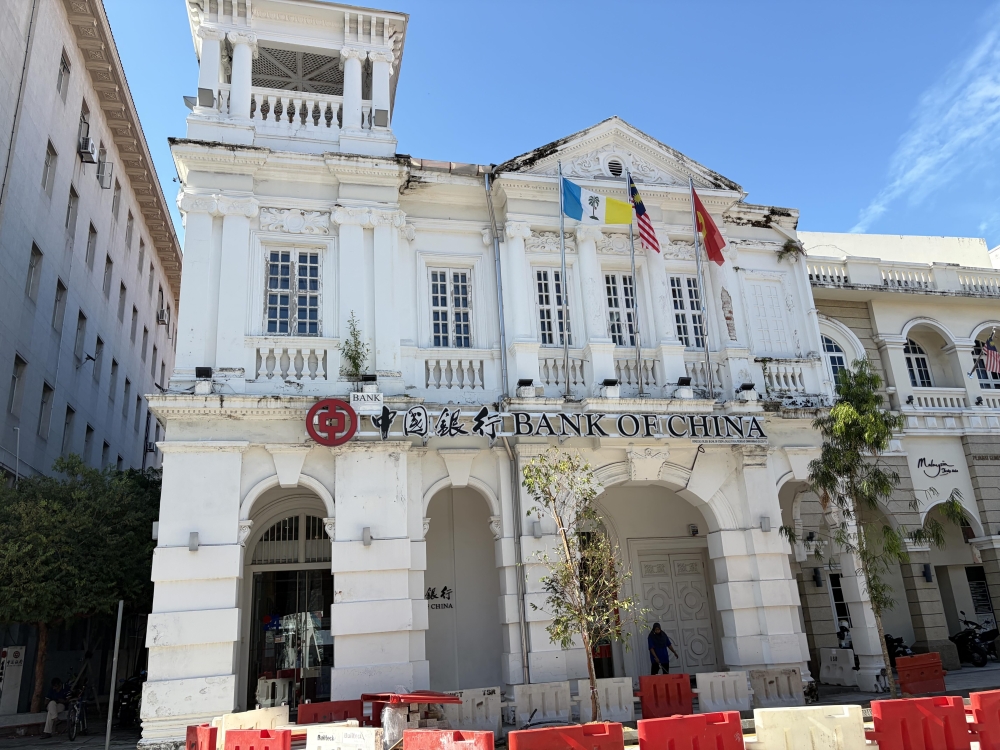
The neighboring building, now housing the Bank of China, was also a product of Neubronner's architectural genius. Constructed in 1905, it was originally designed for the Bank of the Netherlands Trading Society, showcasing Neubronner's versatility and his ability to cater to the needs of various international institutions.
Neubronner's influence extends even to religious architecture. His design contributions are evident in the Masjid Kapitan Keling, particularly in the 1909–1910 renovation and the distinctive minaret erected in 1916. This integration of German architectural sensibilities into local religious structures highlights a fascinating cultural fusion.
Enduring Institutions: Faith, Culture, and Connection
The German community's impact transcended commerce and architecture, leading to the establishment of institutions that continue to serve Penang today. In 1912, the German-speaking Protestant congregation founded St John's Church in Jalan Bagan Jermal. This initiative was a direct response to the growing needs of the expatriate community, providing a spiritual home and a sense of belonging.
While services at St John's Church are now conducted in English, the church remains a tangible link to the community's religious heritage and its early efforts to establish a spiritual presence on the island. It stands as a quiet testament to their enduring faith.
A more contemporary, yet equally significant, symbol of the German presence is the Malaysian German Society itself. Established in 1962, its mission is to foster robust cultural and educational ties between Malaysia and Germany. The society plays a vital role in preserving and promoting the shared heritage that has developed over centuries.
The German Heritage Trail, with its comprehensive documentation of over 20 heritage sites across George Town, offers an invaluable window into the lives of the merchants, architects, writers, photographers, and missionaries who collectively helped shape Penang’s rich and cosmopolitan identity. It invites a deeper appreciation for the diverse threads that constitute the island's compelling historical tapestry.






 Explore AI Teaching Tools
Comments (0)
Please login to comment
No comments yet
Be the first to comment on this article