
Fresno Unified and Teachers Union Forge Unprecedented Alliance to House Families, Combatting Educational Barriers
For seven long years, Veronica Sanchez and her five school-aged children navigated the precarious landscape of temporary hotel rooms across Fresno. While a roof existed, it offered little stability, punctuated by the constant anxiety of hotel staff seeking payment and the disruptive necessity of packing up belongings before the school day. "They’d be like, ‘Mom, are we going to be here when we come back?’ ” Sanchez recalled, her voice tinged with the lingering echoes of that uncertainty.
Now, a profound shift has occurred. Since April 2025, the Sanchez family has found a permanent haven in a furnished, three-bedroom apartment within an affordable housing complex, complete with amenities like a playground, basketball court, and swimming pool. This transformation is a direct result of a groundbreaking two-year pilot program initiated by Fresno Unified School District and its teachers union, a testament to their shared commitment to addressing the root causes of educational disparities.
A Bold Initiative: Bridging the Gap Between Housing and Learning
The Sanchez household is one of twenty Fresno Unified families who have benefited from this innovative program. This initiative, jointly funded by the school district and the teachers union philanthropy, with each contributing over $156,000, aims to dismantle the significant barrier that homelessness presents to a child's education. Beyond providing shelter, the program offers comprehensive support services, connecting families with staff at the apartment complex, various district departments, and community organizations.
“This is what we needed,” Sanchez stated, a palpable sense of relief in her words. Her experience is not unique; across California, there's a growing recognition that a stable home is fundamental to a student's ability to learn and thrive. While other districts have implemented measures like temporary shelters or housing voucher assistance, Fresno Unified's approach is distinguished by its direct contribution to subsidized housing and the provision of holistic support services.
Unraveling Instability: The District's Evolving Approach
Currently, over 675 students within Fresno Unified are experiencing homelessness, a situation that encompasses living with relatives, in shelters, or in motels. Abigail Arii, the director of student support services for the district’s prevention and intervention department, highlights the cyclical nature of this instability, a pattern the program is designed to break.
This initiative reflects a significant evolution in how Fresno Unified addresses the multifaceted barriers—socioeconomic, mental health, and physical—that impede student learning. Darrin Person, the executive director of community schools, emphasizes that the establishment of community schools in 2023, transforming campuses into vital resource hubs, paved the way for this housing assistance program. The idea of providing housing support emerged as a key recommendation during labor negotiations between the district and the teachers union in late 2023.
Crossroads Village: A Beacon of Hope and Stability
The tangible outcome of this collaborative effort is the relocation of these families into Crossroads Village, a 143-unit affordable housing complex strategically located near community schools and resource centers in Fresno. The partnership between Fresno Unified and the Fresno Teachers Association Foundation has been instrumental in making this a reality.
A Shared Investment in Families' Futures
The financial structure of the housing subsidy is a testament to the commitment of both entities. For twenty families, assistance with housing costs is multifaceted. While rent at Crossroads Village varies from $462 to $2,320 based on state and county funding, Fresno Unified and the Fresno Teachers Association Foundation have each committed to covering portions of the rent for ten units each, for a period of two years, concluding in April 2027.
The Fresno Teachers Association Foundation has contributed $165,952, securing seven two-bedroom and three three-bedroom apartments for ten families. Fresno Unified has matched this commitment with $156,370, providing nine two-bedroom and one three-bedroom apartment for the remaining ten families. These funds are drawn from various district departments, including the Community Schools Office, Human Resources Department, and the Department of Prevention & Intervention, with specific support for foster and homeless youth through Project ACCESS.
Each year, both Fresno Unified and the teachers union's philanthropic arm have allocated over $77,000 to this initiative. Families contribute to their rent based on their income, a crucial element in fostering self-sufficiency and long-term stability. Many of these families, like Veronica Sanchez's, faced significant hurdles in finding housing that would accept them, often due to past evictions or limited income.
Veronica Sanchez's Journey: From Hotels to a Home
Veronica Sanchez, now 43, recounts how an eviction in 2018, followed by job loss, plunged her family into homelessness. The waitlists for low-income housing were extensive, and her eviction record acted as a persistent barrier. The housing provided through Fresno Unified and the Fresno Teachers Association Foundation at Crossroads Village has been life-altering. She now actively participates in mental health classes hosted at the complex and engages with job and skills training programs offered by the district.
The collaboration between the Crossroads Village team and Fresno Unified staff is a cornerstone of the program's success. Tenant support managers at Crossroads Village proactively engage with families, reminding students of school attendance requirements and working with the district to address any lease violations that could jeopardize a family's housing. This proactive approach has been vital in resolving issues, such as when a student was struggling with substance abuse or another vandalized property, leading to joint interventions with families and the identification of necessary support services.
“Our No. 1 goal is that they stay housed,” stated Jessica Hoff Berzac, president of Upholdings, the organization that manages Crossroads Village as "supportive" housing, emphasizing the integrated service model.
Empowering Parents, Elevating Students
Fresno Unified's direct support extends to both parents and children, offering a range of mental health services, including individual counseling for students. District staff regularly visit the apartments, providing essential resources like food deliveries and gift cards for local businesses. A key component of the program requires parents to attend monthly classes focused on crucial topics such as positive discipline, navigating the school system, credit recovery, financial literacy, and job development.
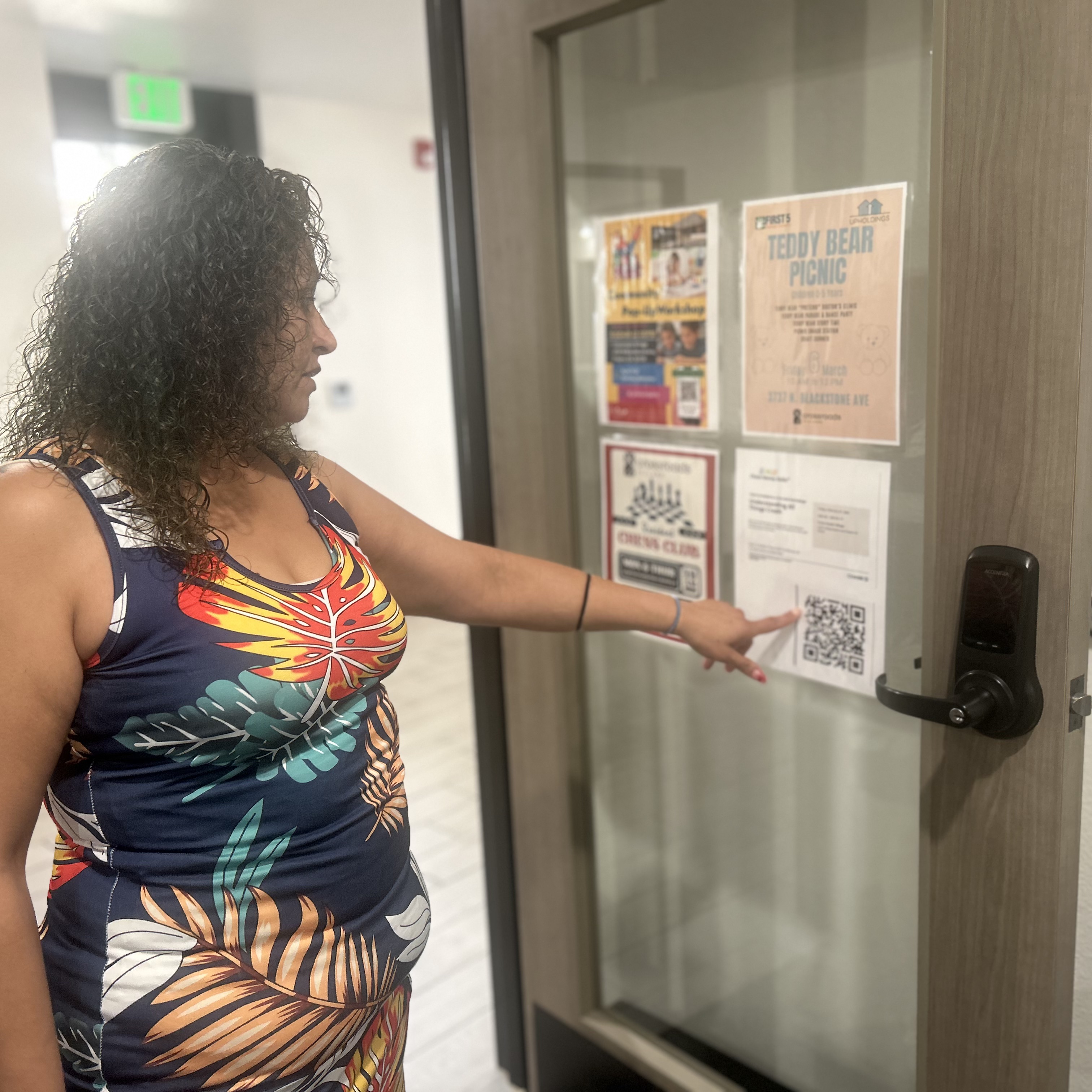
With the support of the district and community organizations, Sanchez is actively working towards expunging her criminal record, a goal that could enable her to become a teacher's aide within Fresno Unified. She is also set to begin an introduction-to-the-workforce class at Fresno Adult School. These workshops, along with community events like a teddy bear picnic for children, a chess club, and credit repair classes, foster a sense of community and provide tangible pathways to personal and professional growth.
Crossroads Village itself is designed to support residents, featuring a playground, basketball court, pool area, an on-site laundromat, and a computer lab accessible during business hours. These amenities contribute to a more stable and enriched living environment.
Beyond Housing: Measuring Impact and Sustaining Momentum
The impact of this program is already evident. According to Arii, students in the program have shown fewer behavioral issues and suspensions, alongside increased attendance and improved grades. While acknowledging that "trauma doesn't heal overnight," the progress is significant.
Sanchez's own children have experienced this transformation firsthand. The instability of hotel living led to frequent tardiness, disrupted sleep due to noise, and arduous commutes to school. At Crossroads Village, her children now maintain the required 90% school attendance rate. This newfound stability has provided much-needed peace of mind, allowing her eldest daughter, Jaylene, to complete high school and pursue a career as a nursing assistant. Her younger children have also become more open and engaged.
The program also mandates parental involvement, requiring attendance at parent-teacher conferences and participation in at least one school event per semester, a stark contrast to the challenges faced when experiencing homelessness, where parental engagement in education is often severely limited.
The program's success, with many families contributing to their rent, offers a hopeful outlook for its potential extension or expansion. Despite facing a budget deficit, Fresno Unified's commitment to this initiative underscores its understanding that student success is inextricably linked to the well-being of their families. As Hoff Berzac aptly notes, "It's more than the student in the classroom. It's where did the student wake up that day and what's going on with the parents. What's going on with their jobs and their health care, because you can't be successful in school if those other pieces aren't cared for." This holistic approach positions the Fresno Unified and teachers union partnership as a potential model for districts nationwide grappling with the complex interplay of housing, poverty, and educational achievement.






 Explore AI Teaching Tools
Comments (0)
Please login to comment
No comments yet
Be the first to comment on this article