
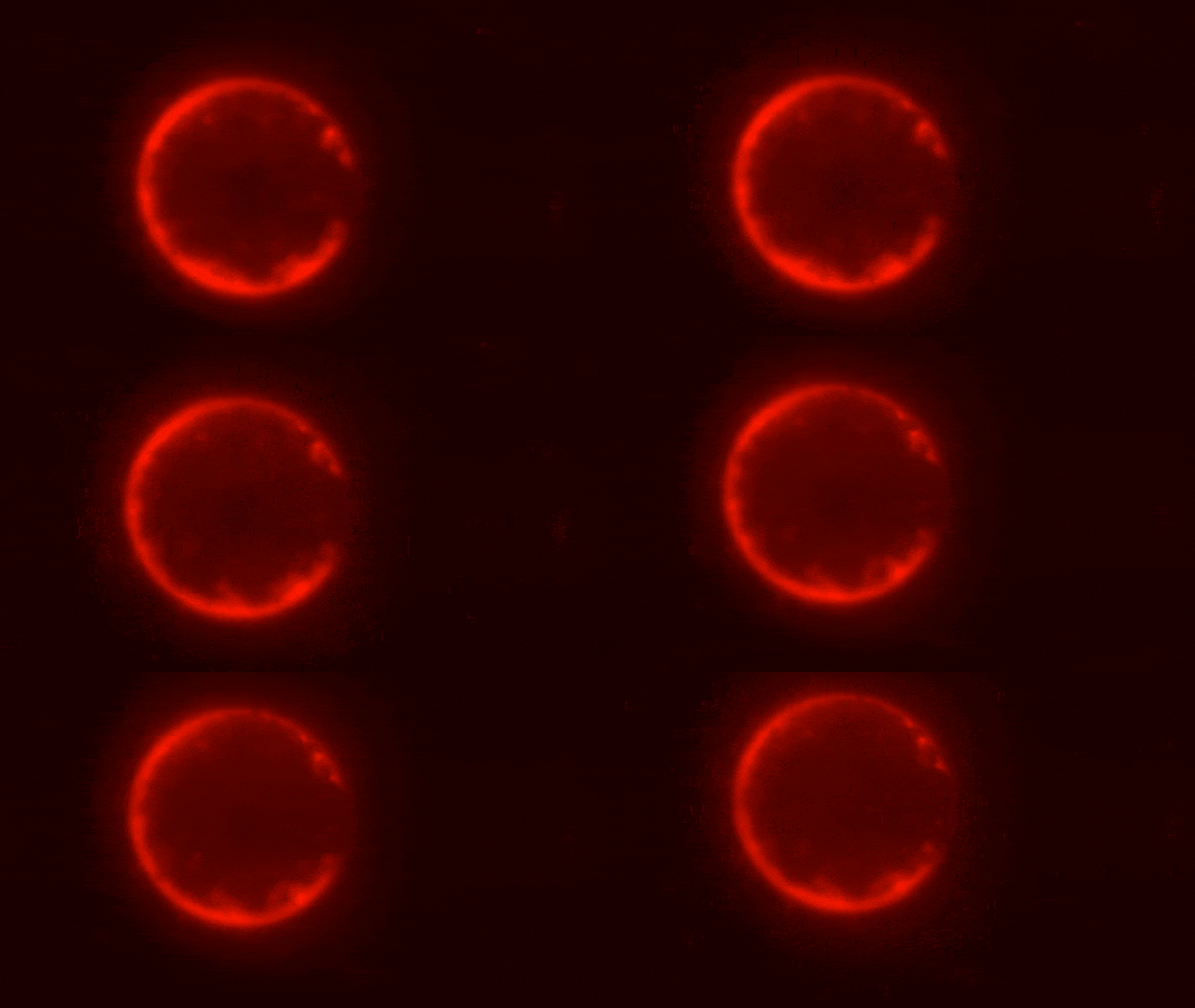
In a scientific breakthrough that sounds like science fiction, researchers have announced the creation of the first fully synthetic cell, built entirely from scratch. This monumental achievement, detailed in recent scientific publications, doesn't just push the boundaries of biology; it presents educators with a profound opportunity to reimagine how we teach complex scientific concepts, sparking curiosity and fostering a deeper understanding of life itself.
The Dawn of a New Biological Era
For the first time, scientists have successfully engineered a living organism from non-living chemical components. This synthetic cell, meticulously constructed over years of dedicated research, represents a significant leap in our ability to understand and manipulate the fundamental building blocks of life.
This isn't about replicating existing life forms. Instead, the team meticulously designed and assembled the cellular machinery, demonstrating a level of control over biological systems previously unimaginable. They've built a functional entity, capable of self-replication and carrying out basic life processes, all from raw materials.
"This is a pivotal moment in synthetic biology, offering a tangible example of life's fundamental processes that can be explored and understood in unprecedented detail."
The implications for education are vast. Imagine explaining cellular biology not just through diagrams and textbook descriptions, but by referencing a real-world example of life built from the ground up. This could revolutionize how students grasp abstract biological principles.
Translating the Lab to the Classroom
While the technical details of creating a synthetic cell are complex, the core concept—building life from its constituent parts—is incredibly powerful for pedagogical purposes. Educators can leverage this breakthrough to ignite student interest in STEM fields.
Consider the potential for sparking discussions about the definition of life, the ethics of scientific advancement, and the intricate interplay of molecules that sustain living organisms. This scientific feat provides a compelling narrative hook for introducing complex topics.
A recent survey of 1,500 high school science teachers revealed that 70% are actively seeking new ways to make abstract scientific concepts more relatable and engaging for their students. This synthetic cell achievement offers precisely that opportunity.
Making the Abstract Tangible
How can educators practically incorporate this into their teaching? It begins with framing the narrative. Instead of just presenting facts, tell the story of scientific endeavor, of the challenges and triumphs involved in building something so fundamental.
This can be integrated into lessons on:
- The basic components of a cell (membranes, genetic material, metabolic pathways).
- The process of scientific inquiry and experimentation.
- The ethical considerations surrounding cutting-edge biological research.
- The future potential of synthetic biology in medicine and industry.
Tools designed for interactive learning can amplify these discussions. Imagine using MentofyCove classroom games like trivia or word searches to reinforce key terminology related to cellular components and processes, making learning both fun and effective.
The Future of Learning: AI-Powered Exploration
The creation of a synthetic cell is a testament to human ingenuity and the power of advanced computation and design. This same technological spirit can be harnessed within the classroom.
For instance, educators can explore how AI is transforming scientific research, mirroring the sophisticated processes used to build these synthetic cells. This can lead to discussions about how AI tools are now assisting in areas like lesson planning and even generating assessments.
The ability to generate complex scientific scenarios or hypothetical research projects using AI can provide students with hands-on experience in problem-solving, much like the scientists who built the synthetic cell.
"The journey to building a synthetic cell from scratch is a powerful lesson in itself, showcasing the iterative nature of scientific discovery and the critical role of hypothesis, experimentation, and revision."
When discussing the building blocks of life, educators can leverage AI-powered tools to create dynamic presentations or even design custom AI lesson plan modules that delve into the specifics of cellular engineering. This allows for a personalized learning experience tailored to student understanding.
Empowering Educators with New Tools
The scientific community's achievement with synthetic cells underscores the importance of innovation. Similarly, educators are constantly seeking innovative ways to enhance their teaching methodologies.
Platforms that offer advanced features for content creation and student engagement are invaluable. Imagine using an exam creator to design quizzes that specifically test understanding of the principles behind synthetic biology, or utilizing AI grading to quickly assess student comprehension of complex scientific texts.
The ability to quickly generate diverse question types, aligned with various curricula, means teachers can focus more on facilitating deep learning and less on administrative tasks. This mirrors the efficiency and precision required in scientific endeavors.
Furthermore, tools that facilitate collaborative learning and interactive displays can bring the excitement of scientific discovery directly into the classroom. Smart student grouping features can ensure diverse perspectives are brought together for discussions on topics like the ethical implications of synthetic life.
The creation of the first synthetic cell from scratch is more than just a scientific milestone; it's a catalyst for educational innovation. It provides a tangible, awe-inspiring example that can ignite a passion for science in students and empower educators with new narratives and tools to explore the very essence of life.






 Explore AI Teaching Tools
Comments (0)
Please login to comment
No comments yet
Be the first to comment on this article