
Revitalizing College Enrollment: The Strategic Role of Football Programs
In today's competitive higher education landscape, institutions are constantly seeking innovative strategies to attract and retain students, particularly men, whose enrollment numbers have seen a concerning decline.This article delves into the growing trend of colleges reintroducing or establishing football programs, exploring the motivations behind this decision, the potential benefits, and the critical insights gleaned from real-world examples.
We will examine how these initiatives, like the one at Roanoke College, aim to foster a more vibrant campus community and address demographic shifts, while also considering the long-term effectiveness of such endeavors.
The Enrollment Challenge: Addressing the Decline in Male Students
A significant demographic shift is impacting higher education: women are increasingly outnumbering men in college enrollment.Nationwide, the ratio often leans towards a 60/40 split in favor of women at four-year institutions.
This trend presents a substantial challenge for colleges seeking to maintain enrollment numbers and a balanced student body.
For instance, Roanoke College, a liberal arts institution, experienced a notable drop in its student population between 2019 and 2022.
Compounding this issue is the projected decline in the 18-year-old population, intensifying the competition for a smaller pool of prospective students.
Many college leaders express concern about this imbalance, recognizing the importance of a diverse student population for a well-rounded educational experience and for preparing young men for future workforce demands.
Studies indicate that a considerable percentage of young men feel undervalued or overlooked in contemporary society, and colleges are exploring ways to better articulate their value proposition to this demographic.
Roanoke College's Strategic Comeback: Reigniting Football for Campus Spirit
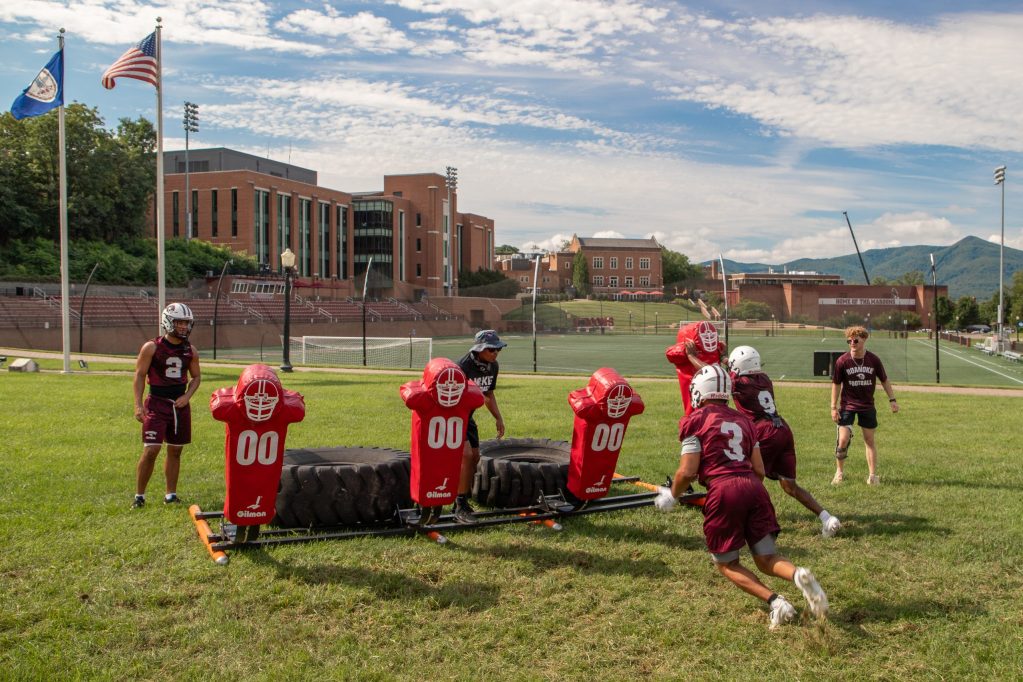
Faced with declining enrollment, Roanoke College made a bold decision to revive its football program, a sport that had been absent since 1942.This move was driven by a multifaceted strategy aimed at not only boosting enrollment, especially among men, but also at cultivating a more dynamic and spirited campus environment.
The college's president articulated a clear vision: that strategically integrating sports, particularly football, could significantly contribute to maintaining and even growing the college's enrollment base.
This initiative coincided with a broader effort to enhance student life, including the establishment of a marching band and a competitive cheerleading team, all designed to resonate with the desire for belonging, excitement, and a strong sense of community among 18- to 22-year-olds.
The Impact on Enrollment and Campus Culture
The reintroduction of football at Roanoke College was met with enthusiasm.The athletic director noted that the initial goal was to attract at least an additional hundred students, and the roster of 97 players on the first day of practice indicated they were already close to achieving that target.
The program's inaugural game was hailed as a historic and invigorating event, drawing significant community support and fostering a palpable sense of pride.
Beyond sheer numbers, the initiative aimed to create a more lively campus, a sentiment echoed by the president, who believed that football and associated spirit-raising activities would be a powerful draw for prospective students.
This approach acknowledges that for many young people, a vibrant campus atmosphere and opportunities for shared experiences are crucial factors in their college selection process.
Financial Considerations and Community Engagement
While athletic scholarships are not permitted in NCAA Division III, where Roanoke College competes, the addition of football players still contributes to revenue through tuition and financial aid.For smaller colleges, this can represent a significant financial benefit.
The college invested approximately $1.3 million from alumni and corporate sponsors to establish the football program.
Furthermore, the team plays in a local high school stadium, with the college paying a rental fee per game.
This model demonstrates how colleges can leverage community resources and partnerships to launch athletic programs.
The success of the initial games, drawing large crowds and fostering community spirit, highlights the potential for football to act as a unifying force, bringing together students and local residents.
The Broader Trend: Colleges Embracing Football for Growth
Roanoke College is not an isolated case.A notable number of institutions have recently added or revived football programs, with several more planning to do so in the coming years.
This trend underscores a widespread recognition among college leaders about the potential of football to address enrollment challenges and enhance institutional appeal.
Examples of Football Program Revivals
Institutions across the country, from New England College to the University of Texas Rio Grande Valley, have joined this movement.Chicago State University and Azusa Pacific University are among those slated to launch football programs in 2026.
Even colleges with existing gender balance, such as Calvin University, have introduced football, citing goals beyond just enrollment, including fostering school spirit, developing leadership, and strengthening connections with feeder schools.
These examples illustrate that the decision to add football is often part of a broader strategic vision for institutional growth and development.
Research Insights: The Long-Term Enrollment Effect
Despite the widespread adoption of football programs, research consistently suggests that while initial enrollment spikes may occur, the long-term impact on student numbers is often limited.Studies indicate that the enrollment gains from adding football programs tend to be concentrated in the first year, primarily attracting students eager to be part of a new team.
After this initial surge, the effect often fades, with enrollment differences becoming statistically indistinguishable compared to peer institutions that did not add football.
This phenomenon can be attributed to a "substitution effect," where colleges are essentially recruiting from different student pools—those who are drawn to football culture and those who are indifferent.
Strategic Diversification: Beyond Football for Enrollment Growth
While football can be a powerful tool, colleges are increasingly recognizing the importance of a diversified approach to enrollment strategy.Relying solely on one initiative, even one as popular as football, may not guarantee sustained success.
Holistic Enrollment Strategies
Roanoke College's leadership emphasizes that their enrollment strategy is not solely dependent on football.The college has actively pursued other avenues for growth, including forging partnerships with local community colleges to create seamless transfer pathways for students.
Additionally, the introduction of new academic programs, such as cannabis studies, demonstrates a commitment to innovation and catering to emerging student interests.
These multifaceted strategies aim to attract a broader range of students and ensure the college's long-term viability.
The success of the community college transfer program, which saw a significant increase in student numbers, exemplifies the effectiveness of such diversified approaches.
The Role of Academic Innovation and Partnerships
The addition of new majors and the cultivation of partnerships with other educational institutions are crucial components of a robust enrollment strategy.These initiatives not only attract students seeking specific academic pathways but also broaden the college's reach and influence within the educational ecosystem.
By offering a diverse array of programs and creating accessible entry points, colleges can appeal to a wider spectrum of learners and adapt to evolving societal needs and interests.
Cultivating Student Success: Beyond the Field
The impact of college football extends beyond athletic performance and enrollment figures.For many students, the sport offers invaluable life lessons, fostering character development, teamwork, and resilience.
Character Development and Life Skills
For students like Ethan Mapstone, a sophomore linebacker at Roanoke College, football provided a renewed sense of purpose and belonging.Despite past injuries, he was inspired by the coaching staff's vision and commitment.
This experience highlights how football can serve as a catalyst for personal growth, start teaching on Mentofy">teaching students the importance of dedication, perseverance, and believing in a shared mission.
These are critical skills that extend far beyond the football field, preparing students for success in all aspects of their lives.
The Value of Individual Attention and Community
While football garners attention, it's essential to remember that students are drawn to colleges for a variety of reasons.KJ Bratton, a junior wide receiver and transfer student, was attracted to Roanoke College primarily for its small class sizes and the individual attention students receive from professors.
Similarly, Jaden Davis, a sophomore wide receiver, emphasized the caring nature of the staff and their personalized approach to student support.
These testimonials underscore that academic excellence, personalized learning experiences, and a supportive campus community remain paramount for many students, even those who are also passionate about sports.
Addressing Stereotypes and Fostering Inclusivity
The reintroduction of football programs can sometimes be met with apprehension from faculty and administrators concerned about potential shifts in campus culture.However, as demonstrated at Roanoke College, these concerns can be alleviated through positive student conduct and engagement.
The athletic director noted that the football players consistently received compliments for their respectful behavior and academic involvement, dispelling negative stereotypes and showcasing their role as positive campus ambassadors.
This highlights the importance of actively fostering an inclusive environment where all students, regardless of their athletic involvement, feel valued and respected.
Conclusion: A Balanced Approach to College Athletics and Enrollment
The decision by colleges like Roanoke College to reintroduce football programs is a strategic response to the evolving challenges in higher education, particularly the decline in male enrollment and the need for increased campus vitality.While football can undoubtedly generate excitement, attract students, and foster a sense of community, research suggests that its long-term impact on enrollment may be limited.
Therefore, a balanced approach is crucial.
Colleges that successfully leverage football as part of a broader, diversified enrollment strategy—one that includes academic innovation, strong community partnerships, and a commitment to personalized student support—are best positioned for sustained growth and success.
Ultimately, the goal is to create an environment where all students can thrive, both on and off the field, and where the college can effectively serve its mission of education and community building.







 Explore AI Teaching Tools
Comments (0)
Please login to comment
No comments yet
Be the first to comment on this article