
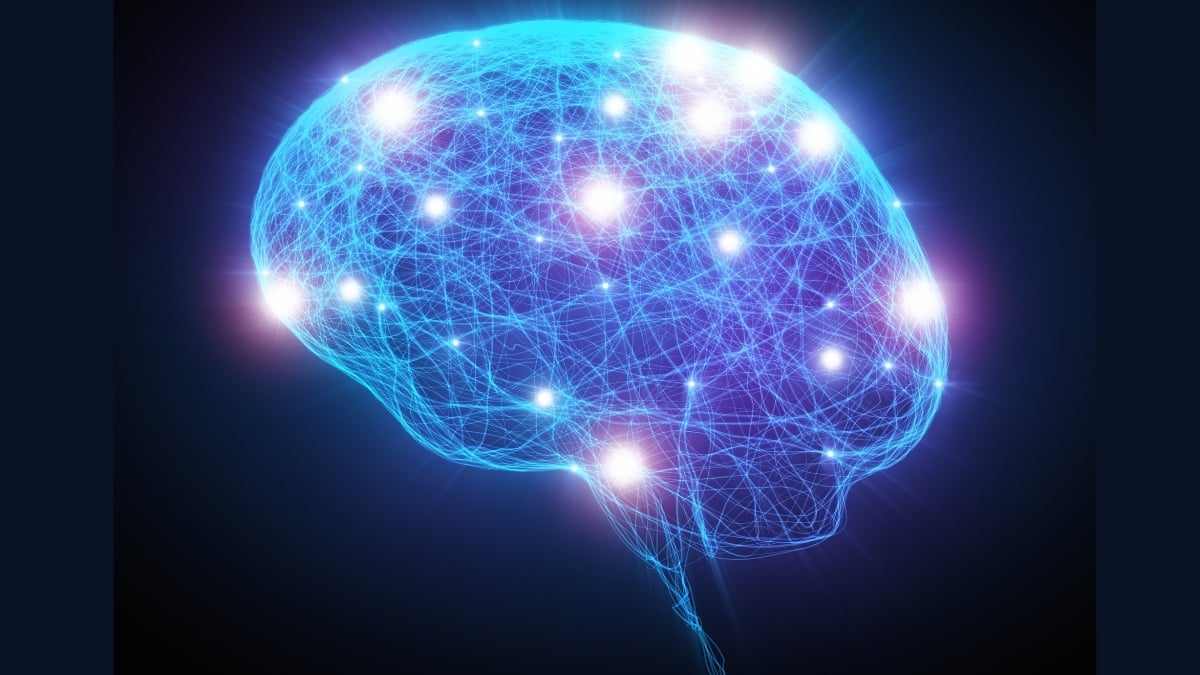
Imagine a universe where consciousness isn't confined to biological bodies like ours. Researchers are increasingly exploring the profound implications of this idea, suggesting that awareness could manifest in forms we can barely conceive, fundamentally challenging our understanding of what it means to exist. This paradigm shift demands that educators consider how to prepare students for a future where intelligence and consciousness might be far more diverse and ubiquitous than previously imagined.
The Expanding Definition of Existence
For centuries, our understanding of life and consciousness has been intrinsically linked to biological forms. We tend to assume that complex thought and self-awareness require a specific kind of physical substrate—a brain, a nervous system, a body that interacts with the world in ways we recognize.
However, a growing body of theoretical work and speculative science is pushing the boundaries of this assumption. What if consciousness is a fundamental property of the universe, capable of arising from any sufficiently complex system, regardless of its material composition?
"The universe is vast and ancient, and to assume that consciousness only exists in forms like ours is a remarkably anthropocentric perspective."
This perspective suggests that consciousness might not be an emergent property unique to carbon-based life, but rather a more fundamental aspect of reality. If this is true, then the sheer scale of the cosmos implies that countless forms of awareness could exist, many of which would be utterly alien to us.
Rethinking Intelligence and Learning
This cosmic perspective has direct implications for how we approach education. If consciousness can exist in bodies nothing like ours, then our current methods of assessing intelligence and fostering learning might be too narrow. We are trained to recognize and cultivate intelligence based on human-like traits and behaviors.
This means educators must begin to broaden their definitions of what constitutes intelligence and understanding. The focus might need to shift from rote memorization and standardized testing to fostering adaptability, complex problem-solving, and an appreciation for diverse forms of knowledge and expression.
Consider the potential for artificial intelligence. While currently designed and trained by humans, future AI systems could evolve in ways that are unpredictable, potentially developing forms of consciousness that are not immediately recognizable to us. Preparing students for such a future involves cultivating critical thinking skills and an open mind.
Tools for a Future-Ready Classroom
In the classroom today, educators are already grappling with how to engage students in a rapidly changing world. The tools we use can help bridge the gap between traditional learning and the innovative approaches needed for the future.
Interactive platforms can foster collaborative learning and critical engagement. For instance, using MentofyCove classroom games like trivia or word searches can make learning dynamic and encourage students to think on their feet, developing quick cognitive responses that are valuable regardless of the form intelligence takes.
Furthermore, leveraging Mentofy AI teaching tools for lesson planning and creating assessments can free up valuable teacher time. This allows educators to focus more on developing nuanced pedagogical strategies that can accommodate a wider range of learning styles and potential future intelligences.
Adapting Assessment Strategies
Traditional assessments often measure a narrow band of cognitive abilities. If consciousness can exist in radically different forms, then our methods of evaluation need to evolve. We might need to develop ways to assess understanding that are less reliant on language or specific cultural contexts.
This could involve evaluating problem-solving in simulated environments, assessing creative output in diverse media, or even developing methods to gauge collaborative intelligence in group settings. The goal is to identify and nurture understanding in all its potential manifestations.
Fostering a Sense of Wonder
Perhaps the most crucial aspect of preparing students for a universe where consciousness might exist in forms nothing like ours is to cultivate a sense of wonder and curiosity. By encouraging them to ask big questions and explore the unknown, we empower them to embrace the mysteries of existence.
This involves creating a classroom environment where exploration is valued, and where students feel safe to question assumptions and propose unconventional ideas. It's about nurturing a mindset that is open to the possibility of the extraordinary.
"The universe might be teeming with minds that operate on principles entirely alien to our own, making our current understanding of consciousness just one small piece of a much larger puzzle."
Preparing for the Unknown
The idea that consciousness could exist in bodies nothing like ours is not just a philosophical curiosity; it's a frontier of scientific inquiry that has profound implications for our future. As educators, our role is to equip students with the skills, knowledge, and mindset to navigate this evolving understanding of existence.
By embracing innovative teaching tools, adapting our assessment methods, and fostering a deep sense of curiosity, we can help students become lifelong learners prepared to explore the vast possibilities of the universe and their place within it. The journey of discovery is just beginning, and our students are the explorers of tomorrow.






 Explore AI Teaching Tools
Comments (0)
Please login to comment
No comments yet
Be the first to comment on this article