
Navigating Community College Math Policy: Bridging Big Picture Successes with Classroom Realities
The landscape of higher education is constantly evolving, and at the heart of much of this change lies the complex interplay between broad policy objectives and the granular experiences of students and faculty.
This is particularly true in community college math education, where ambitious reforms aimed at improving access and equity can sometimes create unforeseen challenges within the classroom.
This article delves into the critical considerations for developing and implementing effective math policies that benefit all students, exploring how to reconcile overarching goals with the day-to-day realities faced by educators and learners.
We will examine how to foster a learning environment that supports both systemic progress and individual student success, a crucial endeavor for any college aiming to empower its students.
The Global-Local Dilemma in Educational Policy
Educational policy often grapples with a fundamental challenge: understanding whether a policy is truly effective by looking at the overall outcomes or by examining the lived experiences of those directly impacted.
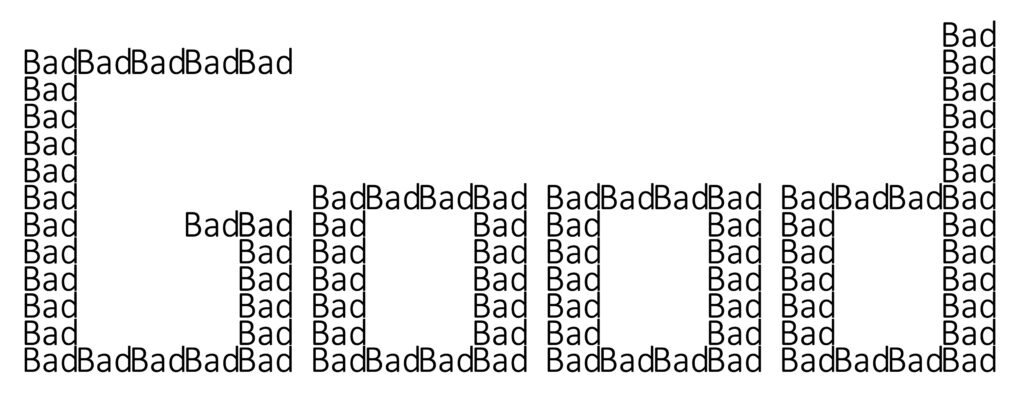
This is akin to viewing an image from a distance versus scrutinizing its individual pixels.
From a macro perspective, data might indicate significant positive trends, suggesting the policy is a resounding success.
However, when viewed from the ground level – within the classrooms and through the eyes of students and faculty – the reality might feel considerably different, even detrimental.
This tension between aggregate data and individual impact is a crucial point of consideration for any educational institution, especially when implementing sweeping changes that affect a large number of students and faculty.
The goal is to ensure that policies are not just statistically sound but also practically beneficial and human-centered.
Rethinking Math Placement and Remediation: A Shift Towards Access
Historically, many community college systems placed students needing additional math support into non-transferable remedial courses.
These courses, often starting with foundational concepts like elementary algebra, served as a significant barrier for many students.
The unfortunate reality was that a substantial number of students enrolled in these remedial tracks rarely progressed to the college-level math courses required for transfer to four-year universities, such as college algebra or introductory statistics.
This created an academic bottleneck, effectively ending the educational aspirations of numerous students before they truly began.
This system, while perhaps well-intentioned in its aim to build foundational skills, often resulted in a dead end, disproportionately affecting students from underrepresented backgrounds.
The Impact of Policy Reform on Student Pathways
To address these systemic inequities, significant policy shifts have been enacted.
A notable example involves leveraging high school academic records for placement into college math courses.
This approach aims to provide more students with direct entry into transfer-level mathematics, bypassing lengthy remediation sequences.
For students who may still require additional support, concurrent enrollment in corequisite courses offers a lifeline.
These support classes are taken alongside the main transfer-level course, providing targeted assistance without delaying progress.
The objective is to accelerate students' journey toward completing their degree requirements and achieving their transfer goals.
This policy aims to dismantle long-standing barriers and create a more equitable pathway for all students, regardless of their prior academic preparation.
Quantifying the Gains: Improved Transfer-Level Course Completion
The implementation of these reforms has demonstrably led to a substantial increase in the number of students successfully completing transfer-level math courses.
Studies indicate a dramatic rise in pass rates within a year of policy implementation.
Before these changes, only a fraction of students managed to pass a transfer-level math course.
However, following the reforms, this number has nearly doubled, with further increases observed in subsequent years.
This translates to tens of thousands more students annually fulfilling their math requirements, a critical step toward earning a college degree and transferring to a four-year institution.
The data clearly illustrate that these policies have moved the needle significantly in helping community college students achieve their academic objectives.
The Faculty Perspective: Navigating Classroom Realities
Despite the compelling aggregate data showcasing increased student success, a significant portion of faculty members express reservations about the effectiveness of these math policies.
Anecdotal evidence from instructors often highlights an increase in the number of students struggling and failing in these newly accessible transfer-level courses.
This is particularly concerning when these struggles appear to disproportionately affect students from marginalized communities.
The paradox lies in the fact that while more students are now enrolling in and attempting these courses, leading to higher overall completion numbers, the pass rates within these expanded cohorts have seen a decline.
This creates a complex situation where the policy is achieving its goal of broader access but is simultaneously presenting new challenges within the classroom environment.
Understanding the Disconnect: Data vs.
Lived Experience
The disconnect between policy success as measured by aggregate data and the perceived reality on the ground for faculty is a critical issue.
While statistics show more students are passing transfer-level math courses overall, faculty members are on the front lines, witnessing firsthand the difficulties many students face.
The emotional weight of seeing students struggle, the frustration of increased failure rates, and the personal investment faculty have in each student’s success can overshadow the broader statistical gains.
This is particularly true when faculty are not fully privy to the outcome data or the context behind the policy changes.
Without this comprehensive understanding, it is natural for educators to interpret their classroom experiences as evidence of policy failure, even when the overall impact is positive.
The Psychology of Loss Aversion and Storytelling
Human psychology plays a significant role in how we perceive policy outcomes.
Research shows that people tend to respond more powerfully to individual stories and personal experiences than to abstract statistics.
The struggles of individual students – their visible frustration, their academic challenges – leave a more lasting impression than a graph depicting statewide improvements.
Faculty, by their very nature, are deeply empathetic individuals who invest emotionally in their students' journeys.
They remember the students who faltered, the ones they wished they could have helped more, and the potential they saw unrealized.
This emotional resonance, coupled with the inherent human tendency to feel losses more acutely than gains, can lead to a perception that the policy is not working, even when the aggregate data suggest otherwise.
This highlights the importance of communicating policy impacts in ways that resonate with both the data and the human element.
Addressing the Paradox: More Students Passing, More Students Failing
The core of the challenge lies in a seemingly contradictory outcome: the policy has indeed led to more students passing transfer-level math courses, but it has also resulted in more students failing.
This paradox arises from the significant expansion of access.
Before the reforms, only a select group of students, often those already well-prepared, attempted these courses.
While their pass rates were high, the total number of students succeeding was limited.
After the reforms, a much larger and more diverse group of students gained entry.
Even with a slightly lower pass rate within this expanded group, the sheer volume means that a greater number of students are ultimately completing their math requirements.
For instance, if a college previously had 100 students attempt a transfer-level math course with an 80% pass rate (80 students passing), and after reforms, 300 students attempt the course with a 70% pass rate, the number of students passing increases to 210.
While the percentage decreased, the absolute number of successful students more than doubled.
This is a critical distinction that needs to be clearly communicated to faculty and stakeholders.
The Importance of Context for Faculty
A significant factor contributing to faculty dissatisfaction is often a lack of complete information.
Studies have indicated that many instructors were not fully aware of the outcome data related to the policy’s impact.
When faculty are primarily experiencing the increased challenges within their classrooms without the broader context of systemic gains, it is understandable that they might conclude the policy is a failure.
Providing faculty with comprehensive data, explaining the rationale behind the policy, and showcasing the overall positive impact on student access and completion are crucial steps in fostering buy-in and understanding.
This ensures that educators have the full picture, enabling them to better interpret their classroom experiences within the larger framework of policy objectives.
The Human Cost of Ambitious Reform
Implementing significant policy changes, especially those designed to dismantle long-standing inequities, inevitably involves a period of adjustment and can come with a human cost.
While AB 705, for example, succeeded in removing significant barriers to transfer-level math, it also introduced new dynamics into the classroom.
These changes can feel personal, urgent, and overwhelming to faculty who are tasked with managing them.
The transition requires adaptation, new pedagogical approaches, and often, a significant emotional investment.
Recognizing and acknowledging this "human cost" is not about undermining the progress made but about understanding the full scope of the reform process.
Good policy must account for both the macro-level achievements and the micro-level challenges faced by educators.
Beyond Data: Empathy, Understanding, and Support
Data alone is insufficient for the successful implementation and sustainability of educational reforms.
Reforms thrive on understanding, empathy, and robust support for the faculty and staff who are on the front lines of change.
As faculty begin to adapt to new policies, they often face unforeseen consequences and the emotional toll of supporting a more diverse student population with varied needs.
This is why the next phase of policy work must move beyond mere compliance and enforcement.
It requires active listening, open dialogue, and collaborative problem-solving.
Faculty need to see how their daily efforts contribute to the larger mission, and policymakers need to gain a deeper appreciation for the realities of classroom instruction.
This mutual understanding is essential for building trust and ensuring that ambitious changes lead to equitable and sustainable outcomes for all students.
The Evolution of Policy: Towards More Ambitious Goals
The journey of educational reform is often iterative, with new policies building upon or refining previous ones.
Following the implementation of AB 705, further policy developments, such as AB 1705, have emerged, pushing colleges to further re-evaluate their course offerings.
These newer policies can be even more stringent, potentially limiting the availability of prerequisite math courses.
Understandably, such directives can leave many educators feeling overwhelmed and uncertain, especially as they are still grappling with the implications of prior reforms and managing unintended consequences.
While guidance may be provided to ease the rollout, confusion and mistrust can persist.
The stakes are high, and the experiences with previous reforms underscore the importance of clear communication and support.
Building Trust Through Transparency and Dialogue
The lessons learned from past reforms are invaluable for future policy development and implementation.
A key takeaway is that mistrust flourishes when there is a disconnect between what the data suggest and what individuals experience.
Therefore, the path forward must prioritize storytelling, active listening, and the co-creation of solutions.
Faculty need to be empowered with the full narrative of policy impact, understanding both the aggregate successes and the specific challenges.
Simultaneously, policymakers must gain a genuine understanding of the daily realities faced by educators and students.
This bidirectional communication is vital for building trust and ensuring that reforms are not perceived as top-down mandates but as collaborative efforts toward a shared vision of educational equity and excellence.
Conclusion: Seeing the Whole Picture for Equitable Progress
The effectiveness of community college math policies, like the complex image described earlier, lies in our ability to perceive both the broad strokes and the intricate details.
Policies like AB 705 have undeniably succeeded in dismantling historical barriers and expanding access to transfer-level math, leading to significant aggregate gains for students.
However, this progress has introduced new classroom dynamics that require careful attention and support for faculty.
True policy success demands an acknowledgment of both the big-picture achievements and the human cost of transition.
Reforms cannot succeed on data alone; they require empathy, understanding, and a commitment to supporting those who implement them.
By fostering open dialogue, sharing comprehensive data, and actively listening to the experiences of both students and faculty, we can navigate the inherent tensions in educational reform.
This approach allows us to take concerns seriously without retreating from hard-won progress, ultimately paving the way for a more honest, hopeful, and equitable future in higher education.
The critical questions remain: How can we best support both students and faculty through ambitious change?
And how can we ensure that every student, regardless of their starting point, has a genuine opportunity to succeed?
Addressing these questions with a holistic perspective is key to moving forward effectively.







 Explore AI Teaching Tools
Comments (0)
Please login to comment
No comments yet
Be the first to comment on this article