
Drones, Data, and Dollars: How Schools Are Forging Real-World Careers for Students
When a water-treatment plant outside Denver faced an unexpected algae bloom choking its pipes, they didn't immediately reach for a traditional engineering firm. Instead, they turned to the students.
The aquatic robotics team at the Innovation Center within St. Vrain Valley Schools in Longmont, Colorado, deployed their underwater robots into the facility. They meticulously collected data, pinpointed the specific algae species, and played a crucial role in its eradication. Now, the plant has a standing contract with the student team for regular quarterly inspections, and neighboring towns are taking notice, initiating their own calls for the students' expertise.
This isn't a staged classroom exercise designed to mimic professional tasks. This is genuine, impactful work, and it signals a significant transformation occurring across school districts nationwide. Increasingly, educational institutions are actively constructing career learning pathways that directly connect students with authentic professional challenges, seasoned industry mentors, and, in some instances, a tangible paycheck.
The Compelling Case for Authentic Work Experiences
The urgency driving these initiatives is undeniable. A comprehensive 2023 review, drawing on two decades of research, highlighted that participation in career and technical education demonstrably improves academic performance, boosts high school completion rates, cultivates essential employability skills, and enhances college readiness.
The central question now confronting districts is not whether to offer these career pathways, but rather whether these pathways genuinely lead to meaningful opportunities. Policymakers are keenly observing these developments, with organizations like the Education Commission of the States identifying the establishment of aligned career pathways and the removal of economic barriers as paramount priorities through 2027.
St. Vrain's Project Teams: A Model of Real-World Engagement
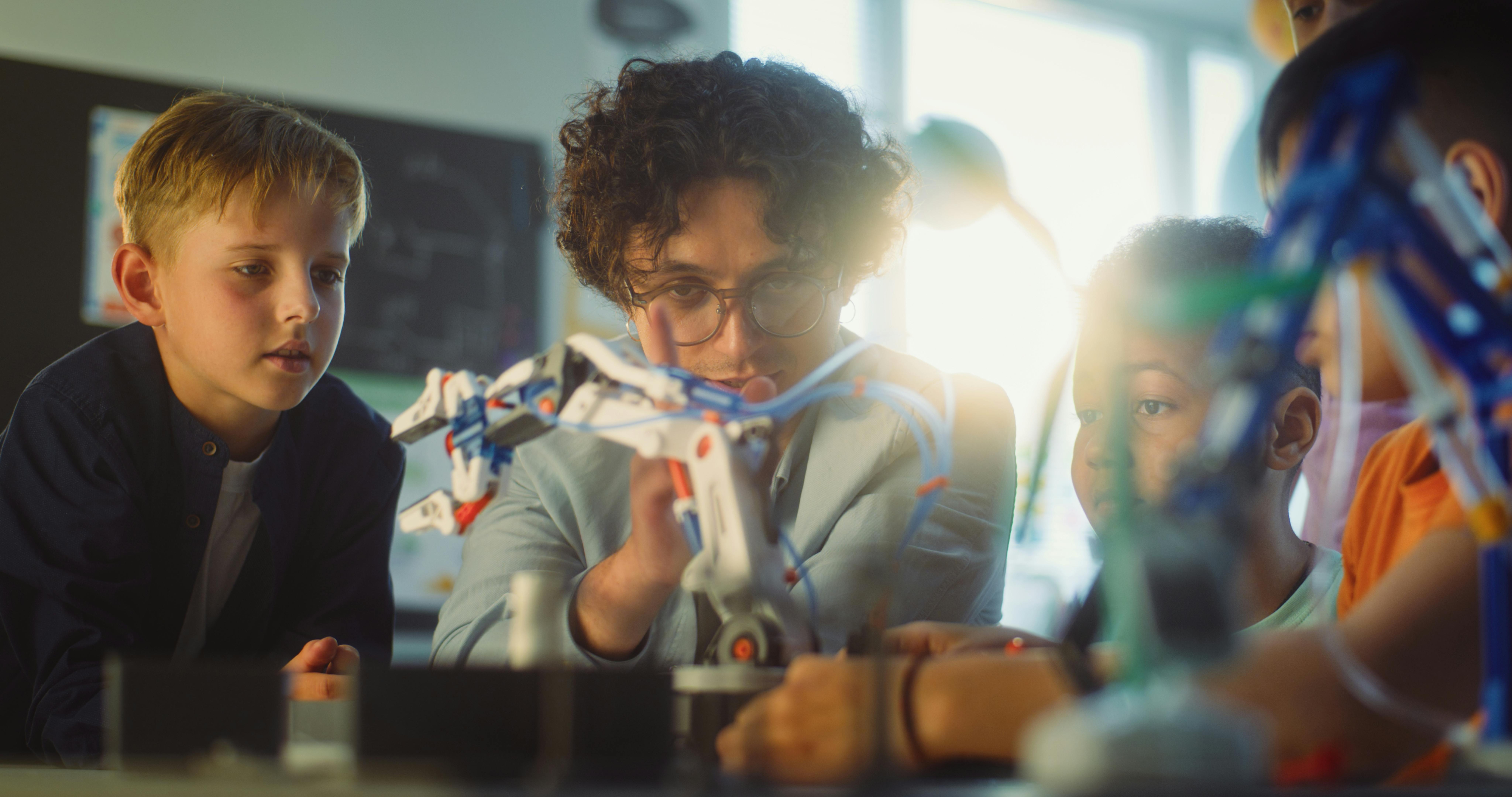
At St. Vrain, Assistant Superintendent of Innovation, Joe McBreen, has dedicated years to perfecting this model through a program known as project teams. Each day after school, approximately 264 students converge at the district’s Innovation Center, transitioning into paid district employees. They meticulously log their hours against accounts belonging to actual clients, engaging in work that has real-world implications.
Students have the flexibility to join a diverse array of teams, including a drone show ensemble, a dedicated cybersecurity unit, an artificial intelligence development group, and numerous others. This structure allows them to explore different interests and rotate through teams as their passions evolve.
“It’s a low-threat, high-reward environment,” McBreen explains. “Students earn money, expand their professional networks, hone crucial soft skills, and essentially test-drive potential careers. And if a student joins a team and discovers it's not the right fit, that realization itself holds significant value.”
The success of this model hinges significantly on the involvement of industry mentors who bring authentic projects, rather than contrived classroom assignments, to the students. Damon Brown, a senior cybersecurity advisor for the U.S. Department of State with a focus on Ecuador, mentored seven St. Vrain students on an intricate assignment.
He tasked them with designing the architectural framework for a cyber intelligence fusion center, utilizing open-source tools. This was work that would have commanded a substantial cost, potentially hundreds of thousands of dollars, if outsourced to a professional firm. “The students absolutely knocked it out of the park,” Brown stated emphatically.
They successfully developed the system architecture, authored comprehensive user manuals, provided equipment recommendations, and conducted a thorough threat analysis of countries bordering Ecuador. Brown's admiration for their performance was so profound that he is now actively recruiting six St. Vrain interns. “This kind of experience creates powerful bonds between people,” he remarked.
Unexpected Growth and Lucrative Opportunities
The program has also demonstrated a remarkable capacity for organic growth and diversification. Following an incident where one student's grandparent fell victim to cybercrime, the cybersecurity team took the initiative to develop an awareness curriculum specifically tailored for senior citizens. They successfully conducted five classes for 24 seniors in their inaugural year, with the second session proving so popular that standing room was at a premium.
Now, senior living facilities are engaging the students to provide these educational sessions. Simultaneously, the drone team has become a sought-after entity, executing commercial drone shows for companies across the nation on Friday afternoons. They bill clients at rates that few drone pilots in the country can match.
One former student participant is currently pursuing aerospace engineering, leveraging the income generated from drone flying to help finance their college education. This demonstrates a direct, tangible benefit that extends far beyond the high school years.
Taking the Model West: Innovation in Washington State
The groundbreaking work undertaken at St. Vrain has garnered significant attention from educators nationwide, inspiring many to adapt elements of their model to suit their own local contexts. Kris Hagel, Chief Information Officer for Peninsula School District in Washington state, visited the Innovation Center and left with a clear vision for establishing a similar initiative.
Two years ago, Peninsula launched a paid drone internship program, beginning with a cohort of seven students and steadily expanding its reach. Students in this program collaborate closely with industry partners, gaining invaluable experience in navigating FAA regulations, programming autonomous flight paths, and mastering drone repair.
“When you are willing to embrace cutting-edge approaches and think innovatively, unburdened by the constraints of traditional systems, you can unlock opportunities for students that far surpass what we typically define as conventional education,” Hagel asserted. “This program has evolved into something far more impactful than I initially envisioned.”
The district forged a strategic partnership with Firefly Drone Systems, one of the few American manufacturers of drones. This collaboration provides students with specialized training and equips them to operate sophisticated drone shows. The program's scope extends well beyond piloting, encompassing crucial roles in marketing, animation design, and equipment maintenance.
Hagel envisions a future where students pursuing business management degrees will be tasked with hiring and managing other students to operate the drone program, creating a self-sustaining ecosystem of learning and employment. He emphasizes that a highly skilled drone operator graduating from high school, equipped with the capital to acquire their own equipment, can step into a six-figure career almost immediately.
Identifying the Problem First: Entrepreneurship in Indiana
Not every district is focused on developing expertise in robotics contracts or elaborate drone shows. For Michele Davis, CTE Department Chair at Metropolitan School District of Steuben County in Indiana, the most impactful real-world pathway lies in entrepreneurship.
In collaboration with the StartED Up Foundation, Davis guides students through a comprehensive three-year sequence. This journey involves identifying genuine problems, conceptualizing innovative solutions, meticulously developing robust business models, and confidently presenting their ideas to authentic audiences.
Students actively engage in "opportunity walks" throughout the school, meticulously documenting everyday frustrations and brainstorming potential solutions. They hone their professional marketing skills through practicing concise elevator pitches, delivering compelling case studies to diverse groups, and articulating their concepts to elementary school students.
“Opportunities are present everywhere you look,” Davis stated with conviction. The ideas that emerge from this process are often remarkably practical and insightful. One student conceived of a reversible outfit designed to streamline quick costume changes in theatrical productions. Another class developed a concept for a mobile trailer that could provide essential hygiene services to individuals experiencing homelessness.
Beyond the development of innovative business concepts, Davis highlights that the program places a strong emphasis on cultivating essential communication skills and fostering unwavering confidence. “We work to make students comfortable with tasks that are typically considered uncomfortable,” she explained.
A Credential, Not Just a Class: Cybersecurity in New York
In Suffern Central School District, located in Rockland County, New York, Superintendent P. Erik Gundersen has adopted a distinct yet equally effective approach. Through a collaborative partnership with the League of Innovative Schools and the curriculum provider Paradigm, the district has implemented a rigorous three-year cybersecurity certification pathway seamlessly integrated into the high school curriculum.
Approximately 60 students are currently enrolled in this specialized program. The curriculum was intentionally designed to attract and engage students who might not traditionally envision themselves pursuing a career in cybersecurity. The district proactively recruited students from immigrant communities and those who are new to the United States.
Students operate within a simulated "sandbox" environment that replicates real-world cyber incidents. This allows them to practice identifying potential threats and responding effectively to simulated attacks in a safe, controlled setting. This hands-on experience is invaluable for building practical skills.
“The financial means to send a child to college are not as readily available as they once were, and much of the current discourse questions the singular importance of a college education,” Gundersen observed. He posits that these evolving economic realities are compelling districts to fundamentally re-evaluate how they prepare students for the modern workforce.
Career credentials that are embedded within traditional high school structures can effectively open doors for students who might otherwise lack clear pathways into high-skill industries. This approach democratizes access to lucrative and in-demand professions.
Education That Mirrors Life's Realities
Across these diverse programs, while the specific details may vary significantly, the underlying philosophy remains remarkably consistent: authentic, real-world experience is not merely a supplementary component of education; it is education itself.
As Joe McBreen wisely advises, “I encourage districts to broaden their vision. This is achievable for anyone. The key is to start small.”





 Explore AI Teaching Tools
Comments (0)
Please login to comment
No comments yet
Be the first to comment on this article