
UK's Engineering Skills Gap Reaches Critical Mass: How One London University is Forging the Next Generation of Industry Leaders
The United Kingdom is grappling with a significant shortfall in its engineering talent pool, a crisis that threatens to stifle innovation and economic growth. Projections indicate a need for over 173,000 new engineers and technicians annually to simply maintain the current pace of demand, yet the pipeline of graduates is failing to meet this staggering requirement. This deficit has positioned engineering as the sector facing the most acute skills shortage across the entire UK industry.
Employers nationwide are echoing a consistent message: a profound lack of engineers possessing the specialized skills demanded by emerging fields like artificial intelligence, automation, and sustainable technologies. This sentiment is particularly acute, with approximately three-quarters of engineering firms reporting difficulties in filling crucial technical roles. The ambition and the demand are undeniably present; the missing ingredient is the skilled workforce.
Bridging the Divide: A Strategic Approach to Industry Readiness
It is precisely this pressing challenge that the School of Science & Technology at City, University of London, is actively addressing. Situated in a vibrant London setting and equipped with cutting-edge research facilities, the institution is dedicated to providing a superior educational experience. Its Master of Science (MSc) programs are meticulously crafted with a singular objective: to rapidly equip students for immediate industry impact.
An engineering MSc is identified as one of the most effective pathways to rapidly close this critical gap. These programs offer invaluable hands-on experience, a crucial element that employers frequently cite as lacking in potential candidates. This approach fosters genuine technical confidence, moving beyond theoretical knowledge to cultivate practical mastery.
The School of Science & Technology at City, University of London, is at the forefront of delivering world-class research that directly informs and shapes its industry-relevant educational offerings. This synergy between groundbreaking research and practical application is a cornerstone of its educational philosophy.
Tailored Programs for Evolving Industry Demands
City, University of London's engineering MSc programs are not merely academic pursuits; they are strategically designed to align with the immediate and evolving needs of the industry. This ensures that graduates are not only knowledgeable but also immediately employable and capable of contributing from day one.
These programs provide students with the opportunity to delve into advanced technical subjects while simultaneously cultivating essential management and practical skills. This holistic development prepares them for the multifaceted demands of modern engineering roles.
Robotics, AI, and Autonomous Systems: Pioneering the Future
A prime example of this industry-focused approach is the MSc in Robotics, AI and Autonomous Systems. This program is delivered by leading academics from the Autonomy Research Centre, an internationally recognized hub actively engaged in numerous global research projects. These projects tackle significant technical challenges in areas such as unmanned aerial vehicles and advanced space technology.
The research expertise cultivated within the Autonomy Research Centre is directly integrated into the curriculum. Students gain profound knowledge in machine learning, image processing, human-machine teaming, communication, and control systems. Crucially, this theoretical understanding is then applied in practical laboratory settings through programming and industrial projects, honing both software and hardware proficiencies.
Biomedical Engineering and Data Analytics: Revolutionizing Healthcare Technology
A similar urgency for skilled professionals is reshaping the healthcare sector. As global demand for better and more accessible care intensifies, the MSc in Biomedical Engineering with Data Analytics is designed to meet this growing need. This program is particularly suited for individuals passionate about applying technology to develop innovative diagnostic and therapeutic solutions.
Graduates will acquire in-depth knowledge spanning medical devices, biosensors, healthcare technology, and bio-data analytics. This comprehensive skill set positions them competitively in a field experiencing continuous expansion and innovation.
Advanced Mechanical Engineering: Adapting to a Dynamic Global Market
The pressure to innovate extends beyond emerging disciplines, with mechanical engineering undergoing its own significant transformation. The MSc in Advanced Mechanical Engineering is designed to prepare students for the demands of a rapidly evolving global market. The program emphasizes advanced thermal power, systems, processes, and manufacturing, grounding students in both fundamental theory and practical technical application.
A distinctive feature of this program is the optional 12-month Professional Placement. This invaluable opportunity allows students to apply their acquired knowledge in their chosen industry before graduation, providing real-world experience and industry connections.
Advanced Aerospace Engineering: Driving Sustainable Innovation
The aerospace and defense sectors are also experiencing intense competition for candidates capable of interdisciplinary work and possessing a strong understanding of sustainability. The MSc in Advanced Aerospace Engineering with Sustainable Technologies directly addresses this demand. It equips students with the knowledge to reduce environmental impact through multidisciplinary thinking.
Students can also specialize in automation and autonomy, including unmanned aerial vehicles. This area has rapidly transitioned from a niche interest to a core industry priority in recent years, highlighting the program's forward-thinking curriculum.
Beyond Technical Prowess: Cultivating Leadership and Management Skills
While strong technical skills are paramount, the industry consistently flags a shortage of engineers equipped to lead complex projects and manage risk with confidence. EngineeringUK has repeatedly highlighted this critical gap. The MSc in Project Management, Finance and Risk is specifically designed to address this deficiency.
This program ensures students understand key business drivers and develop the ability to effectively solve project challenges. Graduates will be empowered to make sound decisions under pressure, supported by a robust capability in quantitative risk assessment and financial engineering, essential for high-value projects.
This comprehensive approach to skill development is reflected across the university's full engineering portfolio. Other notable MSc programs include Civil Engineering Structures, Financial Technology and Systems, and Maritime Operations and Management, each designed to meet specific industry needs.
All engineering MSc programs are delivered by research-active faculty, offering students direct access to the latest technical advancements. This ensures that students are exposed to cutting-edge developments and have the opportunity to demonstrate their design and prototype development skills through their MSc project work.
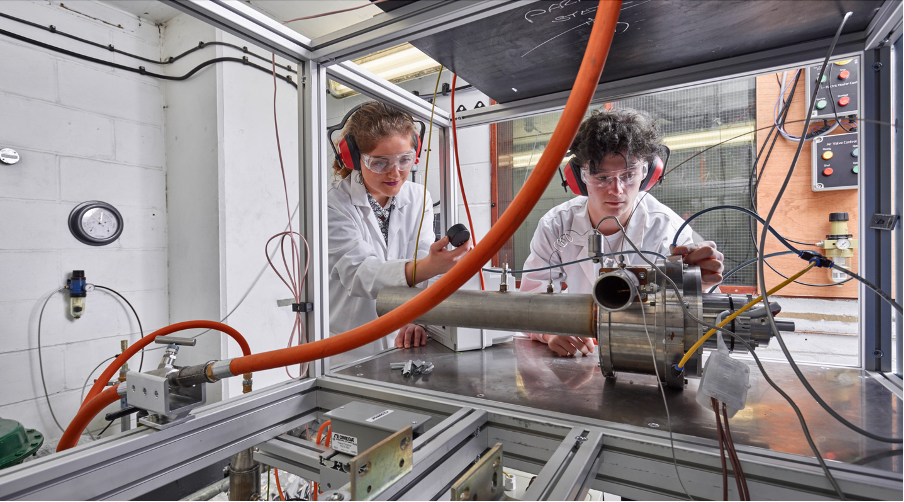
The university’s commitment to practical learning is further underscored by its state-of-the-art facilities. These include a dedicated civil engineering lab, comprehensive engineering workshops, an Industry 4.0 lab, and an AI lab. This environment is meticulously crafted to prepare students for impactful and meaningful work.
Your Direct Gateway to Industry Engagement
Upon joining the School of Science & Technology, students benefit from the dedicated support of the Corporate Relations & Employability Unit (CREU). This specialized team works exclusively within the school to forge connections between students and tangible industry opportunities.
Depending on the specific MSc program, these opportunities may include a 12-month professional placement, a three to six-month internship, or a three-month client project. Each of these pathways provides a vital platform for students to apply their academic learning to real-world challenges and cultivate the precise skills that employers actively seek.
The CREU further enhances the student learning experience by integrating industry input directly into the curriculum. This crucial bridge between academia and the professional world ensures that graduates possess a profound understanding of the demands, ethics, and practicalities of their chosen fields. They leave with a robust portfolio of skills and experiences, ready to make a significant contribution.







 Explore AI Teaching Tools
Comments (0)
Please login to comment
No comments yet
Be the first to comment on this article