
Future Educators Emerge: High School Programs Tackle Teacher Shortage Head-On
Imagine high school students, not just learning about history, but actively shaping it by stepping into the role of educators. This isn't a distant dream; it's a burgeoning reality in schools across the nation, as innovative programs are beginning to cultivate the next generation of teachers from within their own student bodies. The persistent and growing shortage of qualified educators, particularly in critical subjects and diverse communities, is prompting a fundamental re-evaluation of how we attract and train new talent for the K-12 system.
Cultivating Talent from Within: The "Grow Your Own" Movement
The landscape of education is facing a significant challenge: a widening gap between the number of teachers retiring or leaving the profession and the number of new candidates entering the field. This deficit is felt acutely in classrooms nationwide, impacting everything from specialized instruction in math and science to the crucial need for bilingual educators and special education professionals. In response, a powerful "grow your own" movement is taking root, focusing on nurturing potential teachers from the earliest stages of their academic careers.
This approach recognizes a fundamental truth: many educators find their calling in the communities where they grew up. By investing in high school students who show an aptitude and passion for teaching, school districts are building a sustainable pipeline of dedicated professionals who understand the unique needs and cultural contexts of their local students.
A Glimpse into the Classroom: High Schoolers as Mentors
At Bullard High School, a palpable energy filled the air as students Merrick Crowley and Craig Coleman led an interactive science lesson for a group of fifth graders at Gibson Elementary. The lesson, centered on the principles of density, involved a simple yet engaging experiment with eggs and various liquids. The high schoolers guided the younger students through predictions, observations, and explanations, fostering a dynamic learning environment.
This hands-on experience was part of Fresno Unified's Career Technical Education (CTE) Pathway course, a key component of their comprehensive Teacher Academy program. These programs are designed to offer students a realistic and rewarding introduction to the teaching profession, demonstrating its potential to alleviate the national teacher shortage.
The Urgency of the Shortage: Data and Demographics
The statistics paint a stark picture. Despite significant state and federal investments aimed at addressing the teacher shortage, many school districts continue to grapple with unfilled positions. This is exacerbated by an aging teaching workforce and increasing numbers of educators citing burnout and challenging classroom environments as reasons for departure. Fewer aspiring teachers are enrolling in preparation programs, further tightening the supply.
California, for example, has invested over a billion dollars in recent years to combat this issue, yet the struggle to recruit and retain teachers persists. The need is particularly acute for specialized roles, highlighting the importance of programs that can attract a diverse and well-prepared pool of candidates.
Building a Diverse Workforce: Representation Matters
Fresno Unified, the third-largest school district in California, serves a student population that is remarkably diverse, reflecting a broad spectrum of ethnic and cultural backgrounds. The district's leadership recognizes the profound impact that teachers who share similar backgrounds can have on student success. When students see themselves reflected in their educators, it fosters a sense of belonging and possibility.
Maiv Thao, manager of Fresno Unified's teacher development department, emphasizes this point: "We know how important that is, to have someone that understands them, someone that looks like them and is able to be that model of, 'If they can do it, then I can do it as well.'" This commitment to representation is a cornerstone of their strategy to build a more inclusive and effective teaching force.
"Grow Your Own" in Action: Programs Across the State
The success of these initiatives is not confined to a single district. Across California, and particularly in areas like San Joaquin County, a network of "grow your own" programs is expanding. These programs often involve strategic partnerships between school districts, county education offices, charter schools, and higher education institutions.
One such program, Teacher Education and Early College High (TEACH), offers students a unique pathway. Launched in 2021, it allows high school students to simultaneously earn college credits, graduating with both a high school diploma and an associate degree in elementary education. Further collaborations with universities can even lead to debt-free bachelor's degrees, creating a seamless transition into teaching preparation programs.
The TEACH Model: A Four-Year Journey
The TEACH program in Stockton exemplifies a structured, four-year approach to preparing students for the classroom. From their freshman year, students are immersed in pedagogical concepts, learning not just academic content but also how to effectively teach it.
- Curriculum Integration: Core subject areas are taught with a focus on evaluating teaching styles, enabling students to analyze and internalize effective instructional strategies.
- Pedagogical Training: Students take dedicated classes each year to explore various teaching methodologies, which they then apply in hands-on projects and lessons for elementary school students.
- Early Exposure: As freshmen, students begin by visiting elementary classrooms, serving as reading buddies. Sophomores collaborate with elementary teachers to design and implement activities, such as science experiments.
Fresno Unified's Multi-Faceted Approach
Fresno Unified has developed a robust Teacher Academy Program with multiple entry points designed to accommodate different student schedules and interests. These options provide flexible yet intensive preparation for aspiring educators.
- Saturday Program: This paid program, requiring a commitment of four Saturdays per semester, allows sophomores, juniors, and seniors to develop and deliver STEM lessons to younger students.
- Summer Program: A paid internship for grades 10-12, this program places students in summer school settings, offering valuable hands-on experience working directly with elementary students.
- CTE Course: This program, designed for juniors and seniors, focuses on developing essential professional skills such as communication, leadership, and cultural proficiency. It integrates teaching styles, lesson planning, and classroom instruction with practical experience in elementary classrooms.
Beyond Theory: Real-World Teaching Experiences
The effectiveness of these programs lies in their emphasis on practical application. Students are not just learning about teaching; they are actively teaching. This immersive experience provides invaluable insights into the realities of the classroom, both the challenges and the profound rewards.
In Marisol Sevel's CTE class at Edison High, students practiced essential classroom management techniques, learning to build rapport, provide positive reinforcement, and establish fair discipline. These are not abstract concepts but vital skills for creating a welcoming and productive learning environment. The program aims to equip students with the understanding of how to apply these principles as teachers, not just as learners.
Literacy Instruction: A Focus on Foundational Skills
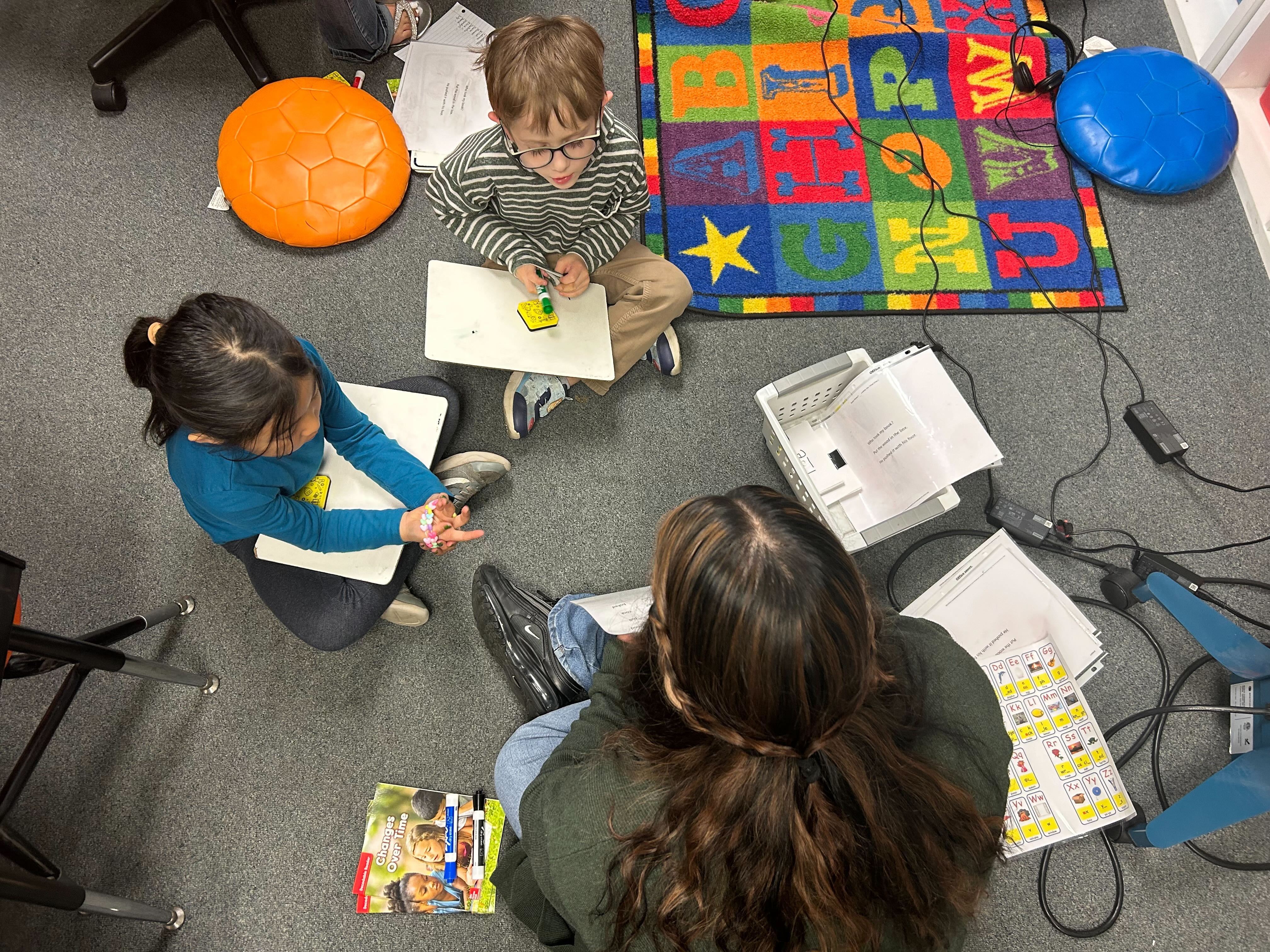
Fresno Unified's literacy team has been instrumental in training high school students in the science of reading. These students then apply this knowledge by supporting elementary students in small group and individual sessions. This direct engagement allows them to practice evidence-based teaching methods and see their impact firsthand.
At Gibson Elementary, Bullard High students like Alondra Pineda Martinez and Marianna Fernandez worked closely with first graders, reinforcing literacy concepts through targeted activities. Guided by the high schoolers, the younger students progressed through various learning stations, from identifying vowel sounds to engaging with books rich in specific phonetic patterns. This personalized support helps elementary students build confidence and improve their reading skills.
Mathematics Support: Bridging Learning Gaps
The impact extends to other subject areas as well. In Renae Pendola's second-grade classroom, high school students provided crucial math support. While the teacher circulated to answer general questions, the academy participants worked with small groups, helping students grasp complex concepts.
Students like Isabell Coronado and Rebecca Lima used hands-on tools, such as play money, to help second graders understand concepts like making change and managing imaginary budgets. These practical exercises not only reinforce mathematical principles but also build essential life skills related to financial literacy.
The "Aha!" Moments: Learning the Realities of Teaching
For the high school students involved, the experience is transformative. They are gaining a nuanced understanding of the teaching profession, moving beyond idealized notions to embrace the daily complexities and joys. Edison High student Alyssa Ortiz Ramirez notes, "It's preparing you for what's coming. We're not romanticizing teachers in here; we're being real."
The students quickly learn that engaging a diverse group of learners requires adaptability and creativity. Issac Garcia Diaz from Edison High shared his initial surprise at encountering different learning styles among elementary students, realizing that "everyone learned the same" was a misconception. This realization is a critical step in developing effective teaching strategies.
Building Connections, Fostering Growth
The benefits are mutual. Elementary students often thrive with the individualized attention and mentorship provided by the high schoolers. Hayley Caeton, a first-grade teacher at Gibson Elementary, observes, "It's not just academics. They're connecting. With an older kid, (the elementary students) just come out of their shell a little bit more." This connection fosters confidence and a more positive learning environment for the younger students.
For students like Hoover High junior Saraih Reyes Baltazar, who emigrated from Mexico, the program offered a unique opportunity to bridge language barriers. By explaining science concepts in both Spanish and English, she helped Spanish-speaking students feel more comfortable and encouraged them to use English more frequently. This dual-language approach is invaluable in supporting English Language Learners.
Addressing Individual Needs
Graduating seniors Vanessa Melendrez and Johnathon Jones from Hoover High provided tailored support to first graders at Wolters Elementary. Melendrez focused on helping students who were struggling with reading at grade level, while Jones assisted with comprehension. They recognized that a single teacher often cannot meet the diverse needs of every student simultaneously.
"There's only one teacher in the room, and there's over 20 students," Melendrez stated. "A teacher can't answer every question while they're up, teaching." This insight underscores the critical role that additional support staff, like future teachers, can play in ensuring all students receive the attention they need to succeed.
Developing Essential Skills for Life and Career
The Teacher Academy Program cultivates a wide range of skills that extend far beyond the classroom. Students develop strong public speaking and communication abilities through leading presentations and small-group lessons. These are foundational skills applicable to virtually any career path.
Bullard High's Marianna Fernandez described how the program helped her overcome shyness: "It's broken me out of my shy shell. It's taught me how to connect with people — classmates, teachers, students, everyone." This personal growth is a testament to the program's ability to foster confidence and interpersonal skills.
A Pathway to Future Success
For many students, these programs serve as a crucial testing ground for their career aspirations. Bullard High senior Marianna Fernandez, whose mother is a daycare provider, always enjoyed working with children. The Teacher Academy allowed her to explore her interest in education, ultimately leading her to consider teaching as a viable career option.
Kyrie Green, a junior at Hoover High who aspires to be a high school math teacher, found that leading a classroom, even in a simulated environment, was her greatest challenge. However, her participation in the program has empowered her to speak up and gain the confidence needed to pursue her teaching goals. She is now focused on graduating and obtaining her teaching certification.
The Long Game: Tracking Impact and Sustaining Momentum
Measuring the long-term impact of these high school pathway programs presents a unique challenge. The journey from high school graduation to obtaining a teaching credential and entering the profession spans several years, making immediate tracking difficult. However, anecdotal evidence and the experiences of program managers like Maiv Thao, who herself participated in a similar program, demonstrate their effectiveness.
"I did what these kids did; I know it works," Thao shared. "Little by little … we are making an impact." Her own career trajectory, from working in an elementary school as a high school student to becoming a teacher and now a program manager, exemplifies the enduring success of these initiatives.
Despite the growing enthusiasm for these programs, public perception of the teaching profession remains a hurdle. A recent survey indicated that only a small percentage of Americans would actively encourage young people to pursue a career in K-12 education. Programs like those in Fresno and San Joaquin County are working to shift this narrative, igniting passion and excitement for a profession that is currently facing significant challenges.
Whether these experiences solidify a student's decision to become a teacher or simply broaden their understanding of the profession's importance, the impact is undeniable. As Edison High student Alyssa Ortiz Ramirez articulated, "If I can be a teacher who gives students what they need, like attention, love or anything, then that's why I want to be a teacher." These programs are not just filling a workforce gap; they are cultivating a new generation of educators driven by a profound desire to make a difference in the lives of students.





 Explore AI Teaching Tools
Comments (0)
Please login to comment
No comments yet
Be the first to comment on this article