
Young Voters Make History: Oakland and Berkeley Empower 16- and 17-Year-Olds in School Board Elections
In a move poised to reshape local governance, two California cities are breaking new ground by allowing 16- and 17-year-olds to cast their ballots in crucial school board elections. This historic shift, years in the making, is finally empowering a new generation of students to directly influence the educational landscape that shapes their lives.
Seeds of Change: From Ballot Measures to Voter Registration
The foundation for this youth enfranchisement was laid through dedicated community efforts and voter-approved measures. In Berkeley, a significant majority of voters backed Measure Y in 2016, paving the way for younger residents to participate in local elections. Oakland followed suit in 2020 with Measure QQ, a similar initiative that expanded voting rights to 16- and 17-year-olds for school board races.
These ballot victories were not the end, but rather the beginning of sustained advocacy. Organizations like Oakland Kids First played a pivotal role, tirelessly working to ensure the Alameda County Registrar of Voters established a robust system for registering these young voters. Their persistent efforts have finally borne fruit, transforming policy into tangible action.
A Forum for the Future: Students Engage with Candidates
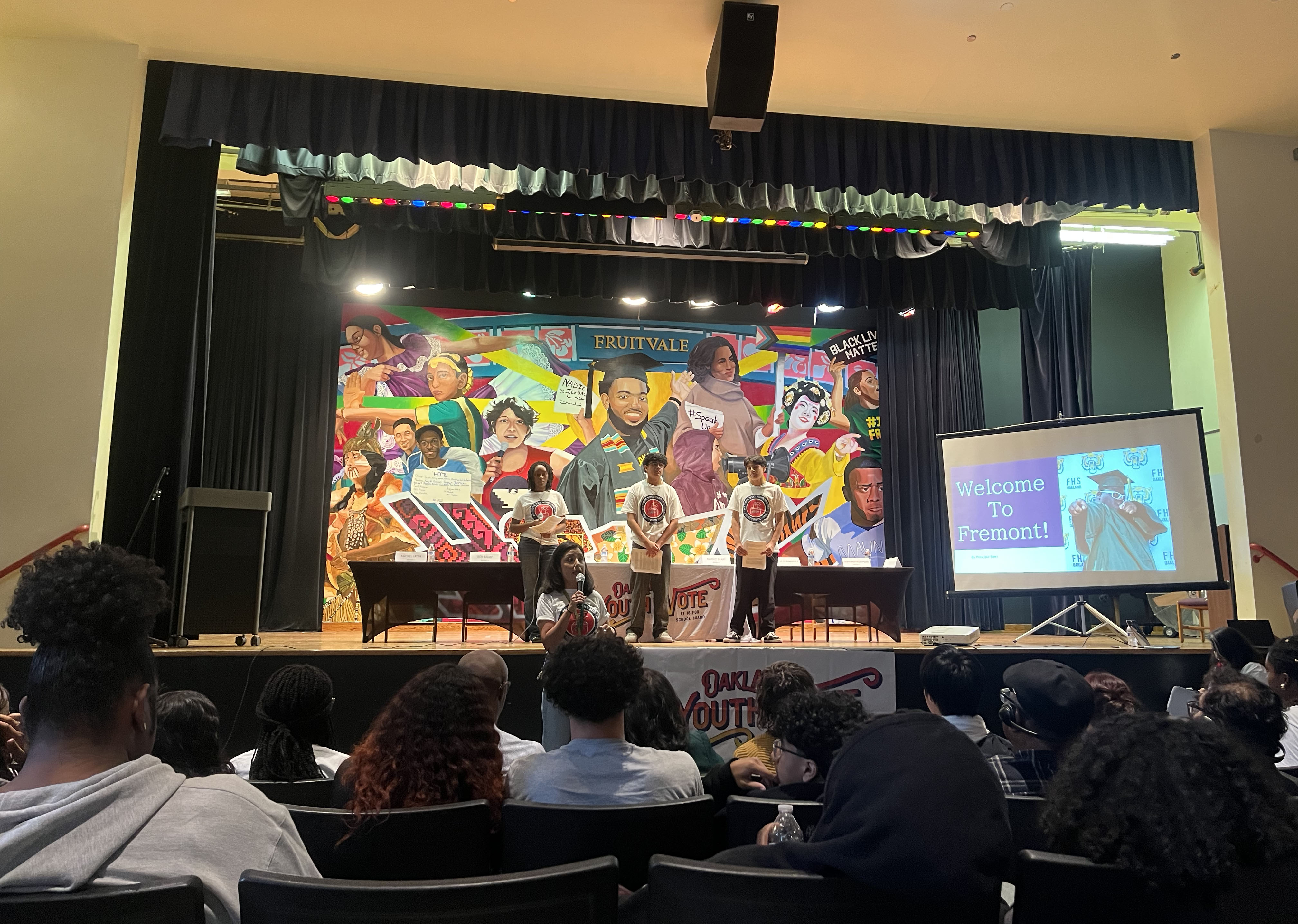
The energy was palpable at a recent candidate forum hosted by Fremont High School, an event meticulously organized by Oakland Youth Vote. Students, educators, administrators, and aspiring school board members converged to foster dialogue and, crucially, to register new voters. The air buzzed with anticipation as candidates from key Oakland Unified School District (OUSD) districts presented their platforms.
Student moderators, a testament to the youth leadership being cultivated, expertly guided the proceedings. They introduced candidates, outlined the voting process, and underscored the profound impact of student voices in shaping educational policy. This was more than just a forum; it was a declaration of intent from a generation ready to be heard.
Amplifying Student Concerns
The student moderators articulated a clear vision, emphasizing that this historic voting opportunity was not a gift, but a hard-won right. Their message resonated deeply: "Your vote has the power to bring us closer to your vision and make your dream a reality." This sentiment was backed by extensive student input, with over 1,400 survey forms gathered across the district highlighting key priorities.
These priorities centered on critical issues such as improved access to health and wellness services, the development of community-centered schools, and the integration of essential life skills into the curriculum. The candidates were then challenged with student-led questions addressing equitable resource distribution, comprehensive mental health support, school safety, and the persistent issue of budget deficits.
Youth Voices in Action: The All City Council's Drive
Ariana Astorga Vega, a senior at Oakland Tech and a member of the All City Council (ACC), and sophomore Amina Tongun, also with the ACC, were instrumental in championing this new voting right. The ACC, composed of 11 peer-elected high school students, serves as a vital conduit for student concerns within OUSD.
Even before reaching the voting age, Tongun expressed her commitment to supporting the local youth vote, recognizing its unique significance. "I feel like it’s really special because we get to vote as young people and our voices are being heard," she stated. Vega echoed this sentiment, highlighting her appreciation for being "a part of that change."
Their advocacy extended beyond the forum, involving strategic social media campaigns and widespread distribution of flyers proclaiming, "Breaking News: 16-17 year-olds can now vote!" Despite encountering challenges such as student disinterest stemming from a lack of awareness about the voting process and its implications, Vega and Tongun remain optimistic, trusting in the community's ongoing efforts to educate and motivate their peers.
Community Partnerships: Fueling the Youth Vote Movement
Maya Rapier, an organizer with Oakland Kids First, has been a driving force behind the youth vote initiative. Her organization's multifaceted approach includes distributing voter registration forms, raising awareness about events like the candidate forum, and integrating a new voting curriculum into OUSD schools. These efforts have already led to the registration of over 1,000 student voters.
Rapier's passion stems from a deep understanding of Oakland's history of underserved students. "Students know their own experiences best," she emphasized, "so for them to be able to be in the schools real-time, notice an issue, take that to the representative, and know that they have the power to bring attention to it, means a lot."
Nidya Baez, Principal of Fremont High School, shares this vision, noting her students' sense of responsibility to represent families and community members who may not have the opportunity to vote. She has actively worked to dismantle barriers, including the "fear factor," by collaborating with local coalitions to deliver classroom presentations, host lunchtime tabling events, and organize forums like the one at Fremont High.
Berkeley's Parallel Path: Cultivating Civic Engagement
Berkeley High School (BHS) has mirrored these efforts, with students and faculty collaborating to drive youth voter registration and education. The BHS Civic Leaders Club, with support from John Villavicencio, Director of Student Activities, organized a school board candidate forum that allowed students direct access to candidates and a platform for their questions.
Beyond organized forums, various BHS student groups have taken the initiative to distribute mail-in voter registration forms directly to classrooms. Villavicencio also highlighted the role of Josh Daniels, a former OUSD and Berkeley Unified school district board member, who facilitated weekly Zoom calls connecting student leaders, organizations, and nonprofits to share strategies and progress across different school districts.
A Tailored Curriculum for Berkeley Students
During one of these collaborative meetings, Oakland Youth Vote shared a comprehensive curriculum designed to educate students about the functions of the school board, introduce the OUSD board, and emphasize the importance of youth voting. Inspired by this resource, Villavicencio encouraged Berkeley to develop a similar program.
Allyson Bogie, a BHS teacher librarian, stepped up to the challenge, creating a condensed, two-day curriculum specifically tailored for Berkeley Unified. After a thorough review process involving district leadership, student representatives, teachers, and administrators, the curriculum was made available to educators, providing them with an accessible tool to discuss youth voting and registration.
"I wanted to make sure any teachers who wanted a tool to talk about youth voting, and getting kids registered, and the history of it, had something really easy to use," Bogie explained. "I believe it's important for kids to vote, and I want to support the teachers, and that’s part of my role as a librarian."
Navigating Hurdles: Registration Challenges and Student Apathy
Despite the dedicated efforts, Villavicencio acknowledged the significant hurdles in motivating students to register and fully grasp the significance of this opportunity. Complications arose from students not knowing their Social Security numbers, a necessary piece of information for registration. Furthermore, many students expressed unfamiliarity with the school board and its functions, making it challenging to convey the impact of their vote.
Villavicencio estimated that BHS could potentially register around 1,000 students out of approximately 1,800 eligible individuals. As of late October, 491 students had successfully registered, a number he described as "slightly disappointing."
While acknowledging that some students are deeply passionate about activism and community engagement, Villavicencio observed a prevailing sentiment of "lukewarm" interest among the broader student body. Bogie noted that while students don't necessarily view the opportunity negatively, a significant portion simply "aren’t that interested."
Looking ahead, Bogie expressed a strong hope for "continuing student momentum" in future elections. Villavicencio concluded with a sentiment that encapsulates the ongoing journey: "It’s commendable, what's being done. And it’s crazy to say that there could be a lot more done." The path to full youth civic participation is still unfolding, but the commitment to empowering the next generation of voters is undeniable.






 Explore AI Teaching Tools
Comments (0)
Please login to comment
No comments yet
Be the first to comment on this article