
The economic squeeze on American families, particularly those with young children, has reached a critical point this summer. With rising costs for nearly everything, a significant number of households are experiencing financial hardship that rivals, and in some cases surpasses, the early days of the pandemic. This pervasive economic strain is not just a number on a balance sheet; it’s deeply impacting the emotional well-being of both children and their caregivers, creating a challenging landscape for educators striving to support every student.
The Cascading Costs Are Drowning Household Budgets
A recent survey by the National Parents Union painted a stark picture: two-thirds of parents with children in kindergarten through fifth grade believe the nation's economic conditions are worsening. The overwhelming majority cited housing, basic goods, healthcare, childcare, and extracurricular activities as significant problems. It's a multi-pronged assault on family finances, leaving many feeling perpetually behind.
Magda Zalewska, a mother of three young children, exemplifies this struggle. She yearns to enroll her older two in soccer, but the expense is simply out of reach. Daily trips to the grocery store and fueling her car are a constant source of anxiety, leaving no room for savings in case of emergencies. Her desire to provide a fulfilling life for her children clashes with the relentless rise in expenses.
“I’m already working from sun up to sun down,” said Zalewska, who works as an early intervention therapist. “I’m already stretched so thin, and it’s frustrating because you want to give your kids this life but you can’t keep up with expenses.”
Even with career advancement, Zalewska finds herself in a perpetual paycheck-to-paycheck cycle. She has relied on financial assistance programs like WIC, SNAP, and Medicaid in the past, but recent changes mean she is losing Medicaid and anticipates losing SNAP benefits soon. The thought of losing SNAP is particularly distressing, as she admits she can barely recall the last time she had fresh fruit, prioritizing her children's nutrition above her own.
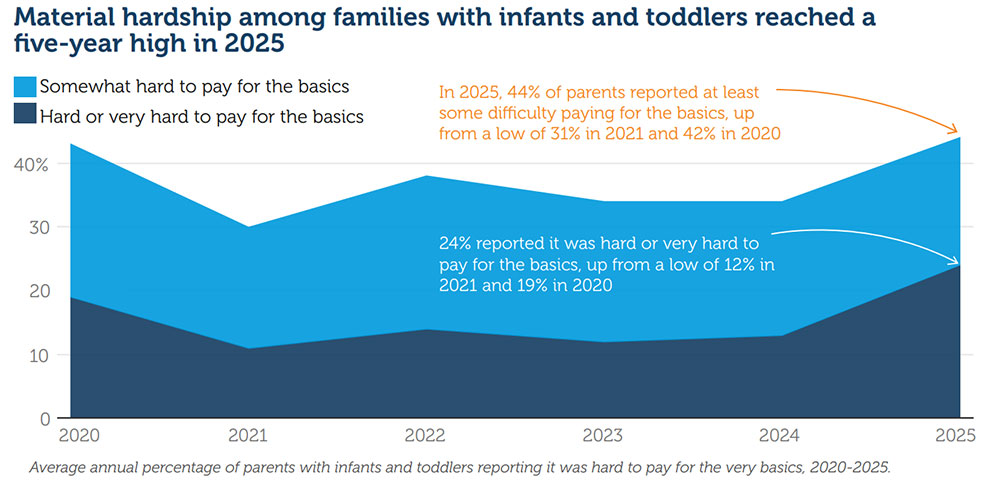
The impact of these financial pressures extends beyond mere inconvenience. A report by the nonprofit Zero to Three, compiling data from Stanford’s RAPID Survey Project, revealed that in 2025, 44% of families with infants and toddlers reported difficulties affording basic necessities like food and housing. This figure is higher than the 42% who reported similar struggles in 2020, during the initial COVID-19 crisis.
The Emotional Toll on Children and Caregivers
Economic hardship doesn't exist in a vacuum; it casts a long shadow over family dynamics and a child's development. Samantha Melvin, director of policy research at Zero to Three, highlights the interconnectedness of financial stress and emotional well-being. Parents grappling with affording rent or putting food on the table are more likely to experience heightened anxiety, depression, and stress, which can inevitably affect their interactions with their children.
This constant state of uncertainty and deprivation can have lasting consequences for young children. While children are inherently resilient, their resilience is nurtured and fostered within stable, supportive family relationships. When parents are forced to work multiple jobs, navigate complex benefit systems, or rely on food banks, the precious time available for quality interaction with their children is significantly diminished.
Melvin emphasizes, “If you’re afraid of paying for rent, putting food on the table, it may impact how you’re interacting with your baby or [how] your baby is perceiving that stress. It can have long-term consequences and harm for babies to be living in this constant place of uncertainty and deprivation, unstable and inconsistent relationships.”
Magda Zalewska’s experience underscores this point. Working approximately 65 hours a week to manage her family’s finances means she "barely sees" her children and is missing their milestones. She describes her current state as "fight or flight mode," with her nervous system in overdrive and an exhaustion that permeates her very being. This is the reality for many parents who are stretched to their absolute limit.
Childcare Costs: A Major Financial Hurdle
Beyond basic necessities, the soaring costs of childcare present another significant financial barrier for families with young children. Clara Busse, a mother in Philadelphia with an infant and a three-year-old, doesn't face the same level of struggle with basic needs but finds the annual childcare expenses for her two children, totaling around $35,000, to be a substantial sacrifice.
Busse notes that this is a shared concern among her peers: “Every friend I have with young children is facing the same challenges. We need policies that make sense for young families. It’s really basic stuff. People are really frustrated.” This sentiment reflects a widespread call for systemic support that acknowledges the realities faced by modern families.
Navigating the Classroom in Challenging Times
For educators, understanding these external pressures is crucial for fostering a supportive and effective learning environment. When students come to school carrying the weight of household financial instability, it can manifest in various ways, including changes in behavior, academic performance, and social-emotional engagement. Recognizing the signs and offering appropriate support can make a significant difference.
Here are some actionable insights for educators:
- Increased Empathy and Understanding: Recognize that students may be experiencing stress at home due to financial hardship. Approach interactions with patience and a non-judgmental attitude.
- Flexible Approaches to Assignments: Consider the potential impact of home circumstances on homework completion. Offer alternatives or extensions when appropriate, and focus on learning rather than punitive measures for missed work.
- Promote a Sense of Community: Create a classroom environment where students feel safe, supported, and connected. This can help mitigate some of the feelings of isolation and stress they might be experiencing.
- Utilize Engaging Learning Tools: Incorporate activities that can offer a mental break and foster collaboration. Tools like MentofyCove classroom games, such as trivia or word search games, can provide fun, interactive learning experiences that are low-stakes and enjoyable for students.
- Be Aware of School Resources: Familiarize yourself with and inform families about available school and community resources, such as free lunch programs, after-school tutoring, or counseling services.
- Streamline Administrative Tasks: With increased demands on educators’ time, leveraging tools for efficient lesson planning and assessment can be invaluable. Mentofy Academia offers AI-powered tools for lesson planning and creating assessments, freeing up valuable time to focus on student needs.
The current economic climate places immense pressure on families, directly impacting the well-being of children and, by extension, the classroom dynamic. As policymakers grapple with solutions, educators remain on the front lines, providing a stable and nurturing environment for students navigating these turbulent times. By fostering empathy, adapting instructional strategies, and leveraging available resources, educators can continue to be a vital source of support and opportunity for all children.
“Families are having such a hard time,” Melvin said. “They shouldn’t have to be working so hard, but the way they keep showing up for their babies — we need our policymakers and elected officials to be showing up for them.”
The challenges families face are multifaceted and deeply impactful, underscoring the urgent need for comprehensive support systems. As educators, our role extends beyond academic instruction; it involves creating an environment where every child feels seen, valued, and supported, regardless of the economic pressures their families may be enduring. By acknowledging and addressing these realities, we can better equip our students for success and well-being.







 Explore AI Teaching Tools
Comments (0)
Please login to comment
No comments yet
Be the first to comment on this article