
Rural Indiana District Bets on "Nature's Gift" Microschools to Reverse Enrollment Slide
In a quiet corner of Indiana, a bold experiment is unfolding. As traditional public schools grapple with declining student numbers, one rural district is turning to a radical reimagining of the classroom: small, flexible, and deeply personalized learning environments designed to capture families seeking alternatives. This innovative approach, centered around a unique public microschool named "Nature's Gift," aims to not only re-engage students but also to stem the tide of families opting for homeschooling or private education.
A New Leaf for Learning: The Genesis of Nature's Gift
Seventh grader Taitym Lynch, 13, now navigates her school day with a newfound sense of agency. Each morning, she crafts her schedule on her school laptop, prioritizing math when her mind is sharpest. Her learning journey involves logging into online platforms for core subjects and collaborating with a "class guide"—a teaching assistant—to delve into topics like complex food chains. Lynch, who found the pressures of a traditional public school overwhelming and the experience of virtual learning isolating, has found solace and engagement at Nature's Gift.
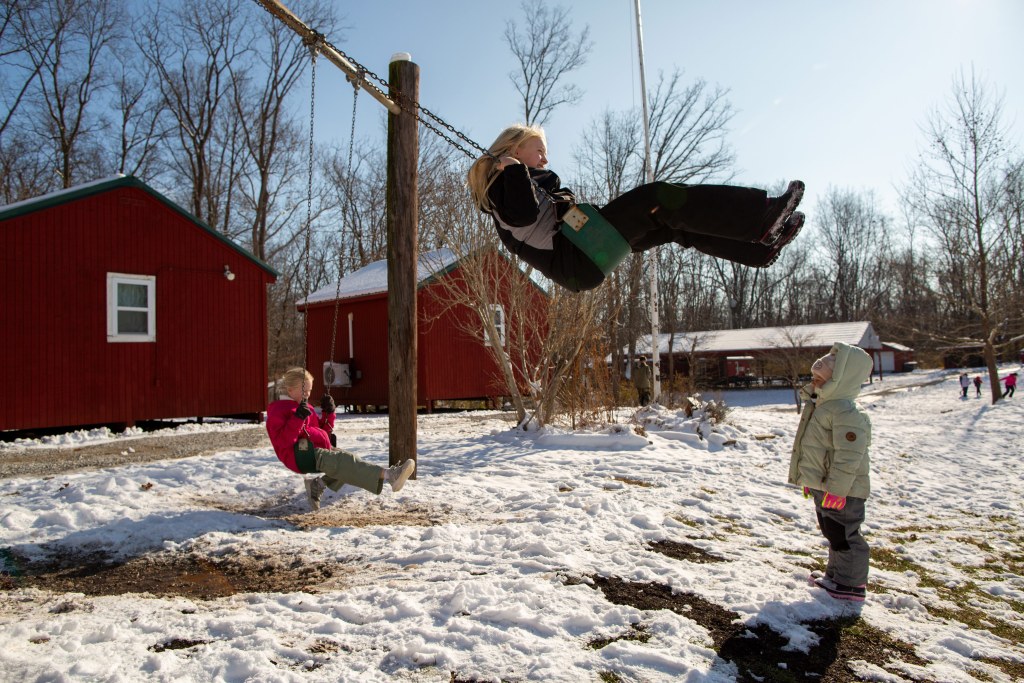
This unique institution, nestled on 12 acres of wooded grounds, offers a stark contrast to the sprawling campuses many students are accustomed to. With just 64 students spanning kindergarten through 12th grade, and a dedicated team of three licensed teachers and several class guides, the environment fosters a level of individual attention that was previously unattainable for students like Lynch.
George Philhower, superintendent of Eastern Hancock Community Schools, a district of 1,200 students located about 30 miles east of Indianapolis, spearheaded the initiative. For years, he had watched his district’s financial health erode as families, unable to find suitable educational fits within the public system, increasingly turned to homeschooling. The national conversation around microschools, gaining momentum particularly during the pandemic, offered a potential solution.
The Microschool Movement: A Public Pivot
Microschools, characterized by their multiage learning environments and emphasis on personalized, often less-regulated instruction, saw a surge in popularity as families sought alternatives to traditional schooling. Estimates suggest that between 750,000 and 2 million students now attend these types of learning settings, which often operate as privately run entities.
Philhower, however, envisioned a public pathway for this model. He secured approval from the state's charter school board to establish the Indiana Microschool Collaborative, a network designed to incubate and expand microschools across the state. Operating as public charter schools, these institutions offer greater flexibility in curriculum and operations compared to traditional public schools, while still being accountable to public oversight.
Nature's Gift, the flagship school of this collaborative, quickly demonstrated the demand for such an approach. The school, initially designed to accommodate 50 students, received so many applications that it expanded its capacity twice and still maintains a waiting list. Philhower’s ambitious vision extends to 2030, with plans to launch at least 10 more microschools statewide, aiming to enroll approximately 6,000 students.
Beyond the Traditional: What Makes Microschools Different
The appeal of Nature's Gift lies in its departure from conventional educational structures. Students advance based on demonstrated ability and interest, rather than solely on age or grade level. This mastery-based progression allows students to accelerate through subjects they grasp quickly and spend more time on areas where they need additional support.
The physical environment itself is a key component of the learning experience. Located on a former youth camp, the school utilizes its 12 acres of natural surroundings. Students often incorporate outdoor learning into their day, with opportunities for nature hikes and lessons conducted amidst the trees. This integration of nature into the curriculum is not merely aesthetic; it’s a deliberate strategy to foster engagement and well-being.
Erin Wolski, the lead educator at Nature's Gift, embodies the school's ethos. With over 16 years of experience in traditional public schools, she sought a more responsive and personalized approach. She partnered with Philhower to bring Nature's Gift to life, drawing on her expertise to manage daily operations and lead diverse age groups. Her role often involves a dynamic mix of direct instruction, administrative tasks, and facilitating outdoor learning experiences.
The school's funding model relies on state per-pupil allocations and grants specifically available to charter schools, providing a crucial financial backbone. This public funding allows Nature's Gift to offer its unique educational model without the tuition barriers often associated with private alternatives.
A Partnership in Education: Parents and Educators
The relationship between parents and educators at Nature's Gift is a cornerstone of its success. Unlike the more distant interactions sometimes found in larger public schools, parents are actively involved as "co-captains" in their children's educational journeys. This collaborative spirit is particularly evident in the hybrid learning models, where parents often supplement classroom instruction with homeschooling sessions.
Danielle Maroska, whose daughter Kinzie attends Nature's Gift, initially chose homeschooling to accommodate her daughter's demanding gymnastics schedule. While homeschooling provided flexibility, Kinzie began to miss the social interaction and community aspect of school. Nature's Gift offered a solution, allowing Kinzie to attend full days on Mondays and half days throughout the week, with Maroska continuing to homeschool her during afternoons when she’s not at the gym.
Maroska has observed a significant shift in Kinzie's attitude towards learning. What was once a struggle with reading has transformed into a genuine enjoyment, with Kinzie now eagerly picking up books. This transformation, Maroska believes, stems from the school's emphasis on student initiative and self-directed learning, mirroring aspects of a college environment.
Jen Shipley, another parent, initially harbored skepticism about public education for her homeschooled nine-year-old. However, the flexibility and close teacher relationships at Nature's Gift won her over. Her daughter, Elliana, attends the school approximately three days a week, with Shipley providing homeschooling for the remaining two. This arrangement fosters a sense of partnership, where Shipley feels actively engaged in her daughter's education rather than simply handing her over to the school system.
Navigating Accountability: The Public Charter Challenge
As a public charter school, Nature's Gift is subject to state testing requirements, a factor that distinguishes it from many private microschools. The initial results from state benchmark tests in November presented a mixed picture. While 70 percent of students scored below proficient in math, 30 percent scored below proficient in English and language arts. Educators at the school emphasize that it is too early to draw definitive conclusions, given the school's recent opening and the diverse educational backgrounds of its students.
Data on the performance of microschools nationwide is limited, with only about a third of those affiliated with the National Microschooling Center participating in state tests. This lack of comprehensive data raises concerns among some researchers about how public microschools will be evaluated. There is a worry that increased reliance on standardized testing could lead to a narrowing of the curriculum, potentially sacrificing the very innovation that defines the microschool model.
Lauren Covelli, an associate policy researcher at Rand, highlights the potential tension between high-stakes accountability and the flexible, student-centered approach of microschools. She notes that if public microschools are increasingly judged by test scores, they may be compelled to alter their operations to prioritize performance on those metrics, potentially diminishing their unique strengths.
A Glimpse into the Future: Expanding Options
Despite the challenges of accountability and the nascent stage of the microschool movement, the outlook for Nature's Gift and similar initiatives remains optimistic. Educators like Erin Wolski see these schools not as a replacement for traditional public schools, but as a vital expansion of options within the public education system. The growing demand from parents seeking diverse learning experiences underscores the need for such flexibility.
The success of Nature's Gift, as evidenced by its waiting list and the enthusiastic engagement of its students and parents, suggests a promising path forward. As George Philhower continues to advocate for the Indiana Microschool Collaborative, the model is attracting interest from school district leaders and education organizations both within and beyond the state. This growing momentum indicates a broader recognition of the need to adapt public education to meet the evolving needs of students and families in a rapidly changing world.
The core principle driving this innovation is simple yet profound: families and students have varied needs and aspirations. By offering a public option that embraces personalization, flexibility, and a connection to nature, initiatives like Nature's Gift are carving out a new space in the educational landscape, demonstrating that a "gift" of learning can indeed be found in the embrace of nature and tailored instruction.




 Explore AI Teaching Tools
Comments (0)
Please login to comment
No comments yet
Be the first to comment on this article