
East Malaysia's Air Connectivity Sees Glimmers of Hope as Troubled Aircraft Rejoin Fleet
Aviation enthusiasts and daily commuters across Sarawak and Sabah are watching closely as a key regional airline signals a turning point in its operational struggles. Following a period marked by significant flight disruptions, the carrier is reporting a gradual return to normalcy, a development that could significantly ease the burden on communities reliant on its vital air links.
Restoring the Skies: A Multi-faceted Recovery Effort
The airline's chief executive, Megat Ardian Wira Mohd Aminuddin, has publicly acknowledged the challenges faced, stating that the gradual return of previously grounded aircraft to active service is a positive indicator. This influx of operational capacity is central to the airline's strategy to swiftly re-establish dependable service across its extensive network.
Megat Ardian Wira emphasized the airline's unwavering focus on enhancing reliability. "We are already witnessing tangible improvements as aircraft are progressively brought back into service," he stated. "Our progress is steady, and our primary objective remains the swift restoration of full operational stability."
He further assured the public that performance metrics are under constant scrutiny. "We will continue to monitor our performance closely, ensuring passengers are kept informed with timely updates as the situation continues to improve," he added, underscoring a commitment to transparency during this recovery phase.
Taking the Reins: Accountability in the Face of Disruption
The airline has faced considerable public attention and scrutiny due to recent delays and cancellations impacting numerous routes within East Malaysia. These disruptions have understandably caused concern among passengers, particularly those in rural and remote areas who depend heavily on the airline's service for essential travel and connectivity.
Addressing the crucial issue of accountability, Megat Ardian Wira asserted the airline's complete ownership of the service provided. "AirBorneo accepts full responsibility for the service we deliver," he declared. "When a flight is delayed or cancelled, our passengers rightly expect answers directly from us."
He highlighted the unique position the airline occupies as the sole operator of rural air services connecting many communities. "As the sole Rural Air Services operator linking numerous communities across Sarawak and Sabah, we deeply understand the critical importance of maintaining reliable connectivity," Megat Ardian Wira explained.
While acknowledging the complex web of industry partners, including maintenance providers, parts suppliers, and aircraft manufacturers, Megat Ardian Wira stressed that from the passenger's perspective, the airline is the singular point of contact. "Passengers do not perceive these distinctions; they see AirBorneo," he noted. "This is precisely why our efforts are concentrated on resolving these issues, collaborating closely with our partners, and restoring reliability as rapidly as possible."
Unpacking the Challenges: Aircraft Availability at the Forefront
Delving into the root causes of the recent operational setbacks, Megat Ardian Wira identified aircraft availability as the principal hurdle. A significant number of aircraft were simultaneously undergoing essential maintenance and technical rectifications, leading to a temporary reduction in deployable fleet capacity.
This situation, he explained, was a confluence of several factors. These included the complexity of repair requirements, challenges in sourcing necessary spare parts, and broader supply chain constraints that are currently impacting the global aviation sector. The interconnected nature of the industry means that disruptions in one area can have cascading effects.
In response, the airline has intensified its collaborative efforts with maintenance and engineering partners. "We have significantly ramped up our efforts with our maintenance and engineering partners to ensure aircraft are returned to service safely and efficiently," Megat Ardian Wira stated. "This includes expediting repair work, securing vital spare parts, and conducting daily reviews of aircraft availability."
The strategic priority is clear: to bolster capacity and minimize passenger inconvenience. "Our priority is unequivocally focused on restoring our operational capacity, improving service reliability, and minimizing disruptions for our passengers," he affirmed.
Fortifying the Future: Strategic Reviews and Enhanced Partnerships
In direct response to the recent challenges, AirBorneo is undertaking a comprehensive review of its maintenance support arrangements. This includes a deep dive into its spare parts provisioning strategy and a re-evaluation of service level expectations with its various partners. The aim is to build a more robust and resilient operational framework.
Furthermore, the airline is actively exploring additional support avenues and alternative sourcing mechanisms. This proactive approach is designed to enhance operational flexibility and significantly reduce the likelihood of similar disruptions recurring in the future. Such measures are crucial for long-term stability.
Just recently, the airline reiterated its commitment to securing faster and more dependable access to critical components. This involves actively seeking out additional and alternative partners for its maintenance and parts supply chain. The goal is to ensure a consistent flow of necessary resources for its operations.
Crucially, the airline has reaffirmed that safety remains its paramount concern. Any aircraft requiring technical attention will only be reintroduced into service after rigorously meeting all stringent operational and engineering requirements. This commitment to safety is non-negotiable.
A Glimpse Ahead: Expanding Horizons with Jet Operations
Looking beyond the immediate operational recovery, Megat Ardian Wira provided an update on the airline's ambitious plans for expansion. The planned introduction of jet operations is proceeding on schedule and is being managed as a distinct initiative, separate from the current turboprop fleet's operational needs.
The jet program possesses its own unique set of operational, technical, regulatory, and readiness requirements. These are being meticulously managed by dedicated teams, ensuring that this new venture does not detract from the efforts to stabilize existing services. This compartmentalization is key to managing complexity.
He reiterated the airline's steadfast commitment to safety. "Safety remains our absolute top priority, and we will not compromise on this principle," Megat Ardian Wira stated emphatically. "We will only commence jet operations once we are entirely confident that all regulatory approvals, operational requirements, and safety standards have been fully met."
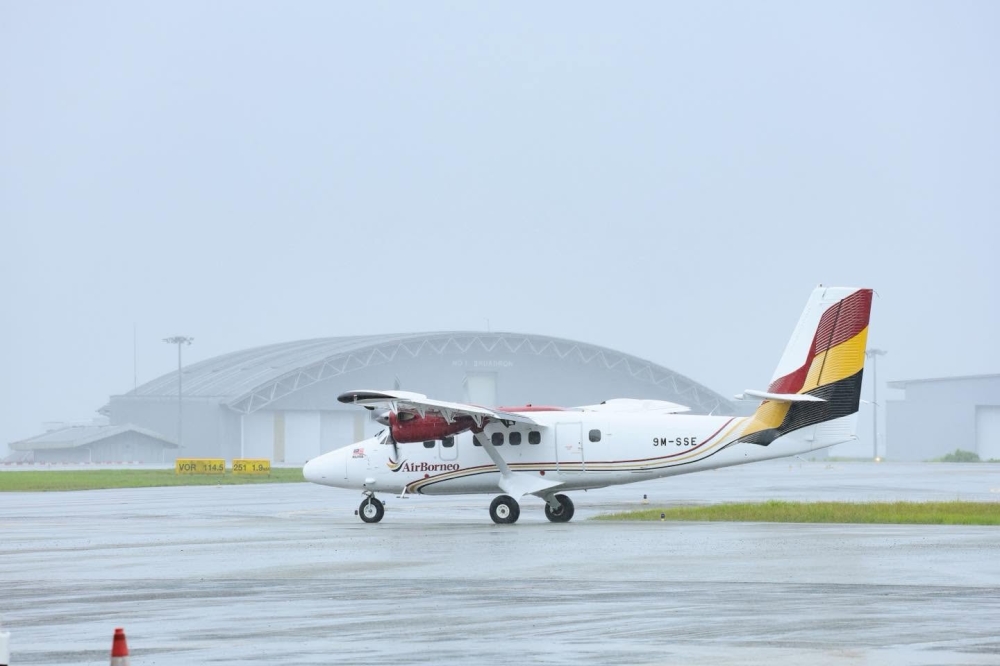
The airline remains dedicated to ensuring a safe, orderly, and successful launch of this new service. Simultaneously, it continues its vital work in improving the reliability of its existing operations, demonstrating a dual focus on growth and foundational stability. AirBorneo currently serves 21 destinations, with key operational hubs in Kota Kinabalu and Miri, utilizing a fleet comprising eight ATR 72-500 aircraft and six DHC-6-400 Twin Otter aircraft.







 Explore AI Teaching Tools
Comments (0)
Please login to comment
No comments yet
Be the first to comment on this article