
Michigan's Bold Gambit: How Pizza Flyers and Free Tuition Aim to Lure Men Back to College
In a quiet corner of northern Michigan, a unique campaign is unfolding, one that involves pizza boxes, targeted outreach, and a significant state investment. The goal? To reverse a concerning trend: fewer men are pursuing higher education, a gap that threatens the state's economic future and the earning potential of its male workforce.
Maggie Bacon, coordinator for BEST Benzie County, is on the front lines of this effort. Recently, she plastered flyers promoting an upcoming education and training fair onto over 500 pizza boxes. Her reasoning is simple yet strategic: Friday night pizza orders often reach working-age men relaxing after a week's work.
This initiative is part of a broader, statewide push in Michigan to cultivate a stronger college-going culture. The state faces a critical shortage of skilled workers, with data revealing that only 51.6 percent of working-age adults possess education beyond high school, the lowest rate in the Midwest.
The Widening Gender Divide in Higher Education
The decline in male college enrollment is stark. Despite clear evidence that postsecondary credentials lead to higher earnings and greater employment stability, men are increasingly opting out of traditional degree programs and vocational training.
This trend has prompted significant action from state leadership. Seven years ago, Governor Gretchen Whitmer set an ambitious goal: to increase the proportion of adult residents with education beyond high school to 60 percent by 2030. The Michigan Reconnect program, launched in 2021, offers free community college tuition for residents 25 and older, a crucial step in removing financial barriers.
However, the program's uptake has skewed heavily towards women. State data for 2024-25 indicates that women in Michigan earn degrees or certificates at a rate 35 percent higher than men. This mirrors a national pattern, where millions more women than men completed credentials in the 2024-25 school year.
A State-Level Mandate to Engage Men
Recognizing this persistent disparity, Governor Whitmer issued an executive order in April 2025, directing increased attention and resources toward encouraging men to enroll in certificate programs and college. The order specifically aims to bolster support for local organizations like BEST Benzie County.
“I always will continue to be a strong supporter of women’s rights and freedoms, but that’s never going to stop me from caring about and fighting for men, too,” the governor stated upon announcing the initiative. While the plan's full implementation has faced delays due to budget considerations, and the state is not currently on track to meet its 2030 target, advocates remain hopeful.
Michigan is not alone in this focus. A growing number of state leaders are concentrating on male success. In Maryland, Governor Wes Moore is championing an initiative to recruit and retain male teachers, while Utah's Governor Spencer Cox is prioritizing male mental health and educational opportunities.
Societal Shifts and Perceptions of Masculinity
Experts suggest that the declining appeal of college among some men is linked to evolving societal norms. Ryan Wells, director of the Center for Student Success Research at the University of Massachusetts Amherst, points to certain online movements that may inadvertently devalue higher education.
“The idea of being a man is more about getting a job and supporting your family,” Wells explains. “It’s sort of rational and logical to see why college could — in many cases, should — play a part, but that’s not the way it gets portrayed.” This perception creates a significant hurdle for state and local efforts to re-engage men in educational pursuits.
Changing these deeply ingrained societal attitudes is a formidable challenge. Wells notes that such "societal attitude structures" are notoriously difficult to alter, requiring sustained and multifaceted interventions.
Stories of Second Chances: Tyler Kniss's Journey
Tyler Kniss embodies the type of individual these outreach programs aim to reach. His early life was marked by struggles, including not finishing high school and serving time for minor offenses. Becoming a father later motivated him to seek stable employment and pursue a GED.
Now 33, Kniss works as a manufacturing operations manager. However, he realized that career advancement required more than experience and certifications. To unlock further opportunities, a college degree became essential.
A suggestion from his employer led him to Northwestern Michigan College, where an instructor helped him craft a career plan and introduced him to the Reconnect scholarship. He is now pursuing a business administration degree while working full-time, with plans to transfer to the University of Michigan for his bachelor's.
The Reconnect scholarship covers his associate degree tuition, and his employer's education policy will likely fund his bachelor's, illustrating a powerful synergy between state aid and employer support.
State Agencies Mobilize for Male Success
Michigan's Department of Lifelong Education, Advancement, and Potential (MiLEAP) is actively engaged in this mission. Jason Wilson, deputy director of strategic talent preparation, emphasized the "urgency and ambition to act on this" at a recent state-organized event focused on male success.
The state has conducted private focus groups with men across Michigan, organized job training fairs, and hosted career pathway events for various age groups. The findings from these efforts are expected soon, according to MiLEAP spokesperson Aundreana Jones-Poole, promising to inform future strategies.
Governor Whitmer is also proposing to lower the Michigan Reconnect Program's age eligibility from 25 to 21, potentially expanding its reach. Partnerships with organizations like the Michigan College Access Network are fostering work-based learning opportunities, including apprenticeships that blend classroom instruction with on-the-job training.
Navigating the Numbers: Progress and Persistent Gaps
While over 200,000 Michiganders have applied to the Reconnect program, this figure falls short of the state's 2030 goal. Between 2018 and 2024, the percentage of adults with a degree or credential in Michigan increased by a modest 2.7 percentage points.
The Class of 2025 saw only 54.6 percent enroll in college within six months, marking a decade-low. These trends are not unique to Michigan, as many states experienced a dip in college enrollment during the pandemic followed by a slow recovery.
Nationally, public four-year undergraduate enrollment saw a 1.4 percent increase in fall 2025. However, the challenge of designing effective, gender-specific policies remains. Wells notes that programs explicitly targeting one gender can sometimes face public scrutiny or political challenges.
Local Innovations: Benzie County's Community-Driven Approach
In Benzie County, where approximately 45 percent of residents hold degrees, local leaders have set their own target: over 2,000 new degrees or credentials by 2030. Since June 2024, around 400 residents have earned certificates, according to Traverse City Mayor Amy Shamroe, who leads the industry-focused arm of the Northern Michigan Attainment Collaborative.
This 10-county campaign, launched with state funding, is developing tailored strategies. One approach involves attracting students, predominantly men, to noncredit classes at Northwestern Michigan College, with the hope they will transition to credit programs or degree pathways.
Elizabeth Sonnabend, program coordinator for extended education and training at the college, emphasizes understanding what draws men to higher education, often finding that hands-on, work-based learning is a key motivator. The college then helps these individuals identify academic paths that recognize their existing workforce experience.
Shamroe actively recruits businesses to create educational or apprenticeship pathways for their employees, a strategy that benefits both the workforce and employers. "It's all part of this reimagining or revisioning of what college or a degree or certification actually looks like," she states. "We want to meet people where they are, their work experience counts."
Overcoming Hurdles: Ghosting, Costs, and Showing Up
Despite these innovative efforts, significant barriers persist. Shirl Martin, the collaborative's student navigator, frequently encounters individuals who go "ghost" as they consider their options, only to resurface months later.
For rural students, the Reconnect program's coverage limitations for non-local community colleges can lead to temporary withdrawals. Bacon notes that this financial strain can be a significant deterrent for those already facing economic challenges.
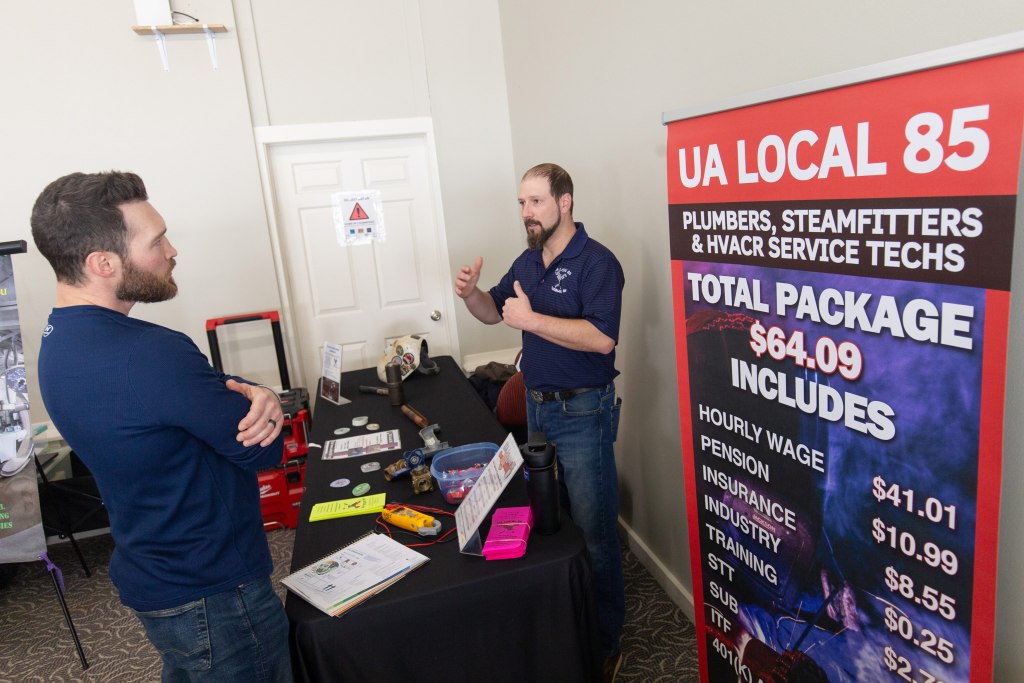
Another persistent issue is simply getting people to attend events. At a recent job fair, only five male job seekers showed up. However, the local plumbing union's booth, advertising potential apprentice pay of $41 an hour, drew significant attention, highlighting the power of clearly communicating financial benefits.
Shamroe suggests a more direct approach to highlighting the financial advantages of college classes or credential programs. Sonnabend adds that many men underestimate their capabilities, believing they aren't ready for further education.
“But they’re capable of doing the work,” she asserts. “They just don’t know it yet.” The ongoing efforts in Michigan underscore a critical understanding: meeting individuals where they are, acknowledging their experiences, and clearly demonstrating the tangible benefits of education are vital to rebuilding a skilled workforce and empowering all residents.





 Explore AI Teaching Tools
Comments (0)
Please login to comment
No comments yet
Be the first to comment on this article