
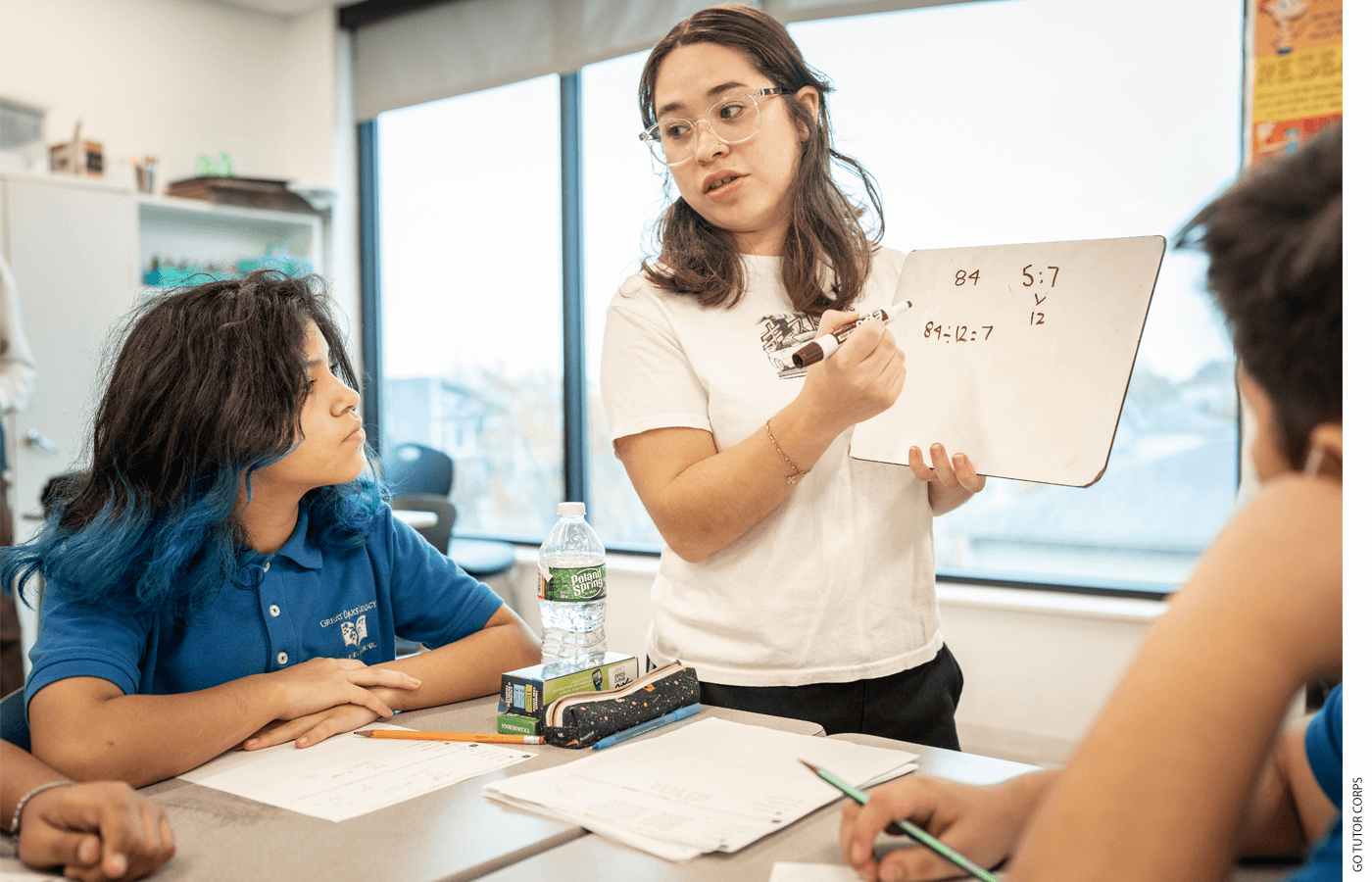
Unlocking Student Potential: The High-Impact tutoring Blueprint
In the ever-evolving landscape of education, the quest for effective learning interventions is constant.
While many innovative approaches emerge, few possess the proven power to fundamentally transform student outcomes.
This article delves into the world of high-impact tutoring, exploring why it's not just another educational trend, but a genuinely game-changing strategy.
We'll uncover the core principles that make it so effective, examine the practical challenges schools face in implementation, and present a roadmap for integrating this powerful tool into your educational framework.
Prepare to discover how targeted, consistent support can elevate learning for every student.
The Undeniable Efficacy of High-Impact Tutoring
The educational world has seen its share of promising initiatives, from widespread tablet adoption to the pursuit of smaller class sizes.
However, the evidence supporting high-impact tutoring stands apart.
Research consistently demonstrates that when implemented with fidelity, this approach yields significant gains in student achievement.
The core tenets are deceptively simple yet profoundly effective: maintaining a consistent tutor-student relationship, ensuring a low student-to-tutor ratio, and providing substantial weekly tutoring time.
These foundational elements create an environment where personalized learning can truly flourish, addressing individual needs and accelerating progress in ways that broader classroom instruction often cannot.
The financial investment in tutoring, particularly from affluent families, underscores a widespread understanding of its value.
Billions are spent annually because parents recognize that this form of support is a powerful catalyst for academic success.
This reality brings a critical public policy question to the forefront: how can we ensure equitable access to such a demonstrably effective educational intervention for all students, not just those from privileged backgrounds?
The focus shifts from questioning *if* tutoring works to determining *how* to make it a universal resource.
Navigating the Practicalities: A School Leader's Roadmap
For school leaders aiming to harness the power of tutoring, a clear, actionable plan is essential.
The journey from recognizing tutoring's potential to successfully integrating it into the school's fabric involves navigating a complex terrain of logistical, human, and cultural considerations.
This is where a pragmatic roadmap becomes invaluable, offering guidance on the essential steps and potential pitfalls to anticipate.
The goal is to move beyond emergency measures and establish tutoring as a sustainable, integral component of the educational model.
The past few years have witnessed a significant policy shift, elevating tutoring from a supplementary service to a central element in discussions about post-pandemic recovery and the future of education.
This heightened focus presents an opportunity, but also demands careful planning and execution.
The transition requires a deep understanding of the levers school leaders must pull to ensure success, from fostering buy-in among educators to building robust support systems for tutors themselves.
Key Pillars of Successful Tutoring Integration
Implementing a high-impact tutoring program requires strategic attention to several critical areas.
These pillars form the foundation upon which a sustainable and effective program is built:
- Aligning Incentives and Securing Buy-in: Gaining the support of teachers and staff is paramount.
This involves clearly communicating the benefits of tutoring for both students and educators, addressing any concerns about workload or role changes, and ensuring that tutoring efforts are seen as complementary to, rather than competitive with, classroom instruction.
- Cultivating a Culture of Tutoring: Tutoring should not be viewed as an afterthought or a punitive measure.
Instead, it needs to be embedded within the school's ethos as a proactive strategy for academic growth and personalized support.
This involves celebrating tutoring successes and fostering an environment where seeking and providing academic help is normalized and encouraged for all students.
- Establishing Sustainable Funding Models: While initial funding may come from grants or emergency allocations, long-term success hinges on integrating tutoring costs into the school's regular budget.
This requires careful financial planning, demonstrating the return on investment through improved student outcomes, and exploring diverse funding streams.
- Recruiting and Training High-Quality Tutors: The effectiveness of any tutoring program rests on the quality of its tutors.
This involves developing robust recruitment strategies to attract skilled and dedicated individuals, providing comprehensive training that covers pedagogical approaches, subject matter expertise, and best practices in student engagement, and offering ongoing professional development to ensure continuous improvement.
- Monitoring Fidelity and Outcomes: To ensure the program is delivering on its promise, consistent monitoring is crucial.
This includes tracking student attendance and engagement, assessing academic progress through regular evaluations, and gathering feedback from students, tutors, and teachers.
This data-driven approach allows for timely adjustments and continuous refinement of the program.
- Adapting to Local Contexts: Every school community is unique, with its own specific needs, challenges, and resources.
A successful tutoring program must be flexible and adaptable, allowing for customization to fit the particular context of the school.
This might involve tailoring the scheduling, the content focus, or the tutor recruitment strategies to best serve the student population.
Addressing the Challenges: Lessons from the Field
The path to successful tutoring implementation is rarely without its obstacles.
Research and practical experience highlight common pitfalls that can derail even well-intentioned programs.
Understanding these challenges is the first step toward proactively mitigating them.
One significant hurdle arises when tutoring programs are initially launched as emergency relief, often dependent on temporary federal funding.
When these funds taper off, the programs can falter, leaving a void in student support.
This underscores the critical need for long-term financial planning and integration into the school's core budget from the outset.
Without this, the sustainability of the initiative is always in question.
Logistical complexities are another frequent stumbling block.
Districts may underestimate the intricate planning required for effectively matching students with appropriate tutors, coordinating diverse schedules across different grade levels and subjects, and ensuring the retention of consistent tutors throughout the academic year.
These operational challenges demand dedicated resources and systematic approaches to overcome.
Furthermore, a common misstep is the failure to deeply integrate tutoring into the core instructional framework.
When tutoring is treated solely as a remedial measure for struggling students, its potential is significantly limited.
Instead, it should be viewed as an opportunity to personalize learning for all students, offering enrichment, targeted support, and accelerated pathways.
This broader perspective unlocks the full transformative power of tutoring, moving it from the periphery to the heart of the educational experience.
The Importance of Candid Reflection
A crucial element in building resilient and effective tutoring programs is the willingness to confront uncomfortable truths about where initiatives have fallen short.
By openly acknowledging past missteps and analyzing the reasons behind them, school leaders can gain invaluable insights.
This candid reflection empowers them to anticipate potential challenges and build adaptive strategies into their plans from the very beginning.
It fosters a culture of continuous improvement, where learning from failures is as important as celebrating successes.
For example, programs that began with enthusiastic pilot phases might struggle to scale effectively.
This can be due to a variety of factors, including insufficient infrastructure, a lack of standardized training for tutors, or an underestimation of the administrative burden involved.
Recognizing these scaling challenges allows for the development of more robust operational plans and the allocation of necessary resources to support growth.
Human Capital: The Cornerstone of Effective Tutoring
Beyond the structural and financial aspects, the success of any tutoring initiative hinges on its human capital.
Recruiting, training, supporting, and retaining high-quality tutors is a complex challenge that cannot be overcome by enthusiasm alone.
It requires a strategic and sustained effort to build a dedicated and skilled tutoring workforce.
The process begins with identifying individuals who possess not only academic proficiency but also a passion for teaching and a genuine connection with students.
This might include certified teachers, university students pursuing education degrees, or community members with relevant expertise.
Once recruited, comprehensive training is essential.
This training should go beyond subject matter knowledge to include pedagogical strategies tailored for one-on-one or small-group instruction, effective communication techniques, and methods for fostering student engagement and motivation.
Ongoing support is equally vital.
Tutors need opportunities for professional development, mentorship, and a forum to share best practices and challenges.
Creating a supportive community for tutors can significantly boost morale and retention.
Regular feedback mechanisms, both for tutors and from tutors about their experiences, are crucial for identifying areas of strength and opportunities for improvement.
Ultimately, investing in the professional growth and well-being of tutors is an investment in the academic success of the students they serve.
Democratizing Access: Tutoring for All
A central, normative thread running through the most effective tutoring models is the unwavering commitment to democratizing access.
High-impact tutoring should not remain an exclusive privilege for those who can afford it.
Instead, it must be intentionally designed and implemented to benefit all students, with a particular focus on those who have historically been underserved or marginalized within the education system.
This commitment requires a proactive approach to identifying students who would benefit most from targeted support, regardless of their academic standing or socioeconomic background.
It involves developing outreach strategies to ensure that all families are aware of the available tutoring resources and understand their value.
Furthermore, it necessitates the allocation of resources to ensure that tutoring is available during school hours, after school, and potentially during school breaks, making it accessible to a wider range of students with varying schedules and needs.
The goal is to shift the perception of tutoring from a compensatory tool to an integral part of a personalized learning journey for every student.
By making high-impact tutoring a universal offering, schools can help to level the playing field, close achievement gaps, and empower every student to reach their full academic potential.
This commitment to equity is not just a matter of fairness; it is a fundamental requirement for building a truly effective and inclusive education system.
Conclusion
The evidence is compelling: high-impact tutoring is a powerful lever for transforming educational outcomes.
It moves beyond fleeting trends to offer a sustainable, research-backed approach to personalized learning.
By understanding and implementing the key pillars of successful integration—from securing buy-in and establishing robust funding to recruiting and supporting quality tutors—schools can build programs that truly make a difference.
The journey requires careful planning, a willingness to address challenges head-on, and an unwavering commitment to democratizing access for all students.
With intentional leadership and sustained support, high-impact tutoring can become a durable, transformative force within any school's instructional model, unlocking the potential that resides within every learner.







 Explore AI Teaching Tools
Comments (0)
Please login to comment
No comments yet
Be the first to comment on this article