
Parking Lots as Sanctuaries: Schools Pivot to Shelter Homeless Families Amidst Housing Crisis
In a stark illustration of the deepening housing crisis, a growing number of school districts are transforming their parking lots into temporary havens for students and their families experiencing homelessness. This innovative, yet controversial, approach offers a glimmer of stability for families pushed to the brink, providing a safe space to sleep, shower, and even do homework, all while navigating the labyrinthine search for permanent housing.
A Desperate Measure for a Growing Crisis
The statistics paint a grim picture: family homelessness has surged, with a significant increase in children and youth lacking stable housing. This trend is exacerbated by the expiration of pandemic-era assistance programs and persistent inflation, leaving many families with dwindling resources and impossible choices. Faced with overcrowded shelters and the specter of sleeping on the streets, schools are stepping in, repurposing their grounds as a last resort.
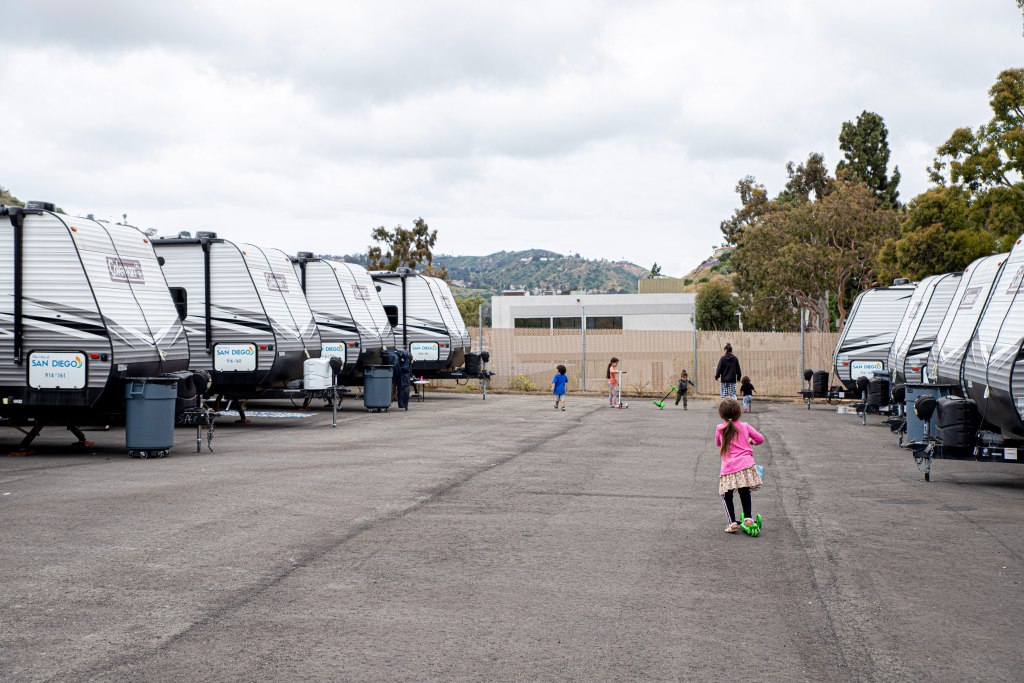
One mother, identified only as M. to protect her family's privacy, shared her experience of living in a recreational vehicle within a city-sanctioned parking lot. "He likes it here," she said, referring to her 8-year-old son. "We can actually cook. I waste less money. There’s a lot to like." For M. and her family, this temporary solution, facilitated by the city of San Diego and a local nonprofit, provided a secure base while they sought more permanent housing. Their sedan, once their only shelter, was replaced by an RV, offering a semblance of normalcy and a private space for her son to study and rest.
This initiative in San Diego began as an experiment in 2017, evolving to prioritize families in 2023. The local school district, witnessing the escalating need, soon followed suit, exploring the use of vacant school properties as temporary shelters. The model is now gaining traction beyond California, with districts in Ohio and Kentucky considering similar programs.
Navigating the Complexities of Safe Parking
The concept of "safe parking" programs, where individuals and families can legally and safely sleep in their vehicles on designated lots, is not new. However, the involvement of school districts adds a unique dimension, directly linking educational stability with housing security. The San Diego Unified School District, for instance, views these lots as a critical intervention, recognizing that students cannot learn effectively if they lack basic safety and health.
Kristy Drake, the district's liaison for homeless and foster youth, described the parking lot as a "way station." "When families drive onto this lot," she explained, "they come into this wider network of support and resources. The goal is to move on. Hopefully no one’s there too long." This approach aims to provide a bridge, connecting families with caseworkers and social services designed to help them transition to stable housing.
The San Diego program offers varying levels of amenities. While some sites provide RVs and communal spaces like kitchens and libraries, others offer more basic provisions, including portable restrooms and security. The Rose Canyon lot, where M. and her family stayed, is an example of a more comprehensive site, offering trailers, a shared kitchen, and a dining and study area. These amenities are crucial for maintaining a sense of dignity and providing a conducive environment for children's education.
The Data Behind the Displacement
Recent data from the Department of Housing and Urban Development reveals a staggering rise in family homelessness across the United States. In January 2024, nearly 260,000 individuals in families with children experienced homelessness, marking a more than 50 percent increase since the pre-pandemic era. Experts caution that these figures likely represent an undercount, as they often fail to capture "hidden" homelessness, such as families temporarily staying in hotels or couch-surfing.
California, with the nation's largest homeless population, has seen a 14 percent increase in family homelessness since before the pandemic. In San Diego County alone, approximately 1,500 people in families are experiencing homelessness, yet the availability of emergency shelters for children and parents remains critically low. This scarcity of resources, coupled with soaring housing costs, has created a perfect storm, pushing more families into precarious living situations.
A Bridge to Stability, But Not a Panacea
While safe parking programs offer a vital lifeline, they are not without their critics. Concerns have been raised by some residents and developers regarding potential impacts on crime and property values. Others question whether these temporary solutions divert attention and resources from addressing the root causes of homelessness, such as the lack of affordable housing and stagnant wages.
Jennifer Erb-Downward, director of housing stability programs at the University of Michigan, acknowledges the imperfections of parking lot solutions. "Parking lots are a terrible option, but there are options that are worse," she stated. "Often the only other option is literal homelessness, in your car and on the streets. This creates a middle ground where you can get families into the system, where you can try to meet their needs and in a place that keeps them safe."
Research on San Diego's safe parking model suggests a positive impact on long-term housing stability. A 2024 study indicated that 40 percent of households that utilized a Jewish Family Service (JFS) safe parking site between March 2020 and November 2021 had transitioned to more stable housing. More recent data from JFS shows that 53 percent of all households in their program, and an impressive 76 percent at the Rose Canyon lot, found more stable housing. These figures significantly outpace the national average for individuals moving from homeless services into permanent housing, which hovers below 34 percent.
Stories of Resilience and Hope
The impact of these programs is perhaps best illustrated through the personal stories of families who have benefited. Dezarae S., who experienced homelessness throughout her childhood, found a temporary home at the Rose Canyon lot with her husband and four children. The RV provided a stable environment where her young children, including twins with autism, could receive specialized support and prepare for preschool. After years on a housing voucher waiting list, her family finally secured a three-bedroom apartment, a testament to the program's ability to facilitate a transition to permanent housing.
"My kids are my world, and my kids are still happy," Dezarae shared, emphasizing her commitment to preserving her children's innocence. Her journey highlights the profound difference that a safe and supportive environment can make in the lives of families facing extreme adversity.
Expanding the Model, Addressing the Gaps
As the efficacy of safe parking programs becomes more evident, other districts are looking to replicate San Diego's success. Cincinnati Public Schools is set to launch its own safe sleep lot, complete with security, private bathrooms, and laundry facilities. Rebeka Beach, head of homeless services for Cincinnati schools, visited San Diego's programs before adopting the model, acknowledging it as a crucial "bridge and response to an immediate crisis."
Educators in Kentucky's Fayette County Public Schools, which reported over 1,100 students experiencing homelessness, are also advocating for similar initiatives. Laura Hartke, an organizer with the local teachers' union, stated, "Schools can’t take care of everything, but we feel we can help where we can." This sentiment underscores the collaborative effort required to address the multifaceted issue of family homelessness.
For families like M.'s, the journey continues. While the safe parking lot provided a much-needed respite, the challenges of securing affordable housing remain immense. The expiration of rental assistance programs and the high cost of living in San Diego present ongoing hurdles. Yet, even amidst these difficulties, families find moments of joy and connection, whether at the beach or simply watching their children play. As M. observed her son riding his bicycle, she reflected, "We just got to make it work." This resilience, coupled with innovative solutions like safe parking programs, offers a beacon of hope in the ongoing fight against family homelessness.




 Explore AI Teaching Tools
Comments (0)
Please login to comment
No comments yet
Be the first to comment on this article