
Unlocking Educational Excellence: How a Small District Achieved the Unimaginable
Embarking on a journey of educational advancement often feels like an uphill battle, especially for smaller school districts facing significant infrastructure challenges.Yet, as we will explore, innovative thinking and strategic resourcefulness can indeed lead to remarkable achievements.
This article delves into how one dedicated school district, against considerable odds, secured a state-of-the-art facility that will profoundly impact its students and the wider community, offering valuable lessons for educational institutions everywhere.
The Challenge of Limited Resources in Education
Many school districts, particularly those in less affluent areas, grapple with the persistent issue of insufficient funding.
This often means that essential upgrades and new facilities, while highly desirable, remain out of reach.
The reality for these institutions is a constant balancing act, prioritizing immediate needs like safety and basic functionality over aspirational projects that could significantly enhance the learning and extracurricular experience.
This is a common scenario that affects school communities across the globe.
For a school district like Anderson Valley, the financial constraints were stark.
Despite a community that passed a substantial bond measure to address critical infrastructure needs, the reality of limited assessed property values meant that funds had to be meticulously stretched.
This necessitated a focus on the most pressing issues: repairing aging classrooms that hadn't seen updates since the mid-20th century, tackling hazardous materials like lead paint, and ensuring basic sanitation and functional learning environments.
These are the foundational elements that a school district must secure before even considering more advanced facilities.
Prioritizing Essential School Infrastructure
The Anderson Valley Unified School District's experience highlights a crucial point: before investing in new athletic fields or advanced technology, a school must ensure its core infrastructure is sound.
This includes:
- Ensuring safe and functional classrooms.
- Addressing environmental hazards such as lead paint and sewage leaks.
- Maintaining basic utilities and structural integrity.
- Modernizing essential learning spaces like science labs.
These are the fundamental building blocks that allow for effective teaching and learning to occur.
Without them, even the most ambitious extracurricular programs will struggle to thrive.
Innovative Funding: A Pathway to New Possibilities
While the immediate needs of the school district were extensive, the vision for a better student experience persisted.
The key to overcoming the financial barrier lay in identifying and securing funding from unconventional sources.
This is where strategic thinking and a proactive approach to grant opportunities become paramount for any school district aiming to expand its offerings.
In the case of Anderson Valley, a breakthrough came from an unexpected grant program designed for community improvement.
This program, initially intended for broader civic projects, was identified as a potential avenue for a much-needed athletic facility.
The critical insight was framing the project not just as a school amenity, but as a significant community asset that would serve a wider population.
This strategic reframing allowed the school to qualify for funding that would otherwise have been inaccessible.
Securing Community-Focused Grants
The success of Anderson Valley underscores the importance of exploring grant opportunities that align with community well-being.
Researching programs that support:
- Public health and fitness initiatives.
- Youth development and equitable access to recreation.
- Community revitalization projects.
can open doors for school districts.
The grant application process will often require demonstrating how the proposed project will benefit not only the students but also the broader community, especially in areas with limited access to such facilities.
This approach can transform a school-specific need into a widely supported community endeavor.
The impact of this funding was transformative.
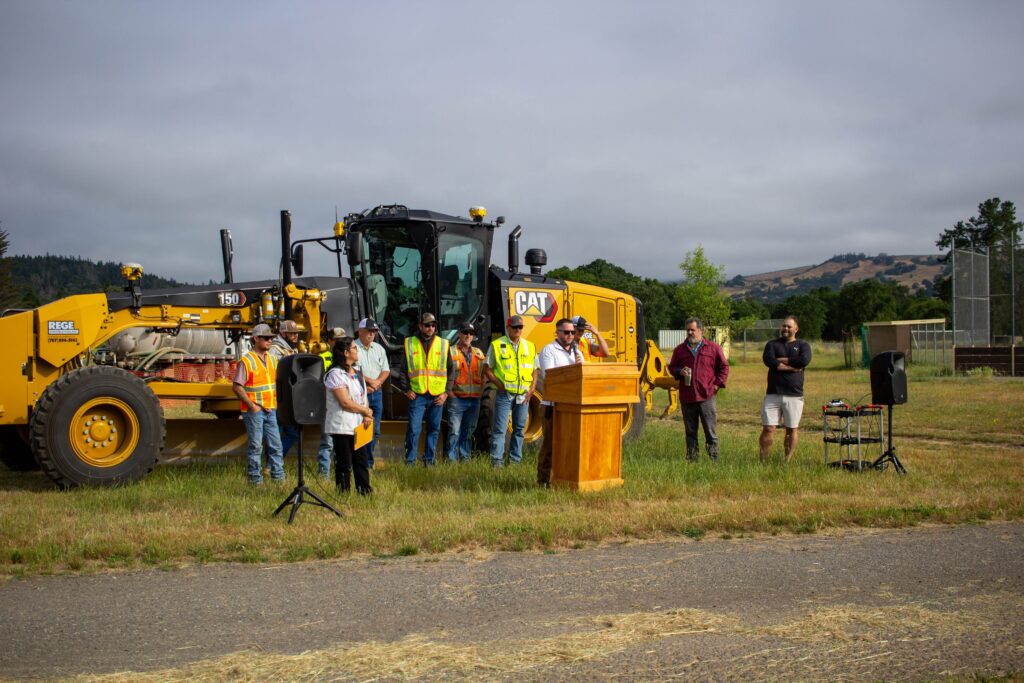
It enabled the construction of a state-of-the-art, all-weather track and a new grass soccer field.
This facility is not merely for athletic competitions; it is designed to be a safe and accessible space for all residents to pursue their wellness and recreation goals.
This is particularly vital in areas where other public fitness facilities are scarce, as was the case for the Anderson Valley district, which had no gyms or workout facilities within a 20-mile radius.
The project was said to be a testament to what can be achieved when a school district looks beyond traditional funding models.
The Broader Impact on Students and Community
The benefits of this new facility extend far beyond the physical.
For the students of Anderson Valley, a district where a significant percentage come from first-generation, low-income families, this project represents a powerful statement of value and opportunity.
Having access to high-quality facilities that rival those in more affluent districts can significantly boost student morale, foster a sense of pride, and provide equitable opportunities for participation in sports and physical activities.
Furthermore, the project is said to have a profound impact on the community at large.
In a region known for its vineyards, where adult soccer is a popular pastime, the new field provides a much-needed venue for organized play and community gatherings.
This shared space can strengthen community bonds and promote a healthier, more active lifestyle for residents of all ages.
The superintendent said that this project will bring pride to the school and be important to the kids.
Fostering Equity and Well-being
The creation of this new field is a powerful example of how educational institutions can serve as catalysts for social equity and community well-being.
It demonstrates that:
- Investing in student and community health is a worthwhile endeavor.
- Equitable access to recreational facilities is crucial for development.
- School projects can be designed to benefit the entire district and beyond.
The vision behind this project was that all children deserve a shot at experiencing the best possible opportunities, and this new field is a tangible manifestation of that belief.
The district will now have a field of their own, a space that fosters both athletic development and a stronger sense of community belonging.
Conclusion
The story of the Anderson Valley Unified School District is an inspiring testament to resilience, innovation, and the power of community-focused initiatives.
Despite facing significant financial hurdles and the urgent need to address basic infrastructure, the district managed to secure a remarkable new athletic facility.
This achievement was made possible through a strategic pursuit of unconventional funding, framing the project as a vital community asset.
The lessons learned here are invaluable for any school district: prioritize essential needs, actively seek diverse funding streams, and always consider the broader impact of educational projects on students and the entire community.
This approach will undoubtedly lead to more success stories in the field of education.







 Explore AI Teaching Tools
Comments (0)
Please login to comment
No comments yet
Be the first to comment on this article