
Austria's Academic Oasis: Unlocking World-Class Education Without Breaking the Bank
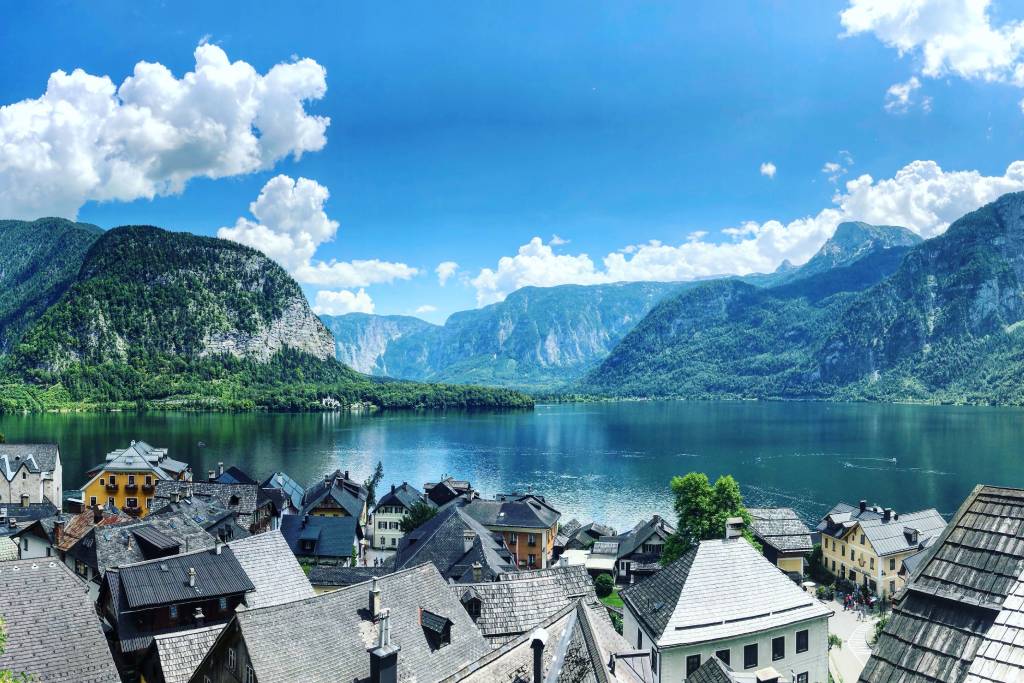
Imagine a country consistently ranked among the world's most livable, offering a rich cultural tapestry and a surprisingly accessible pathway to higher education. Austria is rapidly emerging as a prime destination for international students, not just for its picturesque landscapes and vibrant cities, but for the remarkable affordability of its university programmes. With estimated living costs around 1,300 euros per month, the financial barrier to entry is significantly lower than many might expect.
The Allure of Austrian Universities: Affordability Meets Excellence
A key factor drawing global talent to Austria is its tuition fee structure. For students from European Union and European Economic Area countries, public universities often waive tuition fees entirely, provided they complete their studies within the standard timeframe. Even for international students outside these blocs, the costs remain remarkably competitive, especially when compared to institutions in North America or the United Kingdom.
While the base tuition for non-EU/EEA students at public universities typically hovers between 727 and 753 euros per semester, this fee often covers essential services like student union membership and accident insurance. This predictable cost structure, combined with a high standard of education, makes Austria an increasingly attractive option for ambitious students worldwide.
Navigating Language Requirements: A Bridge to Opportunity
One significant consideration for many international students is the language of instruction. While a growing number of English-taught master's programmes are available, many undergraduate degrees, particularly at the bachelor's level, require a solid command of German, often at a B2 or C1 proficiency level. This necessitates a proactive approach to language learning, potentially involving an additional year of study before commencing university programmes.
However, this linguistic investment opens doors to a vast array of academic offerings and a deeper cultural immersion. The universities themselves often provide resources and support for international students looking to enhance their German skills, recognizing its importance in both academic and daily life.
Pioneering Institutions: A Glimpse at Austria's Leading Universities
Austria boasts a diverse range of universities, each with its unique strengths and specializations. From ancient institutions steeped in history to modern centres of technological innovation, these universities offer a wealth of academic programmes designed to meet the needs of a global student body.
The University of Vienna: A Legacy of Learning
As one of Europe's oldest universities, the University of Vienna stands as a beacon of academic tradition and research. Consistently ranked among the top global institutions, it offers an extensive selection of over 50 undergraduate and more than 100 postgraduate programmes. Its commitment to diversity and research excellence is reflected in its climbing subject-specific rankings, particularly in fields like communication and media studies.
While many foundational programmes are delivered in German, requiring C1 proficiency for admission, the university also provides a growing number of master's degrees taught entirely in English. Tuition for EU/EEA students is nominal, while non-EU/EEA students can expect fees around 752.92 euros per semester.
University of Salzburg: Culture and Innovation
Nestled in the heart of the architecturally stunning city of Salzburg, the University of Salzburg, also known as Paris Lodron University Salzburg, is the region's largest educational institution. Its six faculties cover a broad spectrum of disciplines, from theology and law to natural sciences and social sciences. The university also offers a comprehensive teacher training programme, allowing students to combine a wide array of subjects.
Most bachelor's programmes necessitate at least B2 German proficiency. However, several master's programmes, including Data Science and Medical Biology, are offered in English, providing international students with valuable options. Similar to other public universities, EU/EEA students face minimal fees beyond the standard semester contribution, while international students pay approximately 752.92 euros per semester.
Johannes Kepler University Linz (JKU): A Modern Hub
Johannes Kepler University Linz (JKU) distinguishes itself with a unique campus design, housing all its teaching facilities in a single, cohesive location. This modern university, formerly known as the University of Social and Economic Sciences, comprises four faculties and six schools, fostering interdisciplinary collaboration. JKU is a notable institution for international students seeking English-taught programmes, alongside its German-language offerings.
For EU/EEA students exceeding their standard study duration, semester fees are around 363.36 euros. International students from outside the EU/EEA can expect to pay approximately 726.72 euros per semester, making it a highly competitive choice for technical and business-focused studies.
Technische Universität Wien (TU Wien): Engineering the Future
Technische Universität Wien, or TU Wien, is a powerhouse in technological education and research, consistently ranking among the top universities in Austria and globally. As the first University of Technology in German-speaking Europe, it upholds a motto of "Technology for people," driving innovation in fields like architecture, built environment, and computer science.
While bachelor's programmes are predominantly in German, necessitating proof of language proficiency, TU Wien excels in offering a wide array of master's programmes taught in English. The fee structure mirrors that of other public universities, with EU/EEA students paying a nominal amount beyond the standard semester fee, and international students paying around 726.72 euros per semester.
Academy of Fine Arts Vienna: Nurturing Artistic Talent
For aspiring artists, the Academy of Fine Arts Vienna offers an unparalleled environment for creative development. With a strong emphasis on arts-based research and teaching, its programmes span painting, sculpture, photography, video, performance, conceptual art, architecture, and conservation. Despite its relatively small student body, the academy boasts an international reputation for its faculty and diverse student population from over 50 countries.
Collaboration with international universities and cultural institutions is a cornerstone of the academy's philosophy, encouraging students to gain global experience. A B2 level of German proficiency is generally recommended for admission. Tuition fees for EU/EEA students are minimal, while international students face a semester fee of approximately 726.72 euros.
University for Continuing Education Krems: Lifelong Learning
The University for Continuing Education Krems, formerly Danube University Krems, caters specifically to working professionals and adult learners. With an average student age of 39 and a highly international student body from nearly 100 countries, it offers a unique study model tailored to the demands of modern careers. The university's three faculties focus on health, business, and education, arts, and architecture.
While most programmes are conducted in German, the university provides flexible learning options for those seeking to advance their careers. For international students, tuition fees can start from approximately 432 US dollars per year, offering a cost-effective route for professional development.
BOKU University: Life Sciences and Sustainability
BOKU University, established in 1872, has evolved into a leading European institution specializing in life sciences, agriculture, and environmental studies. Its undergraduate programmes are primarily taught in German, but BOKU also offers a growing selection of master's degrees in English, including Biotechnology, Mountain Forestry, and Green Chemistry. This focus on sustainable development and natural resources makes it a compelling choice for students passionate about these fields.
The fee structure for EU/EEA students is minimal, while international students can expect to pay around 726.72 euros per semester for their studies. The university's strong practical and research-oriented approach ensures students gain valuable real-world experience.
University of Klagenfurt: Regional Knowledge Hub
Situated in the scenic region of Carinthia, the University of Klagenfurt serves as a vital academic hub for the Alps-Adriatic region. Approximately 20% of its student body comprises international students from around 100 countries, contributing to a vibrant and diverse campus environment. The university's four faculties cover arts, humanities, education, management, economics, law, social sciences, and technical sciences.
While German-taught programmes are prevalent, the university also offers a selection of English-taught undergraduate and postgraduate courses. A B2 level of German proficiency is recommended for those pursuing German-language programmes. The semester fee for international students is approximately 726.72 euros.
Technische Universität Graz (TU Graz): Innovation and Practicality
Technische Universität Graz (TU Graz) is renowned for its affordability and strong emphasis on engineering, technology, and innovation. Consistently recognized for its practical, hands-on learning approach, students engage with real-world projects and state-of-the-art laboratories, often collaborating with industry partners. This focus on applied learning ensures graduates possess valuable practical experience upon completion of their programmes.
Tuition fees for EU students are around 363.36 euros per semester, while non-EU students pay approximately 726.72 euros per semester. This competitive pricing, combined with its strong industry connections, makes TU Graz a highly attractive option for aspiring engineers and technologists.
Beyond Tuition: Understanding the Full Picture of Studying in Austria
While tuition fees are a significant draw, prospective international students should also consider other aspects of studying in Austria. The cost of living, while manageable, requires careful budgeting, with an average estimate of 1,300 euros per month covering accommodation, food, transportation, and personal expenses.
The academic year is typically divided into two semesters: the winter semester (October to January) and the summer semester (March to June). The standard duration for bachelor's programmes is six semesters, and for master's programmes, it's four semesters. Exceeding these limits may incur additional tuition fees, though a grace period is often provided.
English-Taught Programmes: Expanding Access
The increasing availability of English-taught programmes across Austrian universities is a significant development for international students. While German proficiency remains a valuable asset, these programmes remove a major language barrier, opening up a wider range of academic opportunities. For English-taught courses, prospective students will generally need to demonstrate English language proficiency, often through standardized tests like IELTS, with scores typically ranging from 6.0 to 6.5 for undergraduate studies and 6.5 to 7.5 for postgraduate levels.
This expansion of English-language offerings ensures that Austria remains a competitive and accessible destination for a diverse global student population, eager to benefit from its high-quality education system.





 Explore AI Teaching Tools
Comments (0)
Please login to comment
No comments yet
Be the first to comment on this article