
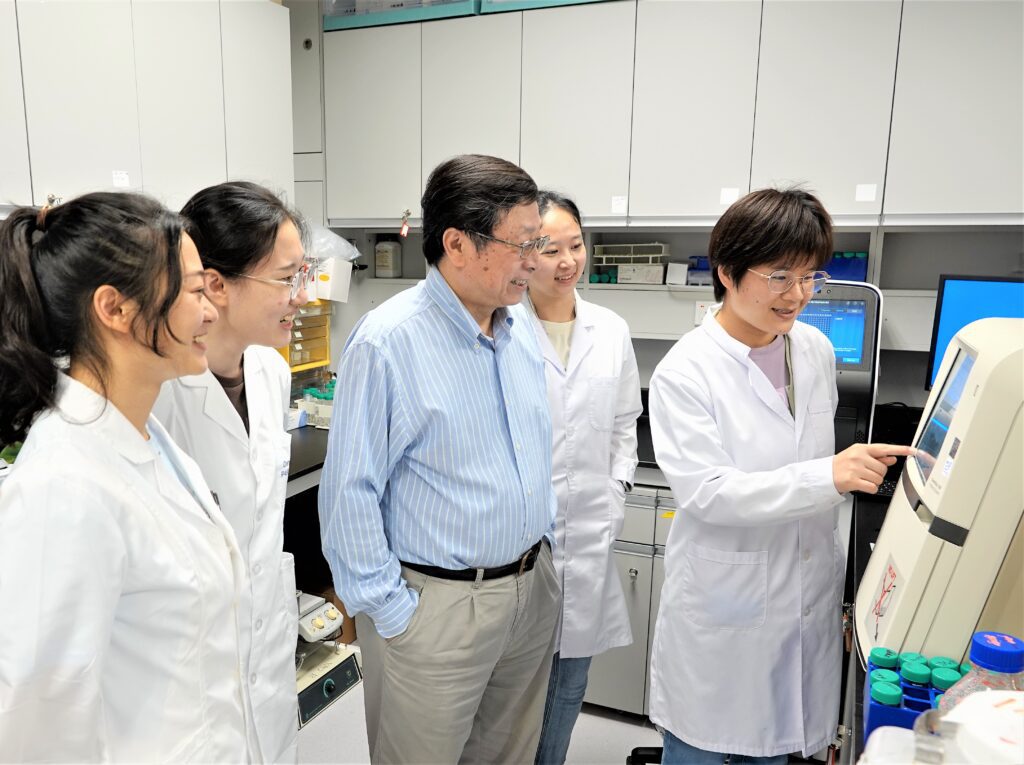
Pioneering the Future of Health: Leading Universities in Biomedical Research Innovation
Embark on a transformative journey into the heart of biomedical science, where groundbreaking research converges with real-world impact.This dynamic field is not just about understanding the intricate workings of the human body; it's about actively engineering the tools and therapies that sustain and enhance life.
From advanced artificial organs and next-generation imaging systems to sophisticated wearable health technologies, the potential for innovation is boundless.
Fueled by rapid advancements in artificial intelligence and an explosion of data, biomedical research is experiencing unprecedented interest and investment, opening exciting new frontiers for aspiring scientists and researchers.
A doctoral degree serves as an exceptional launchpad, empowering you to delve into critical questions and shape technologies that are poised to revolutionize clinical practice, potentially leading to life-saving drugs, vaccines, and therapies.
Discover how leading universities are fostering this next wave of innovation and preparing the next generation of biomedical leaders.
The Evolving Landscape of Biomedical Sciences: From Lab Bench to Global Health Solutions
The realm of biomedical sciences stands at the forefront of addressing humanity's most pressing health challenges.It represents a critical intersection of biology, medicine, engineering, and technology, all aimed at deciphering disease mechanisms, developing novel diagnostic tools, and creating effective therapeutic interventions.
The inherent translational nature of this field means that discoveries made in academic research settings have a significant likelihood of transitioning into tangible benefits for patients and populations worldwide.
This rapid pace of development is driven by a deep understanding of fundamental biological processes coupled with the application of cutting-edge technological advancements.
The Impact of Interdisciplinary Research
At its core, biomedical research thrives on collaboration and the integration of diverse scientific disciplines.
By bringing together experts from fields such as genetics, molecular biology, immunology, pharmacology, and bioengineering, researchers can tackle complex health issues from multiple angles.
This interdisciplinary approach is essential for understanding the multifaceted nature of diseases and for designing comprehensive solutions.
For instance, unraveling the genetic underpinnings of a disease might be combined with engineering novel drug delivery systems or developing advanced imaging techniques for early detection, showcasing the power of synergy.
Translational Research: Bridging the Gap
A key characteristic of modern biomedical research is its strong emphasis on translational science.
This concept focuses on accelerating the process by which basic scientific discoveries are converted into practical applications that improve human health.
It involves a continuum of research, from laboratory investigations to clinical trials and ultimately to widespread clinical implementation.
Universities play a pivotal role in this translational pipeline by providing the infrastructure, expertise, and collaborative environment necessary for such advancements to occur.
The ultimate goal is to ensure that scientific breakthroughs quickly and efficiently reach those who need them most.
The Role of Technology and Data in Biomedical Innovation
The exponential growth of computational power, artificial intelligence (AI), and big data analytics has profoundly reshaped the landscape of biomedical research.
AI algorithms are now instrumental in analyzing vast datasets, identifying patterns, predicting disease risk, and accelerating drug discovery.
Advanced imaging technologies, powered by sophisticated algorithms, offer unprecedented insights into biological processes at cellular and molecular levels.
Furthermore, the proliferation of wearable health devices and sensors generates continuous streams of physiological data, enabling personalized medicine and proactive health management.
This integration of technology and data is not merely an enhancement; it is a fundamental driver of innovation in the health sciences.
University Hubs of Biomedical Excellence: Cultivating the Next Generation of Innovators
Leading universities are the crucibles where the future of biomedical science is forged.They provide not only the academic rigor but also the essential resources, mentorship, and collaborative networks that empower students and researchers to push the boundaries of knowledge.
These institutions are strategically designed to foster an environment where curiosity is encouraged, critical thinking is honed, and ambitious research projects can flourish.
By offering specialized doctoral programs, these universities equip individuals with the advanced skills and deep understanding necessary to contribute meaningfully to the field.
City University of Hong Kong: A New Paradigm in Biomedical Education
The establishment of the College of Biomedicine (CBM) at City University of Hong Kong (CityUHK) signifies a forward-thinking approach to biomedical education and research.
Launched with a vision to be at the vanguard of life and health sciences, CBM consolidates CityUHK's existing strengths in biomedical engineering, biomedical sciences, and neuroscience into a unified, interdisciplinary powerhouse.
This strategic integration aims to accelerate discoveries and the development of innovative solutions for pressing global health challenges, aligning with Hong Kong's ambition to become a global nexus for health and medical innovation.
The college is designed to be a fertile ground for research, development, and clinical trials, attracting leading pharmaceutical and medical device companies.
Department of Biomedical Engineering
Within the Department of Biomedical Engineering, doctoral candidates engage in cutting-edge research across several key areas.
These include the development of advanced biomedical imaging and bioinstrumentation techniques, the engineering of cells and tissues for therapeutic applications, the application of robotics and artificial intelligence in biomedical contexts, and the design of sophisticated biosensors and health informatics systems.
This department is dedicated to creating the technological infrastructure that underpins modern healthcare.
Department of Biomedical Sciences
The Department of Biomedical Sciences focuses on unraveling the fundamental mechanisms of disease development and exploring novel therapeutic strategies.
Research here encompasses cancer biology and therapy, genomics and bioinformatics, vascular, metabolic, and regenerative biology, as well as infectious diseases and immunology.
Students delve into the intricate biological processes that govern health and disease, seeking to identify new targets for intervention.
Department of Neuroscience
Addressing some of the most profound questions about the brain and behavior, the Department of Neuroscience investigates everything from molecular signaling between neurons to complex cognitive functions like perception, memory, and learning.
Doctoral research projects explore neuronal circuits, brain injury and repair mechanisms, and sensory processing, contributing to a deeper understanding of neurological disorders and brain function.
University College London (UCL): A Legacy of Medical Science Innovation
With a history dating back to 1834, University College London (UCL) has consistently been a leader in training the medical professionals and scientists who shape contemporary healthcare.
Its Faculty of Medical Sciences is globally recognized, holding a top-tier international ranking for medicine.
UCL is renowned for its supportive learning environment and its significant clinical impact, driven by a commitment to research excellence.
The university boasts the highest research power in the UK, with its Division of Biosciences forming one of the nation's most extensive and active research communities in biological and biomedical sciences.
Interdisciplinary Biosciences at UCL
The Division of Biosciences at UCL is structured across four dynamic departments: Cell and Developmental Biology; Neuroscience, Physiology, and Pharmacology; Genetics, Evolution and Environment; and Structural and Molecular Biology.
Research within the division spans the entire spectrum of biological inquiry, from the molecular level to the complexities of whole organisms, including humans.
The division exhibits particular strengths in areas such as structural and molecular biology, evolutionary biology, genetics, ecology, cell biology, developmental biology, and neuroscience.
Prospective doctoral students can explore these fields through a variety of PhD programs and doctoral training partnerships, including the BBSRC London Interdisciplinary Biosciences PhD Consortium, the Cell and Developmental Biology MPhil/PhD, the Genetics, Evolution and Environment MPhil/PhD, the UCL Birkbeck MRC Doctoral Training Programme, the Training, Research & Equity in Environmental Sciences Doctoral Landscape Award (TREES DLA), the Neuroscience, Physiology and Pharmacology MPhil/PhD, the Structural and Molecular Biology MPhil/PhD, and the UK Food Systems Centre for Doctoral Training.
Johns Hopkins University: Setting the Standard in Medical Education and Research
The Johns Hopkins School of Medicine is globally recognized for its unwavering commitment to advancing health worldwide by setting the highest standards in medical education, research, and patient care.
A prime example of this commitment is the Biochemistry, Cellular, and Molecular Biology (BCMB) Graduate Program.
This program adopts a mechanistic approach to addressing complex biomedical questions.
The initial year is intensely rigorous and broad-based, featuring laboratory rotations in three distinct research groups, a proposal-based qualifying examination complemented by a proposal-writing workshop, and thesis research conducted within the laboratory of one of over 100 participating faculty members across five foundational science departments.
The program also includes an annual retreat, a student-led research colloquium, workshops focused on career exploration, and a seminar series featuring student-invited speakers.
Cross-Disciplinary Biomedical Sciences at Johns Hopkins
For individuals seeking to accelerate their path toward independent research, the Cross-Disciplinary Graduate Program in Biomedical Sciences (XDBio) at Johns Hopkins offers a unique opportunity.
This program seamlessly integrates biology, engineering, computer science, physics, chemistry, and medicine.
Students are actively encouraged to formulate their own research questions and to foster collaborations with laboratories across the entire university.
This interdisciplinary ethos can lead to diverse research endeavors, such as developing high-resolution optical biosensors, investigating intuitive physics in animal models, exploring the mechanisms of CRISPR-Cas9 gene editing using advanced techniques like cryo-electron microscopy, or studying how the neocortex forms and updates hypotheses.
The research journey is enriched by the presence of Nobel laureates, Lasker Award winners, and members of the National Academy of Sciences, fostering a community where students are empowered and equipped to become the next generation of leaders in biomedical research and healthcare.
Navigating Your Doctoral Research Journey in Biomedical Sciences
Pursuing a PhD in biomedical sciences is a significant undertaking, demanding dedication, intellectual curiosity, and a strategic approach to research and career development.The journey involves not only mastering complex scientific concepts but also developing critical skills in experimental design, data analysis, scientific communication, and project management.
Universities provide a structured yet flexible environment for this growth, offering access to state-of-the-art facilities, expert mentorship, and a vibrant academic community.
Choosing the Right Program and University
Selecting the appropriate university and doctoral program is a crucial first step.
Prospective students should consider factors such as the research specializations offered, the faculty's expertise and research interests, the availability of specific technologies and resources, and the overall research culture of the institution.
Visiting university campuses, attending departmental seminars, and speaking with current graduate students can provide invaluable insights into the program's suitability.
The alignment of your personal research interests with the strengths of a particular university is paramount for a successful and fulfilling doctoral experience.
The Importance of Mentorship and Collaboration
Effective mentorship is a cornerstone of doctoral research.
A good mentor provides guidance on research direction, helps navigate academic challenges, and fosters professional development.
Equally important is the collaborative environment within a university.
Engaging with peers, attending conferences, and participating in interdisciplinary projects can broaden perspectives and lead to unexpected breakthroughs.
The ability to work effectively in teams and communicate research findings to diverse audiences is a skill honed through active participation in the university's academic ecosystem.
Developing Essential Research Skills
A PhD program is designed to cultivate a comprehensive set of research skills.
This includes mastering experimental techniques, developing proficiency in data analysis and interpretation, and learning to critically evaluate scientific literature.
Students are often trained in specialized software, laboratory equipment, and statistical methods relevant to their field.
The process of writing research proposals, dissertations, and scientific publications hones communication skills and the ability to articulate complex ideas clearly and concisely.
These skills are transferable and highly valued across various career paths in both academia and industry.
Career Pathways Beyond Academia
While many PhD graduates pursue academic careers as professors and researchers, the skills and knowledge acquired are also highly sought after in a wide range of non-academic sectors.
The biomedical industry, including pharmaceutical companies, biotechnology firms, and medical device manufacturers, actively recruits individuals with doctoral training.
Roles in scientific consulting, data science, regulatory affairs, science policy, and even entrepreneurship are increasingly common.
The rigorous training in problem-solving, critical thinking, and scientific inquiry makes PhD holders exceptionally well-prepared for diverse and impactful careers in the health and sciences sector.
Conclusion
The field of biomedical science is experiencing a period of unprecedented growth and innovation, driven by a confluence of scientific discovery, technological advancement, and a global imperative to improve human health.
Universities are at the heart of this revolution, serving as incubators for groundbreaking research and training grounds for the next generation of leaders.
Institutions like the City University of Hong Kong, University College London, and Johns Hopkins University exemplify this commitment, offering specialized doctoral programs that equip students with the knowledge, skills, and experience to make significant contributions.
By fostering interdisciplinary collaboration, embracing cutting-edge technologies, and prioritizing translational research, these universities are not only advancing scientific understanding but also actively shaping a healthier future for all.
For aspiring researchers and scientists, pursuing a PhD at such institutions offers a pathway to engage with the most exciting frontiers of biology and medicine, ultimately leading to impactful careers that can change lives.







 Explore AI Teaching Tools
Comments (0)
Please login to comment
No comments yet
Be the first to comment on this article