
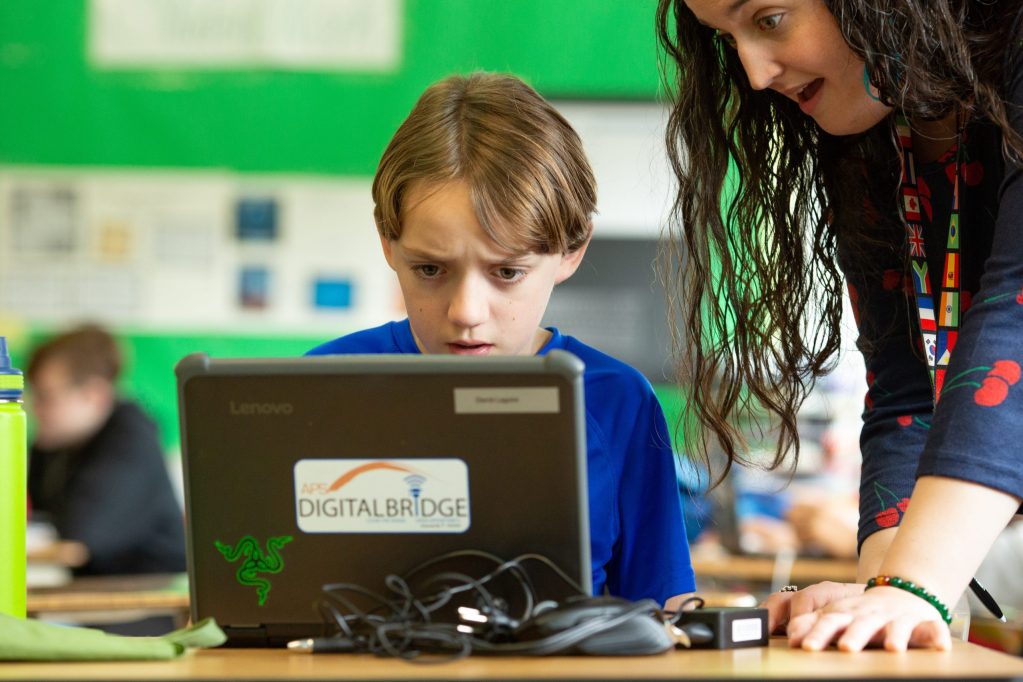
Navigating the AI Revolution: Equipping Students with Critical Awareness for a Changing World
The rapid integration of artificial intelligence into our daily lives presents a complex landscape for education.While many educators are exploring AI's potential to enhance learning, it's crucial that students understand not only its benefits but also its significant drawbacks.
This article delves into the multifaceted impact of AI on students, teachers, and society, offering a comprehensive perspective for a truly informed educational approach.
The Double-Edged Sword: AI's Promise and Peril in Education
As artificial intelligence continues its swift ascent, a vital conversation is emerging within educational circles.
Many teachers are embracing AI, guiding their students on how to leverage its capabilities responsibly.
The sentiment often expressed is that AI is an inevitable force, and therefore, students must learn to use it ethically and effectively.
However, this perspective, while well-intentioned, often overlooks a critical dimension: the profound societal and environmental implications that accompany AI's widespread adoption.
As an early-career educator, I've grappled with this very dilemma, initially agreeing with the pragmatic approach of integrating AI.
Yet, as AI's influence deepens across education and beyond, serious questions arise about its ethical underpinnings and its true potential as an equalizer in educational outcomes.
The notion that students can simply use AI "ethically" can, for too many educators, mask a disregard for its substantial environmental footprint.
Beyond the ecological concerns, it's becoming increasingly evident that AI is poised to reshape the job market, potentially displacing individuals in fields that our students aspire to enter.
This reality fuels a healthy skepticism.
There are numerous unknowns that all educators, policymakers, and leaders in the education sector must seriously consider before actively encouraging the widespread use of AI among students.
For instance, a common narrative among educators is teaching students how to use AI responsibly, assuring them that such usage doesn't constitute academic dishonesty.
Many teachers are actively demonstrating how AI can elevate writing, spark creativity, and streamline research, among a vast array of other applications.
This focus, while valuable, often stops short of a complete picture.
The critical task for educators is to draw a clear and unambiguous line between appropriate and inappropriate AI use.
While AI undoubtedly offers a myriad of benefits, the ethical boundaries being established by educational professionals often lack the necessary clarity and comprehensive consideration.
Unpacking the Environmental Toll of AI
It is no secret that AI's presence and influence have exploded across the globe.
This proliferation is directly linked to an increased demand for natural resources, most notably water, which is essential for cooling the massive data centers that power AI expansion.
Consider the staggering figures: in a single year, major technology companies have utilized billions of gallons of water for their data centers, a number that is projected to climb annually with the construction of more such facilities.
This intensive water usage is particularly concerning given that many of these data centers are situated in regions already experiencing high water stress, such as arid environments that have endured prolonged periods of drought.
Indigenous activists and community members are increasingly raising alarms about the environmental impact of these data centers, urging caution before further development is approved.
The communities most vulnerable to water scarcity and the broader effects of climate change are often those that are already socio-economically disadvantaged and rural.
Promoting AI as a revolutionary tool for students without acknowledging these environmental realities can inadvertently highlight a collective ignorance of environmental justice issues.
For educators, especially those from rural or working-class backgrounds who aim to foster a global perspective in their classrooms, it's imperative to ask critical questions: Who holds power in this scenario?
Who benefits, and who is marginalized?
Too often, it is vulnerable students, both domestically and internationally, who bear the brunt of progress that disproportionately benefits the more privileged.
The Hidden Water Footprint of Digital Innovation
The infrastructure supporting AI, from the servers to the cooling systems, requires immense amounts of energy and, critically, water.
Studies indicate that the water consumption associated with training and running AI models is substantial.
This consumption places a significant strain on local water resources, particularly in drought-prone areas.
Many of these areas are already struggling with water security, making the expansion of data centers a contentious issue.
This highlights a critical need for transparency and accountability from technology companies regarding their environmental impact.
Students need to understand that the digital tools they use have a tangible, physical cost.
AI and the Shifting Sands of the Job Market
The integration of AI into the classroom also raises significant concerns about its potential to disrupt the labor market.
There is a growing apprehension that more affordable AI models could displace a substantial portion of human employment.
Reports suggest that major corporations are already replacing human resources and learning and development roles with AI technologies.
Projections indicate a potential rise in unemployment directly attributable to AI, with estimates suggesting that millions of human jobs could be eliminated, even as new ones are created.
While some statistics might initially appear to indicate a net positive for job growth, a deeper examination is crucial.
What types of positions are likely to be eliminated?
Will entry-level roles be the most affected?
Furthermore, of the new jobs that are created, will they be stable, permanent positions offering livable wages, benefits, and opportunities for career advancement?
These are speculative questions, but they are vital for considering the long-term futures of our students.
If there is even a remote possibility that AI could lead to widespread job displacement for the next generation, educators must question the wisdom of promoting tools that could contribute to such an outcome.
The responsibility to safeguard student futures necessitates a critical stance against any technology that poses a threat to their economic well-being.
Future-Proofing Education in the Age of Automation
The prospect of AI-driven job displacement is not a distant hypothetical; it is a developing reality that demands proactive educational strategies.
Teachers have a crucial role in preparing students for a workforce that will be increasingly shaped by automation.
This involves fostering skills that are uniquely human, such as critical thinking, creativity, emotional intelligence, and complex problem-solving.
While AI can automate many tasks, it cannot replicate the nuanced understanding and adaptability that human professionals bring to their work.
Education must therefore focus on cultivating these enduring human capabilities, ensuring that students are not merely consumers of AI but are equipped to thrive alongside it.
The Ethical Imperative: Transparency and Informed Consent
Artificial intelligence is an undeniable reality, and its pervasive influence is unavoidable.
However, this does not mean we must passively accept its exploitative harms as an acceptable cost for progress.
Any added strain on the global climate or the future livelihoods of generations to come will inevitably tarnish any perceived benefits of AI.
Therefore, any educational practices or strategies involving AI should, at the very least, acknowledge the complex and often challenging reality of its continued use.
Students deserve to be fully informed about the multifaceted impacts of AI, especially when these impacts are within their potential control or influence.
Furthermore, students and their parents must be made aware of the very real privacy concerns associated with AI technologies.
As AI systems collect and process vast amounts of data, understanding how this information is used and protected is paramount.
Educational institutions have a responsibility to ensure that the tools they employ uphold the highest standards of data privacy and security.
If we are committed to environmental stewardship and social justice, while simultaneously encouraging students to engage with AI, educators must explicitly address what it means to integrate these values into classroom practices.
This includes fostering a critical understanding of AI's societal implications.
Empowering Students with Knowledge of AI's Societal Impact
When educators inform students that artificial intelligence can be used ethically, it is imperative that they illustrate the complete spectrum of what that entails.
Students must grasp that while AI may open doors for some, potentially even for themselves, it could come at a significant cost to the environment and to vulnerable communities, both locally and globally.
This requires a pedagogical approach that moves beyond simply teaching students how to operate AI tools.
It necessitates fostering a critical consciousness that enables them to analyze AI's broader societal, economic, and environmental consequences.
This empowers them to become informed citizens and responsible innovators in an AI-driven world.
Cultivating Critical Digital Citizenship for the AI Era
The rapid evolution of AI presents a unique challenge and opportunity for education.
It compels us to rethink how we prepare students for a future where human intelligence and artificial intelligence will increasingly intersect.
The focus must shift from simply adopting AI as a tool to cultivating a generation of critical digital citizens who can navigate this complex landscape with awareness and agency.
This involves a multi-pronged approach that educates students about the benefits, the risks, and the ethical considerations surrounding AI.
Teachers play a pivotal role in this transformation.
They are tasked with not only imparting knowledge but also fostering critical thinking skills that allow students to question, analyze, and evaluate the information and technologies they encounter.
This includes understanding the algorithms that shape their online experiences, the potential biases embedded in AI systems, and the broader societal implications of technological advancements.
By equipping students with these critical faculties, we empower them to make informed decisions and to actively shape a future that is both technologically advanced and ethically sound.
Actionable Insights for Educators and Students
To effectively address the complexities of AI in education, several actionable steps can be taken:
- Integrate AI Literacy into Curricula: Develop age-appropriate modules that explain what AI is, how it works, and its various applications.
This should include discussions about machine learning, algorithms, and data.
- Foster Critical Analysis of AI Outputs: Encourage students to question the information generated by AI tools, to fact-check, and to understand that AI outputs are not infallible.
Teach them to identify potential biases or inaccuracies.
- Discuss Environmental Impacts: Educate students about the significant water and energy consumption associated with AI infrastructure.
Explore sustainable technology practices and the concept of a digital carbon footprint.
- Explore Future Job Market Trends: Engage students in discussions about how AI is likely to transform various industries.
Help them identify skills that will remain in demand and explore career paths that leverage human strengths.
- Promote Digital Ethics and Privacy: Teach students about data privacy, online security, and the ethical considerations of using AI.
Emphasize responsible data handling and the importance of informed consent.
- Encourage Creative and Critical Thinking: Design assignments that require students to go beyond AI-generated content, focusing on original thought, problem-solving, and unique perspectives.
- Facilitate Open Dialogue: Create a classroom environment where students feel comfortable asking questions and expressing concerns about AI.
Encourage peer-to-peer learning and collaborative problem-solving.
Conclusion
The integration of artificial intelligence into education is not merely a technological shift; it is a profound societal evolution that demands a comprehensive and critical approach.
While AI offers undeniable benefits for learning and innovation, it is imperative that students are educated about its full spectrum of impacts.
This includes understanding the environmental toll, the potential disruption to future employment, and the critical ethical considerations surrounding its use.
By fostering AI literacy, promoting critical thinking, and emphasizing digital citizenship, educators can empower students to navigate the AI revolution not just as users, but as informed, responsible, and proactive participants in shaping a more equitable and sustainable future for all.







 Explore AI Teaching Tools
Comments (0)
Please login to comment
No comments yet
Be the first to comment on this article