
Building Stronger Futures: How ECEC Centers and Parents Can Partner for Child Success
The early years of a child's life are a period of rapid development, laying the foundation for future learning and well-being.
Early Childhood Education and Care (ECEC) settings play a crucial role in this journey, but their impact is amplified exponentially when they forge a strong, collaborative partnership with parents.
This article explores the profound benefits of this synergy, offering insights for families and ECEC professionals alike on how to cultivate a shared vision for children's growth and development, both within the ECEC setting and at home.
The Indispensable Role of Parental Engagement in ECEC
The connection between families and their children's ECEC experiences is not merely beneficial; it is foundational.
Research consistently shows that when parents and guardians are actively involved in their child's ECEC journey, children thrive.
This engagement fosters a sense of security and continuity, bridging the gap between the learning environment and the home.
For children, this means a more holistic and supportive approach to their development, encompassing cognitive, social, emotional, and physical growth.
This collaborative spirit is a cornerstone for nurturing well-rounded individuals.
While the ideal of parental involvement is widely acknowledged, the reality of its implementation varies significantly across different regions and ECEC systems.
Many settings excel at keeping parents informed about daily activities, a vital step in transparency.
However, opportunities for families to contribute to curriculum planning, classroom decisions, or even broader policy development within ECEC settings are often limited.
This can leave parents feeling like passive observers rather than active participants in their child's educational journey.
Understanding these nuances is the first step towards fostering deeper, more impactful partnerships.
Unlocking the Benefits: Why Collaboration Matters
The advantages of a robust ECEC-parent partnership extend far beyond mere information sharing.
When ECEC professionals and families collaborate effectively, they create a powerful ecosystem of support.
Parents possess invaluable insights into their children's unique personalities, cultural backgrounds, learning styles, and individual needs.
Integrating this knowledge into the ECEC setting allows educators to tailor their approaches, ensuring that each child receives personalized attention and support.
This mutual respect and shared understanding build trust, a critical element for successful child development.
Furthermore, when parents actively engage with their children's learning at home, they reinforce and extend the benefits gained in ECEC settings.
Simple activities like reading together, engaging in imaginative play, or having meaningful conversations at home can significantly boost a child's language acquisition, emotional regulation skills, and social competencies.
This consistent reinforcement helps children solidify new concepts and skills, leading to more profound and lasting learning outcomes.
The impact of this home-school connection is undeniable for children's overall development.
Empowering Parents Through Partnership
Beyond the direct benefits to children, active parental engagement in ECEC settings also empowers parents themselves.
When their contributions are valued and their insights are sought, parents feel more connected to the ECEC community and more confident in their role as co-educators.
This sense of empowerment can lead to increased self-esteem and a greater sense of agency in their child's upbringing.
It transforms the parent-ECEC relationship from a transactional one to a true partnership, where both parties feel respected and heard.
Navigating the Barriers to Deeper Engagement
Despite the clear advantages, several factors can hinder the depth and breadth of parental engagement in ECEC.
Time constraints are a significant obstacle.
Parents often juggle demanding work schedules, making it challenging to attend meetings or participate in activities that fall outside of typical working hours.
ECEC staff may also face limitations in their availability to engage with families beyond their core responsibilities.
These practical challenges require creative solutions to ensure that all families can participate meaningfully.
Language and cultural differences can also present barriers, particularly in diverse communities.
Effective communication requires sensitivity and adaptability to ensure that all families feel comfortable and understood.
ECEC settings must strive to create inclusive environments where diverse perspectives are welcomed and respected.
Overcoming these hurdles is essential for building equitable and effective partnerships that benefit every child and their family.
Strategies for Fostering Meaningful Connections
While direct participation in classroom decisions might be less common, ECEC staff frequently engage with families in other crucial ways.
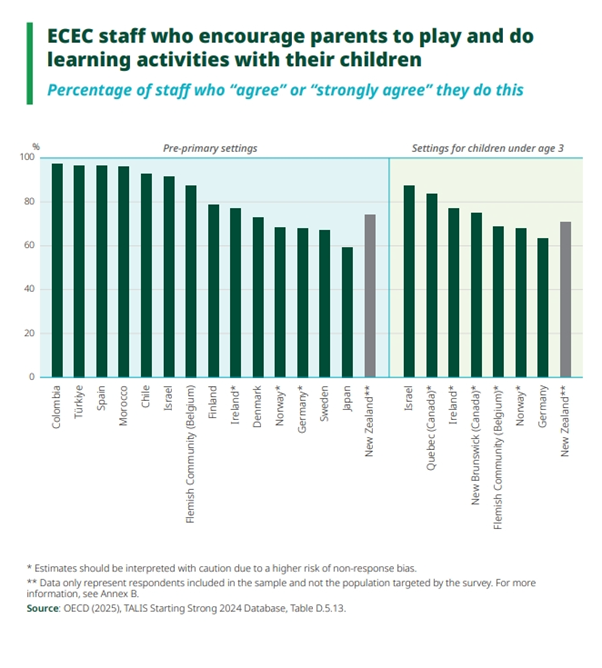
Encouraging parents to support their children's learning at home is a widely adopted practice, with a vast majority of ECEC professionals actively promoting this connection.
This can involve providing parents with resources, suggesting activities, or offering guidance on how to reinforce learning concepts at home.
This focus on the home environment recognizes that learning extends far beyond the ECEC walls.
In some ECEC systems, home visits are a valuable strategy for building stronger relationships between the ECEC setting and the family's home environment.
These visits allow educators to gain a deeper understanding of the child's home life, build rapport with parents, and provide tailored support.
However, these initiatives require dedicated time and proper training for ECEC staff to ensure they are conducted effectively and respectfully.
While not universally implemented, home visits represent a powerful tool for strengthening the home-ECEC connection for children.
Leveraging Technology and Flexible Communication
To overcome logistical challenges and enhance accessibility, ECEC settings can embrace digital tools and flexible communication methods.
Secure online platforms can facilitate the sharing of information, progress updates, and resources, allowing parents to engage at their convenience.
Regular newsletters, brief video updates, or even dedicated parent portals can keep families informed and involved without requiring them to be physically present.
The key is to find communication channels that work best for the diverse needs of the families they serve.
Furthermore, adopting practices that are culturally sensitive and inclusive is paramount.
This means understanding and respecting different family structures, traditions, and communication styles.
Offering information in multiple languages, providing translation services, and actively seeking input from diverse parent groups can help create a more welcoming and equitable environment for all.
This commitment to inclusivity ensures that every family feels empowered to participate.
The Economic and Educational Imperative of Partnership
Investing in strong parent-ECEC partnerships is not just an educational best practice; it also makes sound economic sense.
Research indicates that early interventions and supportive family engagement can significantly reduce the need for more costly remedial services later in a child's educational journey.
By fostering a collaborative approach from the outset, ECEC settings can help prevent future learning challenges, leading to more positive long-term outcomes for children and a more efficient allocation of educational resources.
Given that children spend a considerable amount of time with their parents throughout their formative years, engaging families from the earliest stages of ECEC is one of the most cost-effective policy levers available for improving educational attainment and overall child well-being.
A modest investment in initiatives that strengthen the home-ECEC connection can yield substantial returns, benefiting not only individual children and their families but also society as a whole.
Conclusion
The synergy between effective ECEC settings and engaged parents is a powerful catalyst for child development.
By recognizing the unique contributions of both educators and families, and by actively working to overcome barriers to communication and participation, we can create learning environments that are truly supportive and empowering for every child.
Embracing flexible communication, culturally sensitive practices, and a shared vision for learning ensures that the crucial early years are a time of robust growth, laying a strong foundation for a lifetime of success for children and their families.







 Explore AI Teaching Tools
Comments (0)
Please login to comment
No comments yet
Be the first to comment on this article