
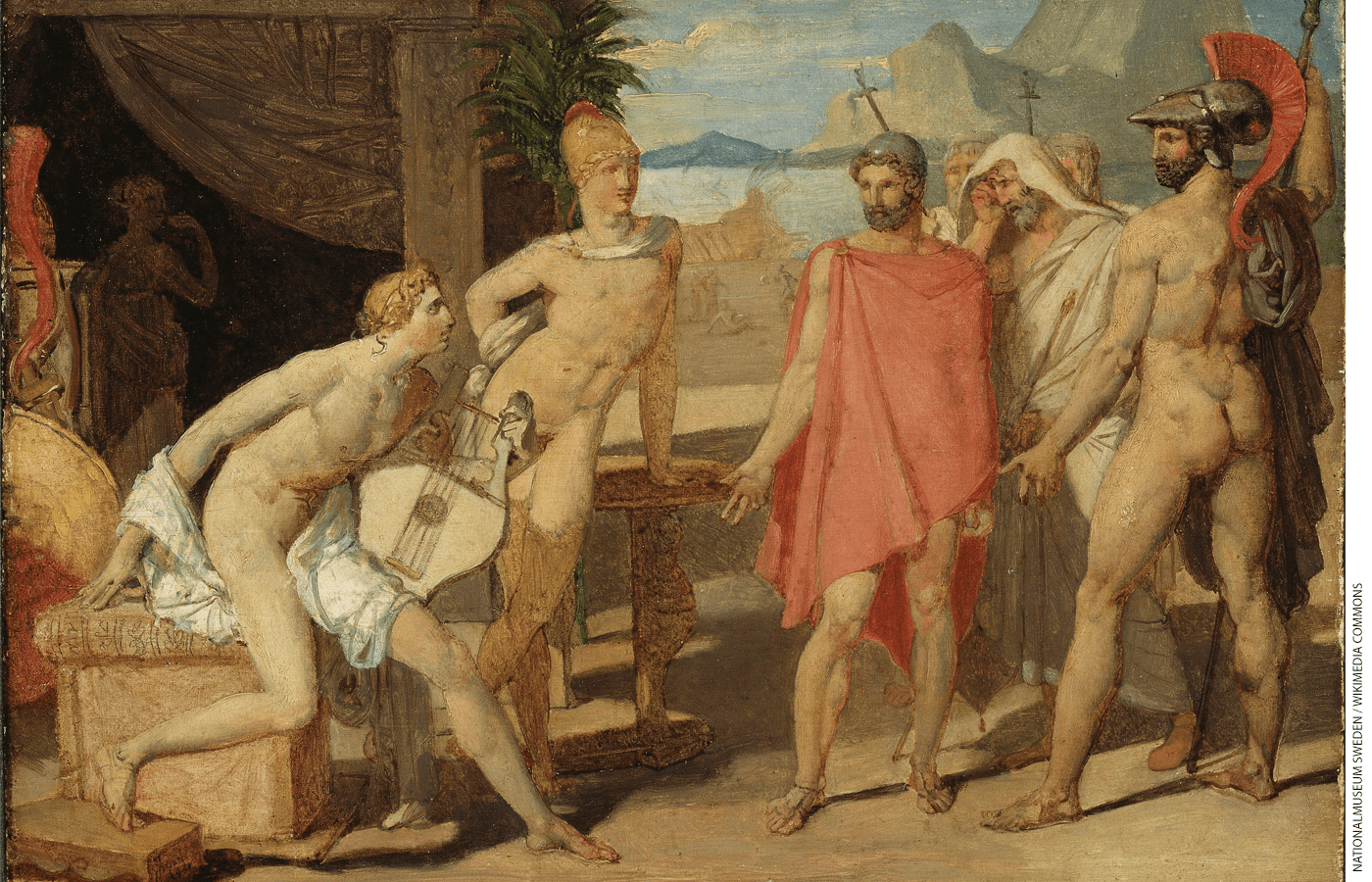
Yesterday my 11th-grade humane letters students and I at Chandler Preparatory School, part of the Great Hearts classical school network in Arizona, discussed the opening book of The Iliad. In our daily, device-free roundtable conversation:
- One student argued that Achilles sabotaged his fellow Greeks by refusing to fight alongside them.
- Another countered that Achilles helped the Greeks by exposing Agamemnon’s flaws.
- A third suggested Nestor, the elder statesman, was more of a leader than either Achilles or Agamemnon.
- Later, a student proposed that Odysseus was the true leader, because in Book 2 he unifies the Greeks at all costs.
These insights show how classical education—rooted in the Western liberal arts, Socratic teaching, and the pursuit of truth, beauty, goodness, and justice—nurtures civic learning in a democratic society.
Civic Education and the Democratic Ideal
Democracy requires citizens who think beyond self-interest to the common good. They must engage in civic discourse, respect institutions, and sometimes sacrifice personal desires for societal harmony. As Alexis de Tocqueville observed in Democracy in America, freedom depends on citizens rejecting detached individualism and instead forming associations for the greater whole.
To prepare young people for this, education must cultivate:
- Knowledge of democratic principles and citizens’ rights and obligations
- Understanding of limited government and free speech
- Respect for democratic institutions—separation of powers, elections, and the free press
Yet, effective civic education depends on a shared vision of what it means to live a good life. That is where classical education shines.
Why Classical Education Supports Civic Virtue
Classical education uniquely fosters civic responsibility by teaching virtue through the great works of Western civilization. Literature, philosophy, and art provide a cultural vocabulary linking past, present, and future generations. This equips students with:
- A shared cultural narrative that reinforces democratic identity
- Broad-mindedness to compare conflicting views
- Respectful discourse skills—expressing personal views while considering others’ perspectives
Classical Education in Practice
I see this daily in my classroom: humane letters students debating leadership in The Iliad, rhetoric students writing persuasive speeches, and seniors stopping by the writing center to refine thesis ideas. These activities embody the Tocquevillian vision of democracy—a society where free citizens learn to deliberate, associate, and pursue the common good.
Robert C. Thornett teaches humane letters and rhetoric at Chandler Prep, a Great Hearts classical school in Arizona.
Original article: Why Classical Education Excels at Civic Education via Education Next.
Educational content curated for learning purposes. Attribution maintained to original sources.







 Explore AI Teaching Tools
Comments (0)
Please login to comment
No comments yet
Be the first to comment on this article