
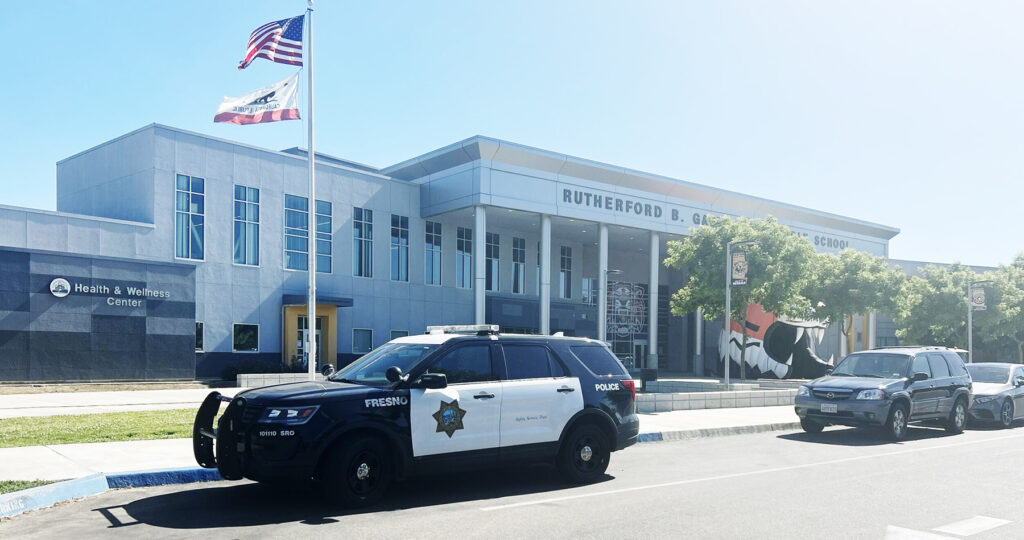
Navigating School Safety: Understanding Police Involvement in California Schools
The presence of law enforcement within educational institutions is a complex and often debated topic.
In California, schools frequently engage with police for a wide array of reasons, ranging from serious safety concerns to seemingly minor incidents.
This article delves into the multifaceted landscape of school policing in California, exploring the data, the diverse motivations behind calls for police assistance, and the ongoing discussions surrounding their role.
Understanding these dynamics is crucial for educators, parents, and students alike as they navigate the pursuit of safe and effective learning environments.
The Spectrum of School-Related Police Calls
The reasons why school staff in California summon the police are remarkably diverse, spanning the entire spectrum of potential issues that can arise within a school community.
While serious incidents like violent altercations, the discovery of weapons, or reports of sexual assault understandably warrant immediate law enforcement intervention, the data reveals that police are also dispatched for a multitude of other, sometimes less critical, situations.
These can include responding to malfunctioning alarm systems, investigating minor property damage, or even assisting with animal control issues on school grounds.
The sheer volume and variety of these calls underscore the intricate relationship between schools and law enforcement agencies across the state.
Research indicates that a significant portion of these calls are for incidents deemed serious, requiring a police presence to ensure the safety and security of students and staff.
These serious incidents can encompass violent acts, threats, and even instances of self-harm.
However, the data also highlights that a substantial number of calls are for matters that, while disruptive, may not inherently require the intervention of sworn officers.
This raises important questions about resource allocation and the most effective strategies for addressing the full range of challenges faced by schools.
Examples of Diverse Incidents
The breadth of situations that lead to police involvement is striking.
Consider these examples:
- A middle school student allegedly engaging in severe physical altercations with a classmate, leading to recommendations for attempted murder charges.
- A report of an injured squirrel in a school courtyard, prompting a call to the police for assistance.
- An incident at a high school pool involving an unauthorized individual exhibiting concerning behavior, resulting in a police response for potential indecent exposure.
- A school alarm being triggered, leading to a police dispatch to investigate a burnt English muffin found in a teacher's lounge.
- Instances of students bringing various items to school, including firearms, knives, and even more unusual items like spears and bows and arrows.
- Reports of sexual assaults, "perversion reports," and significant physical fights among students.
- Less critical calls such as lost keys, malfunctioning equipment, or animals loose on campus, including both domestic pets and livestock.
- Even a call for assistance with a swarm of bees has been documented.
The Debate Around School Policing in California
The role of police in schools has become a focal point of national discussion, particularly in the years following significant social movements advocating for police reform.
In California, this debate is ongoing, with varying perspectives on the necessity and impact of law enforcement presence within educational settings.
Some argue that police are essential for maintaining order, deterring crime, and responding effectively to emergencies, thereby ensuring the safety of students and staff.
They often point to the need for immediate intervention in serious situations and the potential for officers to act as a deterrent to violence.
Conversely, many research studies and advocacy groups suggest that an increased police presence in schools can lead to negative outcomes, particularly for students of color.
Concerns are frequently raised about the potential for the over-criminalization of student behavior, the disproportionate impact of disciplinary actions on minority students, and the creation of a school environment that feels more like a correctional facility than a place of learning.
This perspective often advocates for alternative approaches to conflict resolution and student support that do not involve law enforcement.
Data-Driven Insights into School Policing
Extensive data collection and analysis in California have shed light on the patterns and prevalence of police involvement in schools.
Studies indicate that in districts with dedicated police departments, students are often policed at a higher rate compared to those relying on municipal police services.
This suggests that the structure of school safety services can significantly influence the level of law enforcement interaction students experience.
Furthermore, research has explored the effectiveness of increased policing on school safety.
Some studies have found that simply increasing the number of police officers in schools, particularly when funded by federal grants, has not necessarily led to improved safety outcomes.
This has led to recommendations for exploring a wider range of alternatives to traditional policing for enhancing school security and student well-being.
The Impact of School Resource Officers (SROs)
School Resource Officers (SROs) are sworn law enforcement officers assigned to work in schools.
Their intended role is multifaceted, often encompassing law enforcement, crime prevention, and community engagement.
Proponents of SROs argue that they can build positive relationships with students, serve as mentors, and provide a crucial layer of security.
They are often seen as a visible deterrent to misconduct and a readily available resource in emergency situations.
However, the effectiveness and impact of SROs are subjects of ongoing debate.
Critics point to research suggesting that the presence of SROs can lead to an increase in arrests and referrals to the juvenile justice system for behaviors that might otherwise be handled through school disciplinary measures.
This raises concerns about the potential for SROs to contribute to the school-to-prison pipeline, particularly for students from marginalized communities.
The training and specific duties assigned to SROs are critical factors in determining their overall impact.
Navigating the Legal and Policy Landscape
The legal framework surrounding school policing in California is complex, with state laws often shielding juvenile records and police investigatory information from public view.
This lack of transparency can make it challenging for the public to fully understand the extent and nature of police activity within schools.
While this confidentiality is intended to protect young people, it also limits the ability to conduct comprehensive oversight and public discourse on the effectiveness and appropriateness of school policing practices.
The absence of a uniform statewide policy or set of best practices from the Department of Education further contributes to the variability in school policing across California.
Each school district often operates under its own set of guidelines, leading to significant differences in how police are utilized and integrated into the school environment.
This local control, while allowing for tailored approaches, can also result in inconsistencies and a lack of standardized accountability.
Decentralized Decision-Making and Its Consequences
The decentralized nature of school policing in California means that decisions about whether to have police on campus, the number of officers, and their specific roles are largely made at the local level.
This can lead to a wide range of approaches, from districts with their own robust police departments to those that rely solely on municipal police or sheriff's departments.
For instance, some large districts, like Los Angeles Unified, have historically maintained their own police forces, while others have opted to disband them in favor of alternative safety personnel.
This local control can be both a strength and a weakness.
It allows communities to adapt their safety strategies to their specific needs and contexts.
However, it also means that the quality and nature of school policing can vary dramatically from one district to another, potentially leading to inequities in student safety and disciplinary practices.
The debate over whether a more standardized statewide approach is necessary continues to be a significant point of discussion.
Exploring Alternatives and Future Directions
In response to concerns about traditional school policing, many educational institutions and communities are actively exploring and implementing alternative strategies to enhance school safety and student well-being.
These alternatives often focus on addressing the root causes of behavioral issues, fostering positive school climates, and providing comprehensive support services for students.
One significant area of exploration involves the use of non-police personnel to manage a wider range of incidents.
This can include training school staff in de-escalation techniques, employing mental health professionals and counselors to address student emotional and behavioral needs, and utilizing restorative justice practices to resolve conflicts.
The idea is to divert non-criminal matters away from the justice system and towards interventions that are more supportive and educational in nature.
The Role of Mental Health and Support Services
A growing body of evidence suggests that many incidents that lead to police involvement in schools are rooted in students' mental health challenges, behavioral issues, or social-emotional difficulties.
Therefore, strengthening mental health support services within schools is often cited as a critical component of a comprehensive safety strategy.
This includes increasing the number of school counselors, psychologists, and social workers, as well as providing training for all school staff to recognize and respond to signs of distress in students.
By addressing underlying issues such as trauma, anxiety, and depression, schools can proactively mitigate behaviors that might otherwise lead to disciplinary actions or police intervention.
This approach emphasizes prevention and early intervention, aiming to create a more supportive and nurturing environment for all students.
The goal is to ensure that students receive the help they need to succeed academically and emotionally, rather than facing punitive measures that may not address the core problems.
Restorative Practices and Conflict Resolution
Restorative practices offer a different paradigm for addressing conflict and harm within schools.
Instead of focusing solely on punishment, these approaches emphasize repairing relationships, understanding the impact of actions, and finding solutions that promote accountability and healing.
This can involve facilitated dialogues between students involved in conflicts, community conferencing, and peer mediation programs.
The aim of restorative justice is to create a more inclusive and equitable school community where students feel heard, respected, and supported.
By teaching students how to communicate effectively, manage their emotions, and resolve disputes peacefully, schools can reduce the likelihood of serious incidents and foster a more positive learning environment.
This approach recognizes that discipline should be an opportunity for learning and growth, rather than simply a punitive measure.
Conclusion
The engagement of police in California schools is a complex issue with a wide range of contributing factors and consequences.
While law enforcement plays a vital role in responding to serious safety threats, the data reveals a broader spectrum of incidents that lead to police calls.
The ongoing debate surrounding school policing highlights the need for careful consideration of the impact on students, particularly those from marginalized communities.
As California schools continue to strive for safe and effective learning environments, exploring a balanced approach that integrates appropriate law enforcement presence with robust mental health support, restorative practices, and alternative disciplinary strategies will be paramount.
Understanding the nuances of this issue is key to fostering a future where all students can thrive.






 Explore AI Teaching Tools
Comments (0)
Please login to comment
No comments yet
Be the first to comment on this article