
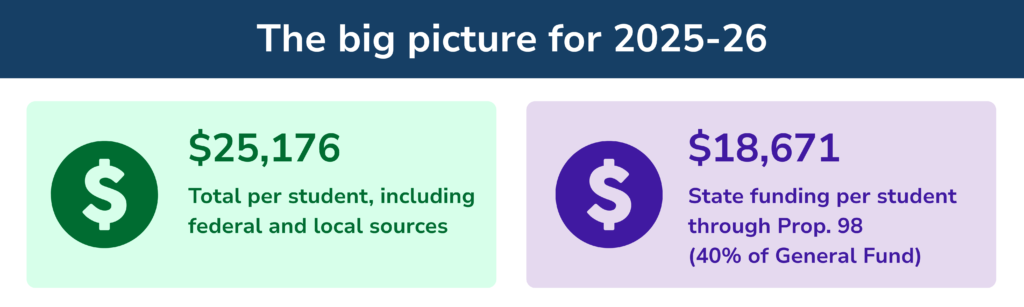
Navigating the 2025-26 State Budget: A Deep Dive into Educational Funding and Priorities
The educational landscape is constantly shaped by budgetary decisions, and understanding these shifts is crucial for educators, students, and policymakers alike.This year's state budget, while navigating economic uncertainties, reveals a commitment to protecting and enhancing educational opportunities across various levels.
From early childhood initiatives to higher education, this comprehensive analysis explores the key allocations, strategic investments, and potential impacts that will define the upcoming academic year.
Discover how this budget aims to bolster learning environments and support the vital work of our educational institutions.
1.
Safeguarding K-12 Education: New Funding Streams and Strategic Investments Despite a challenging fiscal climate, the budget demonstrates a strong resolve to shield K-12 schools from significant financial setbacks.
This protection is a testament to the recognized importance of foundational education.
The allocation of substantial one-time funding signifies a proactive approach to addressing immediate needs and fostering long-term growth within school districts.
This funding is particularly vital in bridging potential revenue gaps and ensuring the continuity of essential educational programs.
Early Literacy and Foundational Skills
A significant portion of the new funding is earmarked for bolstering early literacy programs.Recognizing that strong reading skills are the bedrock of academic success, this budget prioritizes evidence-based approaches.
This includes substantial investment in professional development for educators, equipping them with the latest strategies in phonics and structured literacy.
The goal is to ensure that every child, from transitional kindergarten through the elementary grades, receives the foundational reading instruction they need to thrive.
Furthermore, dedicated funds will enhance the capacity to hire and train specialized literacy coaches, providing targeted support to students and teachers alike.
This initiative represents a critical step in addressing learning disparities and setting all students on a path to academic achievement.
Expanding Learning Opportunities: After-School and Summer Programs
The budget champions the expansion of after-school and summer learning programs, acknowledging their dual role in academic enrichment and providing essential support for working families.By lowering the eligibility threshold for districts to access funding for these programs, more schools will be able to offer these vital services.
This broadened access ensures that a greater number of students, particularly those from disadvantaged backgrounds, can benefit from extended learning opportunities.
These programs not only reinforce classroom instruction but also offer safe and engaging environments for students during non-school hours, contributing to their overall well-being and development.
Addressing the Teacher Shortage: Recruitment and Retention Initiatives
The ongoing challenge of teacher shortages is directly addressed through a robust funding package aimed at recruitment and retention.The budget allocates significant resources to programs designed to attract aspiring educators and support current teachers.
This includes substantial stipends for student teachers, a critical step in alleviating the financial burden that often deters individuals from entering the profession.
Additionally, funding is extended for established programs that provide tuition assistance for those committing to teach in underserved areas or hard-to-staff subjects.
Investments in professional development and certification programs are also included, recognizing the importance of ongoing learning and leadership opportunities for teachers.
This comprehensive approach signals a commitment to building a stable and skilled start teaching on Mentofy">teaching workforce for the future.
Transitional Kindergarten Expansion
The budget fully funds the final year of expansion for transitional kindergarten (TK), ensuring that this crucial pre-kindergarten program is available to all 4-year-olds.This expansion is not just about increased access; it also includes ongoing funding to reduce the adult-to-child ratio in TK classrooms.
This enhancement will allow for more individualized attention and a more supportive learning environment for the youngest learners.
The investment in TK underscores the state's commitment to early childhood education as a cornerstone of educational success.
2.
Higher Education: Navigating Funding Adjustments and System Support The state's public university systems, the University of California (UC) and the California State University (CSU), will largely avoid the deep cuts initially proposed.
While neither system faces direct reductions, a strategic deferral of a portion of their base funding is planned.
This accounting measure, while requiring careful management by the institutions, is mitigated by the provision of no-interest loans to cover immediate shortfalls.
Deferred Funding and Future Commitments
The budget defers a portion of previously pledged funding increases for both the UC and CSU systems.This deferral impacts the timeline for promised annual budget augmentations, pushing some of these increases to future fiscal years.
This adjustment reflects the current fiscal realities while maintaining a commitment to the long-term financial health of these vital institutions.
The state's engagement with the universities on these deferred funds is tied to their progress on key performance indicators, such as improving graduation rates and increasing enrollment of California residents.
Targeted Support for Specific Institutions
Beyond the system-wide adjustments, the budget includes targeted financial support for specific universities facing unique challenges.For instance, a notable allocation is directed towards Sonoma State University to aid in its strategic turnaround plan.
This support is crucial for institutions that may need to adapt their program offerings or operational strategies to meet evolving needs and financial realities.
Such targeted investments highlight the state's responsiveness to the diverse circumstances of its higher education institutions.
3.
Community Colleges: Enrollment Support and Student Services The community college system, a critical pathway for workforce development and higher education access, receives significant attention in this budget.
Beyond the standard cost-of-living adjustments, new funding is allocated to support enrollment growth and enhance student services.
Boosting Enrollment and Student Success
Substantial financial allocations are designated to support increasing enrollment numbers within the community college system.This funding is crucial for ensuring that colleges have the resources to accommodate more students and provide them with the necessary academic and support services.
Furthermore, dedicated funds are provided for emergency financial aid, offering a critical safety net for students facing unexpected financial hardships that could otherwise derail their educational pursuits.
Enhancing Student Support Services
The budget also prioritizes specialized student support services.A notable investment is made in Dream Resource Liaisons, college staff dedicated to assisting undocumented students navigate the complexities of higher education.
Additionally, funding for the Career Passport initiative aims to equip students with the tools and guidance needed to explore career pathways and prepare for the workforce.
These targeted investments underscore a commitment to ensuring equitable access and comprehensive support for all students within the community college system.
Data Sharing and Infrastructure Investments
While new funding is provided for student-focused initiatives, the budget also includes adjustments to funding for certain infrastructure projects.A reduction in funding for the Common Cloud Data Platform, a project aimed at facilitating data sharing among colleges, indicates a recalibration of priorities or a shift in strategy for inter-institutional data management.
4.
Financial Aid and Student Support Programs The state's commitment to making higher education accessible and affordable is reinforced through continued support for financial aid programs.
Cal Grant Program Enhancements
The Cal Grant program, a cornerstone of state financial aid, receives increased funding to accommodate rising caseloads.This augmentation ensures that more eligible students can access the financial assistance they need to pursue their post-secondary education.
The sustained investment in Cal Grant reflects its vital role in promoting educational equity and opportunity.
5.
Addressing Critical Educational Needs: Math, Child Care, and Nutrition Beyond core academic funding, the budget addresses several other crucial areas impacting students and families.
Advancing Mathematics Instruction
While early literacy receives substantial funding, mathematics instruction also benefits from new financial support.Allocations for professional development are designed to equip educators with the latest frameworks and pedagogical approaches in mathematics.
This investment aims to strengthen math education across all grade levels, fostering a deeper understanding and appreciation for the subject.
The establishment of a new Math Network further supports collaborative learning and the dissemination of best practices among educators.
Tackling the Child Care Crisis
The budget includes measures to address the ongoing child care crisis, with funding increases for subsidies provided to child care and preschool providers serving low-income families.While this aims to increase affordability, the budget does not expand the number of children served by subsidized child care beyond current levels.
A reduction in funding for the Emergency Child Care Bridge Program, which provides immediate child care access for foster families, is also noted, though less drastic than initially proposed.
Ensuring Universal School Meals
The commitment to providing universal free school meals for every child continues, ensuring that no student goes hungry during the school day.The budget also allocates significant one-time funding for kitchen infrastructure improvements, enabling schools to better serve minimally processed and locally grown foods.
Dedicated funds are also set aside for nutrition staff recruitment and retention, recognizing the importance of skilled personnel in delivering healthy meals.
6.
Budgetary Mechanisms: Balancing and Fiscal Prudence The state's approach to balancing this year's budget relies on a combination of deferrals and one-time funding.
These accounting maneuvers are employed to navigate revenue fluctuations and ensure that essential services, particularly in education, remain protected.
The Role of Deferrals and One-Time Funds
Deferrals, an accounting practice of delaying payments, and the strategic use of one-time funding are key components of the budget's fiscal strategy.While these methods help bridge short-term gaps, they also necessitate careful financial planning and management to avoid long-term liabilities.
The budget also draws upon the Proposition 98 rainy day fund, which will be fully utilized by the end of the fiscal year.
Navigating Economic Uncertainty
The current budget reflects a cautious approach in response to broader economic uncertainties.Factors such as fluctuations in the stock market, global economic shifts, and localized events contribute to the volatility of state revenues.
The budget's structure aims to provide stability for educational funding amidst these external pressures.
Conclusion
This state budget represents a strategic effort to prioritize education, even within a constrained fiscal environment.The significant investments in K-12 education, particularly in early literacy, after-school programs, and teacher recruitment, underscore a commitment to foundational learning and educator support.
While higher education navigates funding adjustments through deferrals, the core mission of these institutions remains supported.
Community colleges receive crucial funding for enrollment growth and student services, reinforcing their role as accessible pathways to opportunity.
The budget's approach to balancing fiscal realities while safeguarding educational funding offers valuable insights into how state priorities are shaped and executed.
Understanding these allocations empowers stakeholders to advocate for continued educational excellence and to leverage the available resources effectively for the benefit of all learners.





 Explore AI Teaching Tools
Comments (0)
Please login to comment
No comments yet
Be the first to comment on this article