
Graduation Looms as AI Reshapes the Hiring Landscape
For many students on the cusp of graduation, the promise of a career built on years of study is colliding with a rapidly evolving job market, increasingly influenced by artificial intelligence. The dream of landing a coveted position, particularly in fields like technology, is now shadowed by widespread industry shifts and a growing uncertainty about the future of work.
The Shifting Sands of Tech Careers
Noah Herd, a computer science senior at the University of Washington Tacoma, discovered his passion for technology early, building his first video game as a teenager. The allure of high salaries in the tech sector during the pandemic solidified his career aspirations. He sees coding as a creative endeavor, a way to build tangible products from abstract ideas.
However, as his graduation date approaches, Herd, like many of his peers, is navigating a landscape marked by significant layoffs in the tech industry. Companies that once offered lucrative opportunities are now shedding thousands of employees. This stark reality has cast a pall over his optimistic outlook, even as he remains determined to pursue his software engineering goals.
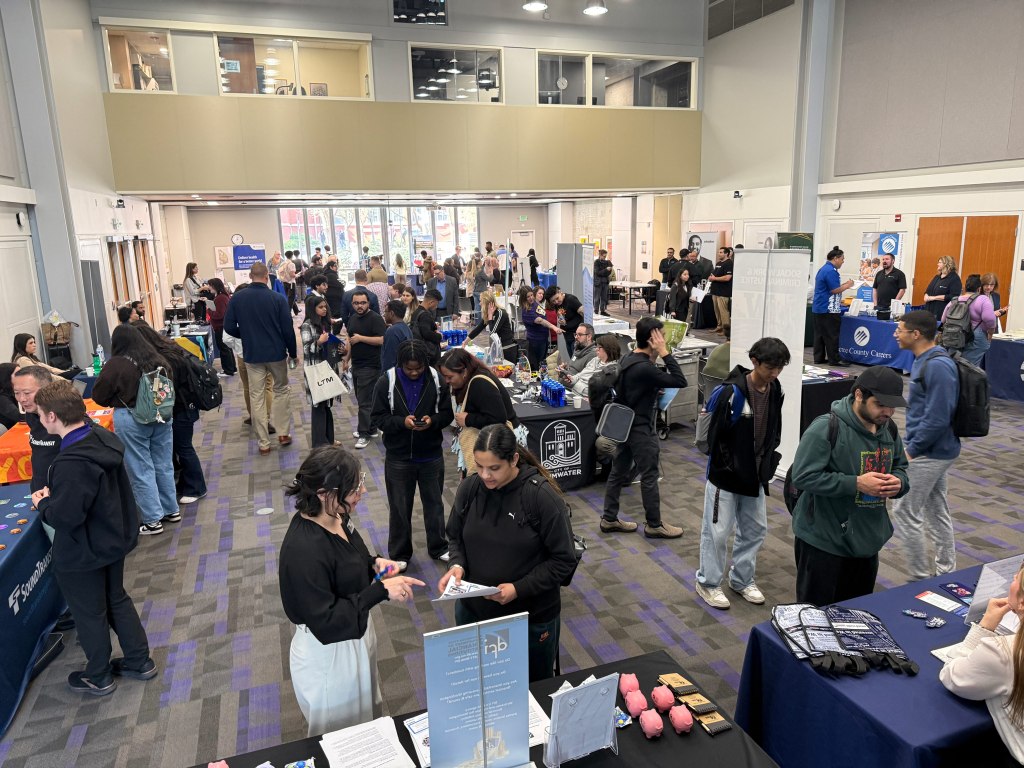
“It’s not looking good,” Herd admitted, reflecting on a recent career fair where recruiters still drew long queues, despite the industry's volatility. The immediate need to secure employment, however, remains a primary concern, underscoring the practical pressures faced by graduating students.
AI's Shadow Over Entry-Level Roles
Software development is frequently cited as a field highly susceptible to automation by artificial intelligence in the coming decade. Other professions, including customer service, graphic design, accounting, and data entry, also appear on lists of roles at high risk.
Experts predict that entry-level positions and roles typically filled by younger workers, particularly those in Generation Z, could be disproportionately affected. The repetitive nature of many of these jobs makes them prime candidates for automation by AI technologies.
Recent labor market data paints a concerning picture. The unemployment rate for recent college graduates has reached a five-year high. Furthermore, employment figures for young adults aged 22 to 25 in sectors most exposed to AI have seen a noticeable decline. The number of full-time job postings on early-career platforms has also decreased, falling below pre-pandemic levels.
Beyond AI: A Complex Economic Tapestry
Despite the growing presence of AI, students and economists alike hesitate to attribute the current challenging job market solely to this technology. Many graduating students are already contending with a broader economic climate characterized by a "low hire, low fire" environment, where competition is fierce.
They face the added pressure of competing with recently laid-off professionals and individuals who are unable to retire, further constricting the availability of positions. Labor experts suggest that AI has not yet significantly displaced a large number of entry-level or white-collar jobs, though its influence is undeniably adding to market uncertainty.
Educational institutions are actively adapting to these changes. Career services departments are integrating AI into their offerings, advising students on how to leverage the technology to enhance their competitiveness. There's also a renewed emphasis on networking and cultivating soft skills, such as communication and critical thinking, which are considered more resilient to automation.
The Enduring Value of Human Skills
“Technical skills may come and go, change and evolve,” noted John Woods, provost and chief academic officer at the University of Phoenix. “But we are still teaching judgment, critical thinking, teamwork.” This highlights a fundamental belief that uniquely human attributes remain essential in the evolving workplace.
However, concerns linger about AI potentially exacerbating existing inequalities. Some advisors and students worry that AI could reinforce advantages for those with established connections, allowing them to secure the most desirable remaining human-centric jobs.
“The effects of AI on labor markets are obviously evolving as we speak,” observed Steven Durlauf, an economist specializing in human capital and wealth inequality. He added that young workers often face a lack of clarity about their future, leading them to anticipate the worst-case scenarios.
Navigating a Multifaceted Economic Climate
Durlauf and other labor market analysts emphasize that isolating AI's impact is challenging amidst a confluence of economic disruptions. These include the rapid hiring and subsequent downsizing by major tech firms during the pandemic, shifts in federal workforce policies, and persistent concerns about inflation, including rising costs for housing and healthcare.
At a recent career fair, computer science majors, including Noah Herd, engaged with recruiters like Anshul Bhandari from Infoblox. Bhandari's company is actively recruiting for various roles, acknowledging that AI is already integrated into their hiring process, including initial interviews and a significant portion of their programming tasks.
“I see AI as an enabler, not a job killer,” Bhandari stated. “A third of our code is written by AI, but we still need humans. We still need human oversight—at least for the foreseeable future.” This perspective suggests a collaborative future where AI augments human capabilities rather than entirely replacing them.
Student Voices: A Spectrum of Concerns
Students express a range of anxieties about their prospects. Laura Cortez, a junior in mechanical engineering, finds it difficult to pinpoint a single reason for her hiring challenges, having applied to over 200 jobs with limited callbacks. She attributes the hurdles to a combination of a challenging economy and a surplus of students competing for a limited number of positions.
Cortez doesn't perceive an immediate threat to her field from AI, believing its current role is primarily in resume screening. She notes that some students are already developing strategies to navigate these AI-powered filters, such as using hidden text on their resumes to include specific keywords.
Ibadat Sandhu, a computer science major aspiring to work in cybersecurity, observes a trend where entry-level positions increasingly demand two to three years of experience. “Even with internships, they’re getting more specific with what they want from students,” she explained. “I don’t even have four years here [at college] yet. Where do I get that experience?” This highlights a growing disconnect between academic timelines and employer expectations.
Monika Rani, a 35-year-old pursuing a master's degree in accounting, hopes to secure a finance role before AI significantly impacts the field. Having moved from Pakistan, she acknowledges the uncertainty of the labor market but believes her profession will remain secure. “We still need humans to double check and oversee AI. It’s useful now, but still contains errors. It’s not 100 percent,” she asserts.
Navigating the Future of Hiring: Skills Over Credentials
Despite mixed messages, a spring job outlook survey indicates potential growth in hiring for college graduates this year, particularly in information and engineering services, as well as trade and construction. Conversely, manufacturing and utilities are projected to see a decrease in hiring.
A significant portion of employers plan to hire new staff, while a smaller percentage intend to reduce their workforce. While many employers are not yet prioritizing AI-specific skills on resumes, a substantial percentage of entry-level jobs now require some proficiency in the technology. Furthermore, a considerable number of employers are assigning AI-related tasks to interns, signaling a growing trend.
“We’ll continue to see a lot more of that,” commented Mary Gatta, director of research and public policy at the National Association of Colleges and Employers (NACE). She also highlighted a shift towards "skills-based hiring," a method that evaluates candidates based on their actual abilities and competencies rather than traditional academic credentials like degrees or GPAs.
The Rise of Skills-Based Hiring
Research from NACE shows a marked decline in the use of GPA as a primary screening tool. Instead, a majority of employers now utilize skills-based hiring for entry-level positions. This approach emphasizes practical application and demonstrable capabilities.
Gatta advises college graduates to translate the skills they've acquired through research projects or student club activities into concrete examples on their resumes. “Employers don’t want them to list ‘critical thinking’ or ‘teamwork.’ They want candidates to explain what that means and provide examples when that was really important and useful,” she explained. This strategy is beneficial for students across all majors, including computer science.
Jonathan Wright, director of career services at the College of Southern Nevada, believes the rapid integration of AI reinforces his long-standing advice for students to pursue continuous training, whether through externships, certificates, or advanced degrees. He suggests that this additional education may now include learning how to effectively collaborate with AI agents.
“Employers still need the humans to manage all these AI tools,” Wright stated. “The human element is still there. Stop running from the technology. Embrace it, and add it to your tool belt.” He views AI as a potential democratizing force, offering tools and guidance that can provide a starting point for those seeking to understand complex career paths.
Concerns About Equity and the Digital Divide
Not everyone shares this optimistic outlook. Amanda Figueroa, associate vice chancellor for social mobility at UW Tacoma, points out that existing employment disparities, particularly for Black women, could be exacerbated by AI. Research indicates that female, Black, Hispanic, and first-generation college students are less likely to secure paid internships, which are often gateways to well-compensated entry-level positions and valuable mentorship opportunities.
Figueroa suggests that if AI further complicates access to internships and entry-level work, students may become even more reliant on social connections and interpersonal skills to find job opportunities. This, she warns, risks reinforcing existing networks and limiting access for those without privileged connections.
As graduation nears, Noah Herd grapples with a mix of pride and apprehension. He has set a six-month deadline to find a computer science job, considering military service as a fallback if he doesn't succeed. “I really don’t want to do that,” he confessed, “but I need to be able to feed myself.” His situation reflects the broader anxieties of a generation entering the workforce at a pivotal moment of technological and economic transformation.





 Explore AI Teaching Tools
Comments (0)
Please login to comment
No comments yet
Be the first to comment on this article