
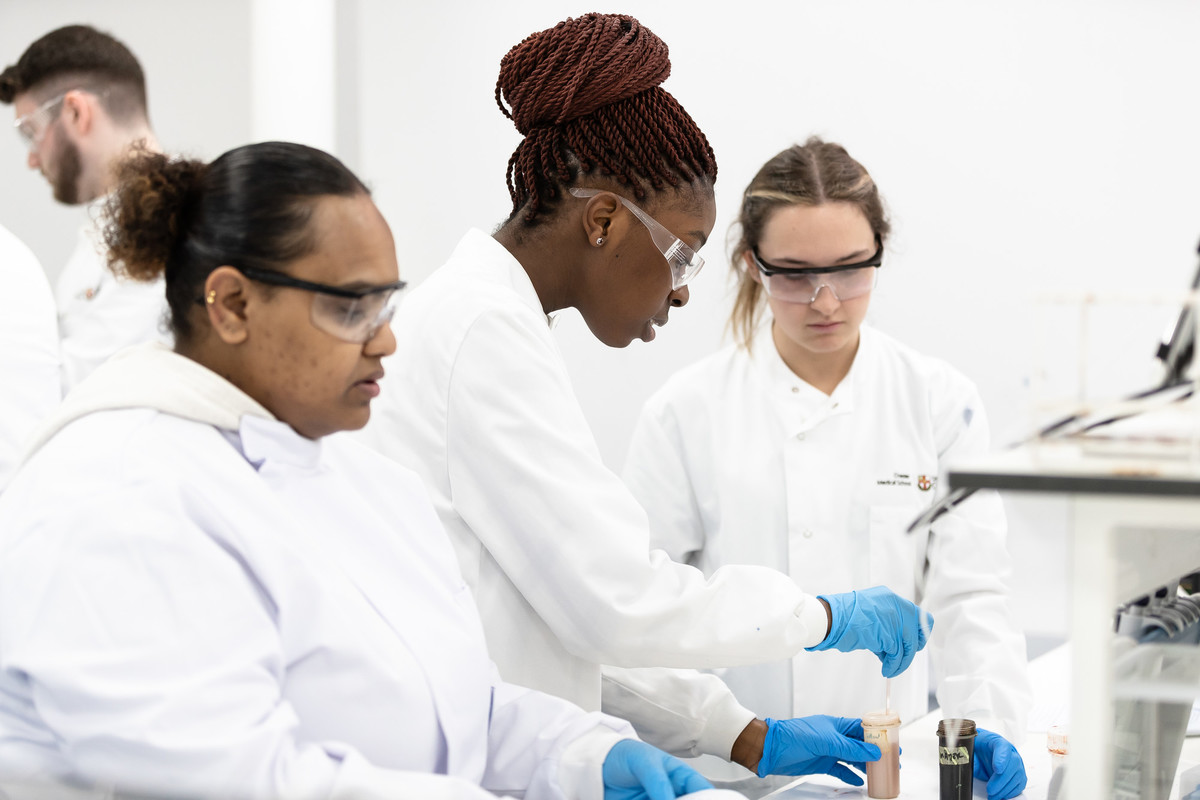
Chester University Cultivates Next Wave of Food Science Trailblazers Amidst Industry Revolution
The global food landscape is undergoing a seismic shift, demanding a delicate dance between consumer desires and industry realities. Shoppers now crave products that are not only healthier, safer, and environmentally conscious but also remarkably affordable, all without sacrificing the taste, quality, and convenience they’ve come to expect. This complex equation has propelled food science to the forefront of industry development, transforming it into a critical discipline for navigating these competing pressures.
At the heart of this evolution, the University of Chester is forging a path for future food innovators. With a rich heritage spanning over 180 years, this esteemed institution in northwest England is home to a School of Allied and Public Health that champions applied science programs meticulously designed to meet the dynamic demands of the food industry.
Forging Future-Proof Expertise in 12 Months
The MSc Food Science and Innovation program at Chester is a testament to this forward-thinking approach. In a focused 12-month period, students are immersed in the scientific knowledge and practical skills essential for mastering the intricacies of modern food production. The curriculum spans the entire journey from initial concept to the consumer's plate, encompassing manufacturing, processing, and groundbreaking product development.
This intensive program is not conceived in isolation; it is a collaborative effort with industry veterans, ensuring a contemporary and highly relevant curriculum that mirrors the real-world challenges and opportunities within the food sector.
A Curriculum Designed for Impact
The modules offered are a deep dive into the science that underpins every aspect of food. Students explore fascinating areas such as Functional Foods and Bioactive Ingredients, Packaging Innovations that push the boundaries of preservation and presentation, and the intricate science of Food Rheology, Texture, and Sensory Science. Crucially, topics like Food Security and Integrity, alongside Advances in Food Innovation, are woven together to provide a holistic understanding.
Rather than treating these subjects as isolated silos, the curriculum emphasizes their interconnectedness. This approach builds a connected picture of how food moves from concept to shelf, highlighting potential pitfalls and opportunities at every stage of the development process. Students gain hands-on expertise in food production, sensory evaluation, product formulation, and quality assurance.
They grapple with the pressing challenges faced by today's food manufacturers, including navigating stringent food safety regulations, overcoming complex formulation hurdles, and meeting the commercial imperative to develop products that are both nutritionally beneficial and possess excellent shelf stability.
From Classroom to Cutting-Edge Research
The culmination of this rigorous academic journey is an independent dissertation project. This is where students are empowered to tackle a genuine research or development challenge, applying their newfound knowledge to a real-world problem. For 2025 graduate Paul Abidakun, this meant spearheading the development and evaluation of an omega-3 enriched plant-based mayonnaise.
His project leveraged advanced liposomal delivery techniques, a cutting-edge approach to nutrient encapsulation. Paul meticulously conducted shelf-life evaluations and sensory trials at HTC Health, a facility that mirrors industry standards. The subsequent analysis of samples took place within Chester's state-of-the-art on-campus food facilities, providing invaluable practical experience.
“This project sharpened my technical skills and deepened my love for research, problem-solving, and evidence-based product development,” Abidakun shared, reflecting on the transformative impact of his dissertation work.
The NoWFOOD Centre: A Hub of Innovation
Projects like Abidakun’s are significantly bolstered by the University of Chester’s NoWFOOD Centre. This dedicated food manufacturing facility serves as a vital resource for both students and external industry partners, fostering a collaborative environment for innovation and development.
The centre boasts a sophisticated 10-booth sensory taste panel suite, complemented by fully equipped development kitchens and advanced food analytical laboratories. This setup is a direct reflection of the technical departments found within leading food companies, providing students with an authentic industry experience.
Within these advanced facilities, students learn far more than just the mechanics of product creation. They develop a profound understanding of how evidence informs critical decision-making, how to design effective sensory studies, and how to interpret complex consumer feedback. They gain proficiency in evaluating product performance and mastering the analytical techniques that form the bedrock of modern food development and quality assurance.
Learning is further enriched by the guidance of experienced academics and practitioners. These individuals bring a wealth of diverse perspectives and employ varied teaching methodologies, ensuring that each student's individual learning needs are met and nurtured.
Mentorship That Fuels Growth
The caliber of the academic team is a significant factor in the program's success. Graduates consistently credit their lecturers for their personal and professional development. Abidakun, for instance, specifically highlighted the invaluable guidance of Professor Weili Li and colleagues like Stewart Crofts and Ashley English, whose mentorship extended beyond technical instruction.
This program fosters an environment where critical thinking is paramount. Students are encouraged to question assumptions and approach food innovation from a dual perspective: scientific rigor and commercial viability. This balanced approach was a key takeaway for Shweta Vishwanath, another distinguished graduate from the 2025 cohort.
“From innovative lectures to insights from pioneering ventures and food industry professionals, the programme gave me a deeper understanding of food innovation and product development, teaching me how to handle creativity with feasibility,” Vishwanath stated. This ability to marry creative vision with practical execution is a hallmark of successful product development in the food industry.
Balancing Creativity with Commercial Acumen
The food industry is a demanding arena where brilliant ideas alone are rarely sufficient. Products must possess scientific robustness, commercial viability, scalability, and a keen alignment with evolving consumer expectations. The MSc program at Chester equips students with the strategic thinking required to navigate these competing priorities, enabling them to make decisions firmly grounded in evidence.
The learning experience is further amplified by guest lectures delivered by seasoned professionals from the food industry. These sessions provide invaluable real-world insights and create opportunities for students to engage directly with local industry partners, forging crucial connections for their future careers.
While the path is undoubtedly demanding, it is precisely within these challenges that the most significant personal and professional growth occurs. “There were moments of self-doubt and days when everything felt overwhelming,” Vishwanath admitted. “But looking back, I realise it was never just about the degree, it was about growth, resilience, and becoming a stronger version of myself.”
A Spectrum of Career Opportunities Awaits
The career prospects for graduates with a specialization in food science are both broad and expanding. Projections indicate that the overall employment of food scientists is expected to grow by 6% from 2024 to 2034, outpacing the average growth rate for all occupations. This robust growth underscores the increasing demand for skilled professionals in this vital sector.
Graduates are well-positioned for roles across the entire food supply chain, from the initial stages of food production and innovative product development to ensuring stringent quality assurance, managing food safety protocols, and driving cutting-edge research and development initiatives.
For Paul Abidakun, the MSc program has been instrumental in shaping a clear and ambitious vision for his future contributions to the food industry. “I am eager to contribute to the food industry through quality assurance, new product development, functional food innovation, and data-driven processing improvements,” he expressed.
As he looks ahead, Abidakun is enthusiastic about applying the comprehensive knowledge and skills acquired during his studies to the next critical phase of his career. The University of Chester's commitment to fostering innovation and practical expertise ensures its graduates are not just prepared for the present, but are poised to lead the future of the food industry.







 Explore AI Teaching Tools
Comments (0)
Please login to comment
No comments yet
Be the first to comment on this article