
Alberta's Engineering Crucible: Where Global Challenges Meet Groundbreaking Research
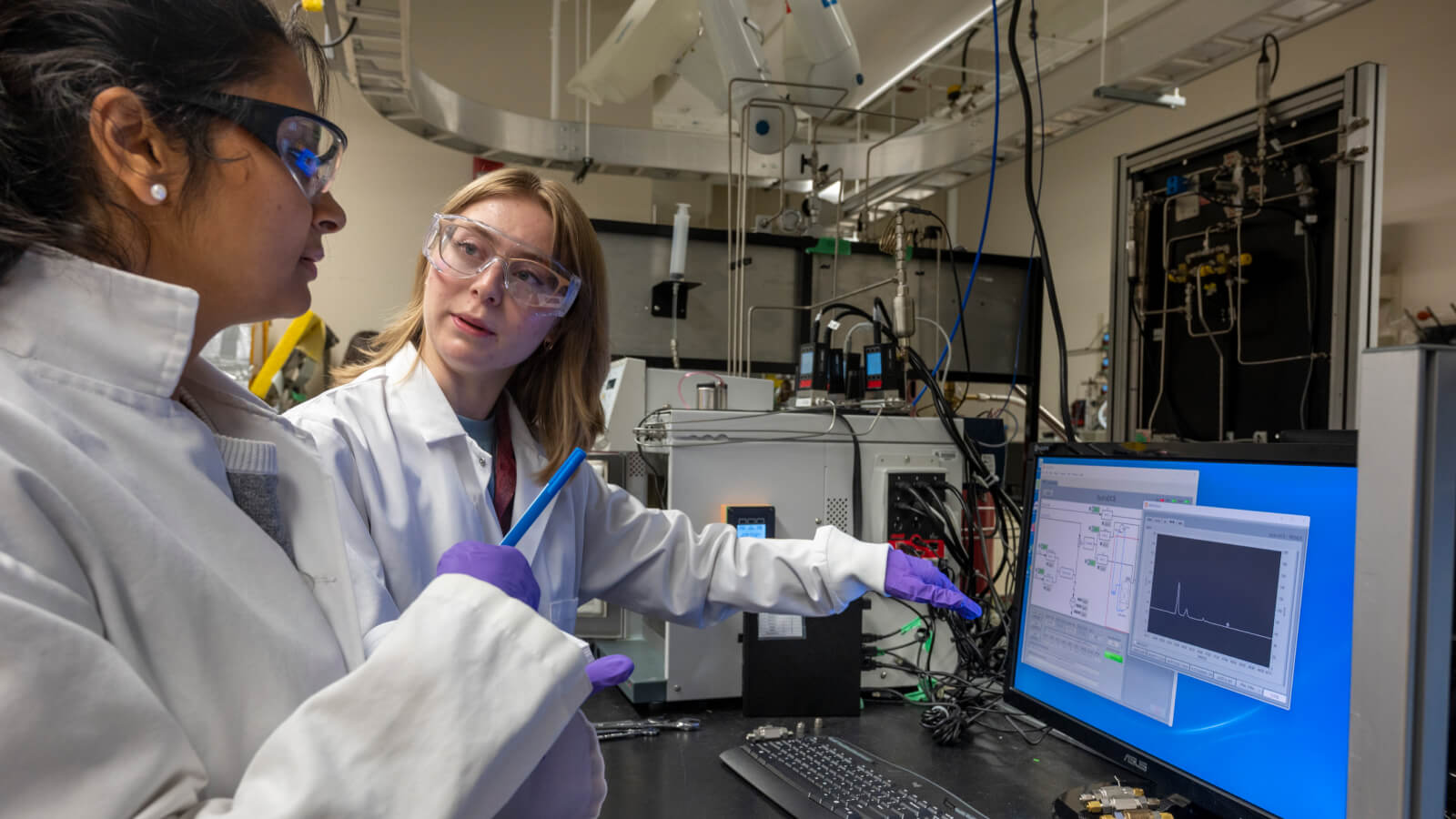
In the heart of Alberta, a quiet revolution is brewing within the halls of academia, transforming how the next generation of engineers tackles the world's most pressing issues. Far from theoretical exercises, students here are immersed in research that directly confronts the complexities of a sustainable future, from extracting critical minerals to optimizing industrial processes.
Fueling the Future: Tackling Resource Extraction with Innovation
Imagine arriving in a new country with a monumental task: finding ways to power the clean energy transition without leaving a heavier environmental footprint than the one we're trying to erase. This was the challenge for Farzin Sadehlari, originally from Iran, who found his intellectual home at the University of Alberta's Department of Chemical and Materials Engineering (CME).
Sadehlari's doctoral research centers on Green Emulsion Liquid Membrane technology, a sophisticated approach designed to offer a more environmentally sound alternative to traditional metal extraction methods. He is actively engaged in developing a system that could see this innovative process scaled up for widespread industrial application.
"The chance to contribute to projects that address sustainability and the intricate challenges of critical mineral processing, all within a highly collaborative research setting, was a major draw," Sadehlari explains. "The state-of-the-art research facilities, the spirit of interdisciplinary cooperation, and the robust connections with industry made CME the perfect environment for my work."
A Research Powerhouse: Global Impact from Alberta
The Department of Chemical and Materials Engineering at the University of Alberta is not just a teaching institution; it's a vibrant engine of research with a significant global footprint. Its graduate community, comprising approximately 250 PhD, MSc, and MEng students, with a strong majority pursuing doctoral degrees, is supported by an impressive annual external funding stream exceeding CA$20 million.
This substantial investment is strategically allocated across six key focus areas: energy and the energy transition, sustainable development, smart processing, dual-use technologies, health, and food and biological engineering. This funding model ensures that every graduate student undertaking thesis-based research receives a research assistantship, and all 150 postdoctoral scholars and research associates benefit from fellowship support.
The output of this dedicated research effort is prolific. CME faculty and students collectively publish over 500 journal articles each year, averaging an exceptional 12 high-impact publications per faculty member. In terms of citation impact, the department stands at the pinnacle in Canada for Chemical Engineering and is tied for third place for Materials Science and Engineering, according to the Shanghai Ranking – Academic Ranking of World Universities.
Furthermore, its Chemical Process Control option holds the second-highest global ranking for citation impact. The department's reputation is further solidified by QS Rankings by Subject 2026, which places CME among the top three to four Canadian institutions for Chemical Engineering. These impressive rankings are complemented by significant faculty recognition, including three fellows of the Royal Society of Canada, eight fellows of the Canadian Academy of Engineering, and 10 fellows from major professional societies. Notably, 26% of the faculty are women, reflecting a commitment to diversity and inclusion.
Bridging Academia and Industry: Real-World Engineering Solutions
The research initiatives at CME are not confined to theoretical exploration; they are deeply rooted in addressing the tangible challenges faced by Alberta's diverse industries. Carlos Henao, an oil and gas engineer hailing from Colombia, is currently investigating the complex phenomena occurring within the steam generators essential for SAGD (Steam-Assisted Gravity Drainage) operations, a critical method for extracting oil from Alberta's vast oil sands reserves.
His work specifically examines how variables such as flow rate, acidity, and turbulence influence the formation and integrity of a thin protective layer known as magnetite. This layer plays a crucial role in preventing corrosion within the steam generators. A more profound understanding of this coating's behavior could empower oil sands operators to refine their processes, leading to more efficient steam generation and improved operational outcomes.
Hossein Mohammadghasemi, a doctoral candidate from Tehran, operates at the intersection of data science and industrial process control. His research focuses on the Primary Separation Vessel, a substantial tank used in oil sands processing to separate bitumen from sand and water. He is developing sophisticated computer models designed to predict bitumen recovery rates and pinpoint areas where losses may occur.
"My work primarily falls under the umbrella of smart processing and the development of digital twins within the energy sector," Mohammadghasemi states. The tools he is creating are specifically engineered for use by engineers and managers, enabling them to make more rapid and informed decisions regarding live industrial systems.
What unites these three students is the profound growth they have experienced through collaborative efforts that extend beyond their immediate research groups. Mohammadghasemi engages in monthly meetings with industry partners through his affiliation with the Process Data Analytics and Smart Automation group. Henao actively contributed to the organizing committee for the Faculty of Engineering Graduate Research Symposium, working alongside a diverse cohort of students from across the faculty.
Meanwhile, Sadehlari consistently draws valuable insights from discussions with researchers specializing in hydrometallurgy and process systems engineering, which helps him refine the strategic direction of his own research endeavors. This interconnected approach fosters a dynamic environment where diverse perspectives converge to drive innovation.
Learning by Doing: Cultivating Future Innovators
At CME, hands-on learning is not an afterthought; it is woven into the very fabric of its graduate programs. The curriculum is designed around tangible, real-world processes, exploring concepts like the chemical engineering principles behind brewing coffee or the materials engineering science involved in crafting chocolate.
Students are actively engaged through open-ended design challenges, competitive projects, participation in student clubs, and immersive industry visits. The department is also developing a Smart Plant Automation facility, built upon an industrial-grade distributed control system for chemical plants, which will be integrated into coursework.
Furthermore, plans are underway to introduce a scanning electron microscopy (SEM) teaching laboratory and a fermentation and biotechnology teaching laboratory, further enhancing the practical learning opportunities available to students. Professors at CME leverage these cutting-edge teaching facilities and a wealth of research equipment to their fullest potential.
Many faculty members bring invaluable experience directly from industry, allowing them to bridge the gap between theoretical concepts and practical application. Professor Vinay Prasad, for instance, played a role in the design of what is now the world's largest refinery before transitioning to academia. In his "Coffee in Chemical Engineering" lab, every step from selecting the beans to the final cup is meticulously linked to fundamental engineering principles.
"From the very first day, students are applying material balances to the operation of a drip coffee maker," Professor Prasad notes. "Students collaborate in teams to devise the optimal roasting, grinding, and brewing processes. They are encouraged to be creative and to trust their intuition."
The pedagogical philosophy behind this approach is deeply practical. "Companies historically provided extensive specialized in-house training for new employees," Professor Prasad observes. "This is becoming less common, which elevates the importance of hands-on learning as a critical competitive advantage for launching a successful career."
Moreover, a network of 3-1-1 partnership programs with select international universities provides students with opportunities to gain even broader experience. These global connections not only attract international students but also link graduates to extensive professional networks, cultivating the kind of enriching environment that drew students like Sadehlari, Henao, and Mohammadghasemi from diverse countries and varied engineering backgrounds to the University of Alberta.





 Explore AI Teaching Tools
Comments (0)
Please login to comment
No comments yet
Be the first to comment on this article