
Riverside Rises: Enrollment Boom Strains Campus Life, Sparks Student Concerns
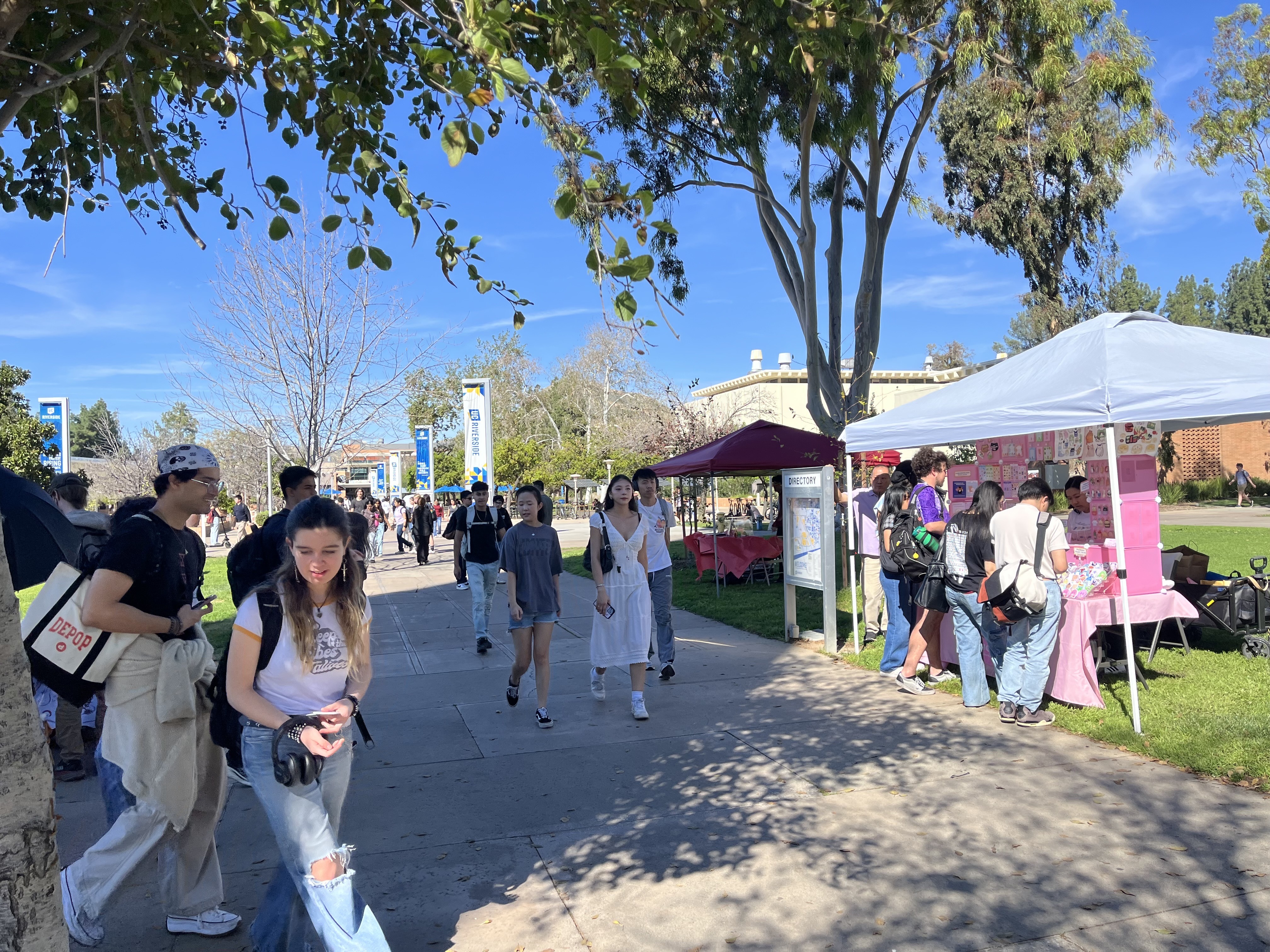
A tidal wave of new students has descended upon UC Riverside this academic year, marking the largest incoming class in the institution's history. While this surge signals a resounding success in bolstering the university's reputation and attracting talent, the physical infrastructure and daily campus experience are showing the strain of this unprecedented growth.
The Squeeze: Housing and Daily Life Under Pressure
For many first-year students, the reality of this expansion hit hard on move-in day. Dorm rooms designed for two have been converted into triple accommodations, creating an immediate spatial challenge. The cramped quarters, struggling to comfortably house three students' belongings alongside their living essentials, serve as an early indicator of the broader resource crunch.
This housing crunch doesn't necessarily ease for students beyond their initial year. Anecdotal evidence suggests that the university's capacity to provide adequate housing diminishes for upperclassmen, leaving them to navigate a more competitive and often less accommodating market.
Beyond the Dorms: A Campus Feeling the Pinch
The impact of increased enrollment extends far beyond residential halls. Everyday conveniences are becoming increasingly difficult to access, creating friction in the student experience. This is particularly evident in shared campus spaces and essential services.
Bike racks, once readily available, are now consistently full, leading to makeshift parking arrangements and a daily scramble for space. This seemingly minor inconvenience highlights a larger trend of diminishing personal space and increased competition for limited resources across campus.
The dining halls, a crucial lifeline for many first-year students residing on campus, are also experiencing significant pressure. Long queues have become a common sight, forcing students with demanding schedules to make difficult choices between meals and academic commitments. The time spent waiting for food can directly impact a student's ability to attend their next class on time.
Harrison Swatzell, a first-year history major, voiced the common frustration: "The dining hall lines are kind of annoying. I mean, I’m tired, and I’m ready to eat, and I’ve got to wait in a (long) line to get food." This sentiment underscores the daily challenges students face in accessing basic necessities amidst the growing student population.
The Academic Arena: Class Access and Faculty Workload
Perhaps the most significant concern arising from the enrollment surge is its impact on educational resources. The university's ability to provide timely and accessible academic opportunities for all students is being tested, particularly regarding class registration and faculty support.
Navigating the Registration Maze
First-year students, in particular, are finding it challenging to secure spots in their desired courses. With a larger pool of students competing for limited seats, the registration process has become a high-stakes endeavor. This is compounded by the fact that essential courses, critical for degree progression, often fill up before students are even eligible to register.
Dante Scott, a first-year business analytics major, proposed a practical solution: expanding the availability of core curriculum courses. "At least the lower division classes. They can probably add a couple more sections so people could actually get it," he suggested, emphasizing the need for more offerings in foundational subjects like mathematics.
The Faculty Bottleneck
However, the capacity to simply add more classes is directly tied to the university's faculty resources. The current workload for professors and teaching assistants is already substantial, and the increased student-to-faculty ratio is creating a significant strain. This can impact the quality of instruction and the level of personalized support students receive.
One student recounted an experience where a crucial assignment, designed to prepare for an upcoming exam, was graded only after the exam had already taken place. This delay, attributed to the teaching assistant's overwhelming workload, highlights the logistical challenges faced by academic support staff in managing such large classes.
Even with the best intentions, professors and teaching assistants are finding it physically difficult to adequately support such a large number of students. The personal touch and individual attention that foster deeper learning are becoming increasingly elusive in these oversized academic environments.
The Contrast of Scale: Small Classes vs. Lecture Halls
The difference in learning experiences between smaller, more intimate classes and large lecture halls is stark. Patricio Schurter, a first-year materials science and engineering major, shared his observations.
Schurter described his positive experience in a math class with approximately 30 students, noting a stronger sense of community and greater opportunities for direct engagement with the professor. "It really makes it so that it’s a lot more student-focused, and I appreciate that wholeheartedly," he stated.
He contrasted this with his experiences in larger science courses, where class sizes can reach 400 to 600 students. In these settings, Schurter observed, "the teachers are honestly done. Whenever I went to their lectures, they’d just be regurgitating what was on the slides." The sheer volume of students appears to limit the professor's ability to facilitate dynamic and interactive learning.
Looking Ahead: Infrastructure and the Faculty Question
The university is taking steps to address the growing demand for academic space with the upcoming opening of the Undergraduate Teaching and Learning Facility. This new building is expected to provide additional classrooms and laboratories, offering some relief to the physical constraints.
However, many students remain skeptical that this facility alone will solve the core issue. The fundamental challenge, they argue, lies not just in the availability of physical space but in the shortage of faculty members to staff these new learning environments. Without a corresponding increase in teaching staff, the problem of oversized classes is likely to persist.
Schurter expressed this concern directly: "Without increasing faculty, we are still going to have classes with 200 to 400 students where the professors are physically incapable of administrating to everybody’s needs." He views the construction of new buildings as a superficial response to a deeper problem, questioning whether it truly addresses the admissions challenge or offers a genuine solution.
The impressive ability of UC Riverside to attract such a significant influx of students is undeniable, and being part of this dynamic growth can be exciting. Yet, this expansion must be accompanied by the necessary infrastructure and resources to ensure that the student experience remains robust and that educational quality is not compromised. The challenge now lies in balancing ambitious enrollment goals with the practical realities of supporting a rapidly growing student body.





 Explore AI Teaching Tools
Comments (0)
Please login to comment
No comments yet
Be the first to comment on this article