
Tufts University Engineering: Cultivating Interdisciplinary Innovators for a Complex World
In today's rapidly evolving global landscape, the most impactful solutions emerge not from isolated expertise, but from the dynamic fusion of diverse knowledge.
Tufts University's School of Engineering stands at the forefront of this paradigm, fostering an environment where students and researchers transcend departmental boundaries to tackle grand challenges.
Discover how Tufts empowers aspiring engineers and scientists from various backgrounds to drive innovation through a uniquely collaborative and integrated learning experience.
1.
The Tufts Approach: Bridging Disciplines for Breakthrough Discoveries
At Tufts University, the traditional silos of academic departments are intentionally dismantled.
Situated near the vibrant innovation hubs of Boston and Cambridge, the School of Engineering champions a philosophy where big ideas are encouraged to cross-pollinate.
This means that students pursuing engineering programmes are not confined to a single track; instead, they are actively encouraged to connect their technical pursuits with critical areas like medicine, nutrition, civic life, and beyond.
This interdisciplinary ethos is not merely an academic exercise; it's a fundamental strategy for addressing the multifaceted problems of the 21st century.
By fostering collaborations between seemingly disparate fields, Tufts creates fertile ground for novel discoveries.
Imagine medical researchers and engineering students joining forces to conceptualize and build next-generation medical devices, or computer science experts collaborating with social scientists to ensure artificial intelligence develops ethically and beneficially.
This cross-pollination allows for a richer understanding of complex issues, enabling solutions that are both technically sound and socially responsible.
The university's commitment to this approach is evident in its numerous institutes and centres that exemplify this integrated learning model.
2.
Pioneering Research Centres: Hubs of Cross-Disciplinary Innovation
Tufts University has established several key research centres that serve as powerful engines for interdisciplinary collaboration, directly impacting the learning experiences of its students.
These centres are designed to bring together faculty, industry professionals, and students from across the university's ten schools, fostering a dynamic exchange of ideas and expertise.
The Tufts Institute for Artificial Intelligence (TIAI)
A prime example is the Tufts Institute for Artificial Intelligence (TIAI).
This institute is dedicated to advancing AI research and development in a way that is both ethical and impactful.
TIAI unites experts from a wide array of Tufts schools, including Engineering, Arts and Sciences, Biomedical Sciences, and even the Museum of Fine Arts.
This broad spectrum of participation ensures that AI advancements are considered from multiple perspectives, encompassing technical feasibility, societal implications, and creative applications.
Students involved with TIAI gain invaluable exposure to the diverse considerations that shape the future of AI.
Tufts University Centre for Cellular Agriculture
Another significant initiative is the Tufts University Centre for Cellular Agriculture.
This centre is a testament to the university's commitment to tackling global challenges, such as sustainable food production.
With over 90 members hailing from five different schools and eleven departments, the centre is a melting pot of scientific and engineering talent.
Students here are at the forefront of research in cultivated meat, working alongside experts in fields ranging from biology and chemistry to engineering and policy.
This provides a unique opportunity to contribute to a rapidly developing and crucial area of science.
Institute for Research on Learning and Instruction
The Institute for Research on Learning and Instruction exemplifies how Tufts connects engineering with educational science.
This institute brings together engineers, educators, and cognitive scientists to explore innovative pedagogical approaches and understand the fundamental mechanisms of learning.
Students participating in research here can contribute to developing new educational tools and strategies, informed by both technical expertise and a deep understanding of human cognition.
Cybersecurity Centre for the Public Good
In the realm of digital security, the Cybersecurity Centre for the Public Good showcases Tufts' commitment to applying technical skills to societal needs.
Here, students and researchers collaborate with external clients to identify cybersecurity vulnerabilities and develop practical solutions.
This centre draws upon the expertise of the School of Engineering, the School of Arts and Sciences, the Fletcher School, and the Jonathan M.
Tisch College of Civic Life, demonstrating a holistic approach to cybersecurity that considers technical, policy, and societal dimensions.
Students gain real-world experience tackling pressing security challenges under the guidance of a multidisciplinary team.
3.
Academic Programmes: Fusing Knowledge for Future Leaders
The academic programmes at Tufts University are meticulously designed to mirror its interdisciplinary philosophy, preparing students for the complexities of the modern professional world.
These programmes are not structured around single departments but are intentionally crafted to allow students to synthesize knowledge and skills from various domains, equipping them with a broader perspective and a more robust skill set.
Tufts offers a significant number of cross-disciplinary master’s programmes, providing students with the flexibility to tailor their education to their specific interests and career aspirations.
These include specialized master's degrees in areas such as bioengineering, computer engineering, cybersecurity and public policy, data science, human-robot interaction, and materials science and engineering.
These programmes are designed to provide students with advanced technical depth while also fostering the critical thinking and problem-solving skills necessary to navigate complex, real-world challenges.
Furthermore, Tufts provides several joint PhD programmes, allowing for even deeper integration of knowledge across disciplines.
These programmes are ideal for students who wish to pursue cutting-edge research at the intersection of multiple fields.
The emphasis is on fostering a holistic understanding, enabling graduates to approach problems from multiple angles and develop innovative solutions that might not be conceivable within a more traditional, single-discipline framework.
4.
Specialised Pathways: Deepening Expertise Through Collaboration
Beyond the general interdisciplinary programmes, Tufts offers highly specialized pathways that further exemplify its commitment to integrated learning, particularly within its engineering and computer science departments.
These pathways are designed to provide students with both breadth and depth, ensuring they are well-prepared for the demands of advanced research and industry.
Dual-Degree Opportunities at the Tufts Gordon Institute
The Tufts Gordon Institute is a prime example of this specialized approach.
Its dual-degree programme allows students to earn one master’s degree from the institute and a second master’s degree from one of six academic departments.
This unique structure is perfect for students who possess a wide range of interests and talents.
Whether a student is drawn to bioengineering, data science, computer science, or a combination of fields, this programme offers a tailored educational experience.
It empowers students to fuse technical expertise with leadership and management skills, preparing them for roles where they can drive innovation and manage complex projects.
The Human-Robot Interaction Nexus
The Human-Robot Interaction (HRI) programme at Tufts is another compelling illustration of interdisciplinary synergy.
Students can pursue MS or PhD degrees in HRI through distinct departments: Computer Science, Electrical and Computer Engineering, or Mechanical Engineering.
Each department brings a unique perspective to robotics.
The Computer Science department focuses on the algorithms, artificial intelligence, and software that govern robot behaviour.
The Electrical and Computer Engineering department delves into the intricate world of sensors, control systems, and embedded software.
Meanwhile, the Mechanical Engineering department concentrates on the physical design, mechanics, and locomotion of robots.
By allowing students to choose a primary department while still actively engaging with the others, Tufts ensures graduates possess a comprehensive and nuanced understanding of robotics, making them exceptionally adaptable and capable of tackling the most complex challenges in the field.
5.
Cultivating AI Talent: A World-Ready Approach
Tufts University is actively shaping the next generation of AI talent by embracing a philosophy that mirrors how AI research and development actually occur in the real world: at the intersection of diverse fields.
The university encourages its students to explore, question, and adapt their interests, fostering a dynamic and responsive learning environment.
Postbaccalaureate programmes in computer science and data science at Tufts are particularly noteworthy for their inclusive design.
These programmes welcome students from a wide array of academic backgrounds, including those who have previously studied disciplines like literature, biology, or economics.
This approach recognizes that valuable perspectives can come from anywhere.
By providing these students with robust technical skills and the confidence to enter competitive fields, Tufts offers a pathway that is distinct from many other institutions.
It democratizes access to high-demand STEM careers.
The Master of Science in Artificial Intelligence
The new Master of Science in Artificial Intelligence further exemplifies this forward-thinking strategy.
Offered through either the Department of Computer Science (CS) or the Department of Electrical and Computer Engineering (ECE), this programme allows students to select their primary lens for understanding AI.
The CS track emphasizes machine learning and AI from a computational and societal viewpoint, exploring how these systems function and their broader implications for the world.
Conversely, the ECE track dives deep into artificial general intelligence and machine learning, equipping students with profound engineering knowledge.
This dual focus prepares graduates for both the theoretical underpinnings of AI and the practical, real-world systems where it is implemented.
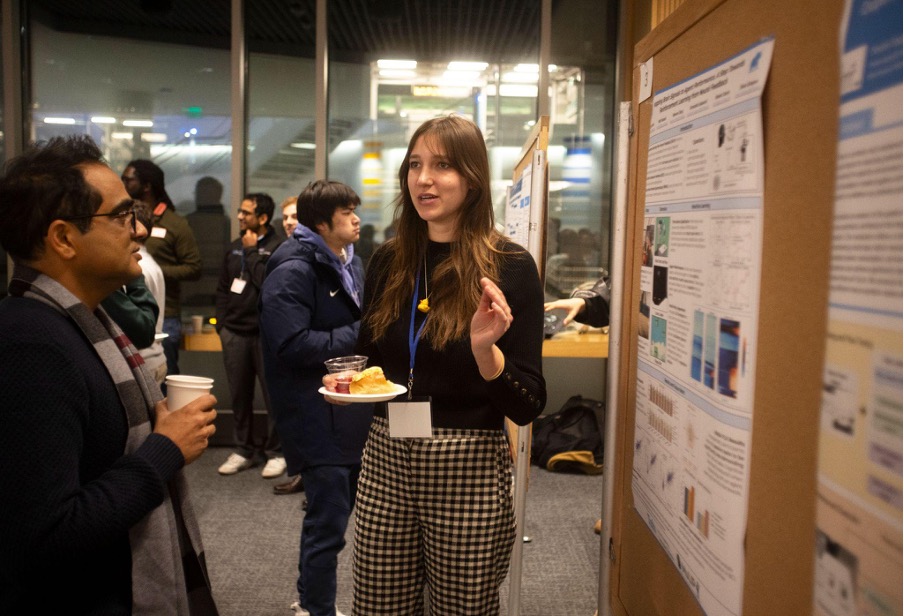
The recent Human-AI Interaction Research Discovery Event, hosted by the Human-AI Interaction Centre (HAII) – a part of TIAI – perfectly encapsulated this spirit.
Dozens of faculty, staff, and students gathered to share their ongoing projects and envision future research possibilities.
The attendees represented a remarkable diversity of backgrounds, spanning community health, philosophy, computer science, and politics.
Their work, showcased through posters, wove together expertise from engineering, arts, medical, and dental medicine students, all united by the common thread of AI.
This vibrant exchange highlighted the kind of adaptable, interdisciplinary thinkers Tufts is cultivating, poised to shape the future of AI and beyond.
Conclusion
Tufts University's School of Engineering stands as a beacon of interdisciplinary learning, demonstrating that true innovation thrives at the confluence of diverse fields.
By fostering a collaborative environment, establishing cutting-edge research centres, and offering meticulously designed academic programmes, Tufts empowers students from all backgrounds to become leaders in science and technology.
The university's commitment to integrating engineering with arts, sciences, medicine, and civic life ensures that its graduates are not only technically proficient but also possess the broad perspective and critical thinking skills necessary to address the world's most pressing challenges.
For aspiring engineers and scientists seeking an education that transcends traditional boundaries and prepares them for a future of complex problem-solving, Tufts University offers an unparalleled opportunity to learn, innovate, and lead.







 Explore AI Teaching Tools
Comments (0)
Please login to comment
No comments yet
Be the first to comment on this article