
Navigating Career Aspirations: How Policy Shifts Impact University Students
Embarking on a journey toward a fulfilling career is a cornerstone of the university experience.
For many students, this path is intricately linked to the opportunities available within their college or university, and sometimes, even at the federal level.
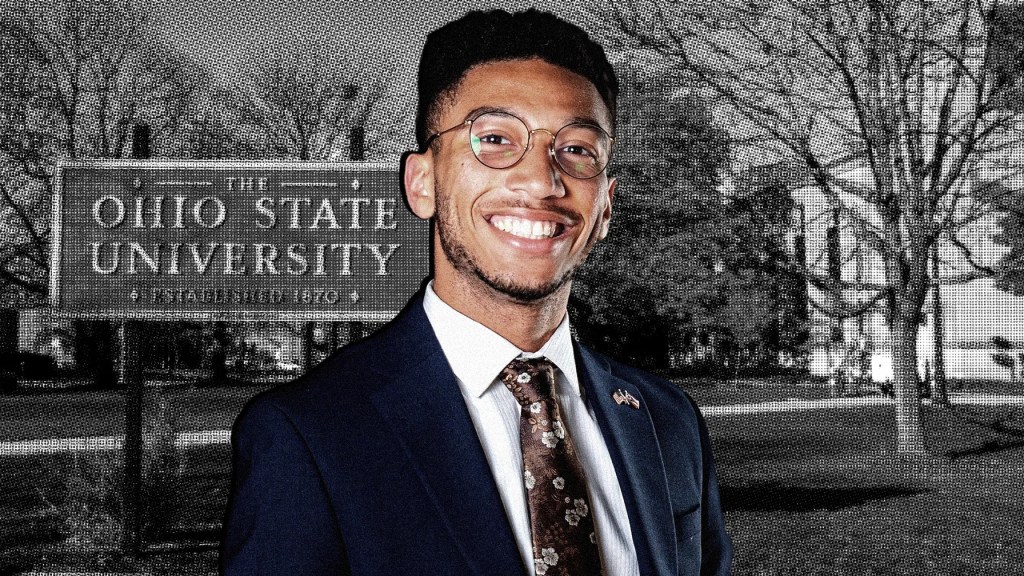
However, as Christopher Cade's experience at Ohio State University illustrates, external policy changes can significantly alter a student's trajectory, impacting internships, on-campus roles, and the very environment that fosters their professional growth.
This article delves into how shifts in governmental and university policies can create unforeseen challenges for students aiming for specific career paths, particularly in fields like public service and political engagement.
The Ambitious Student: A Vision for Public Service
Christopher Cade, a dedicated student at Ohio State University, harbored a profound ambition to contribute to public service, with a long-term vision of potentially reaching the highest office.
His aspirations were deeply rooted in his family's legacy of political involvement and activism.
Growing up, he was exposed to the impactful work of his maternal grandmother, Maude Hill, a figure deeply involved in the Civil Rights Movement and a dedicated professional at an affordable housing development nonprofit.
His father's senior role at a housing authority and his brother's academic pursuit of political science and social justice advocacy further solidified Cade's passion for making a difference.
This familial influence provided a strong foundation for his own burgeoning interest in public policy and political science.
During his initial year at the university, Cade actively sought opportunities to gain practical experience that would align with his career goals.
He successfully secured an internship with the U.S.
Department of Transportation, a significant step towards his federal career aspirations.
Concurrently, he landed a work-study position within the university’s Office of Diversity and Inclusion, a role he found particularly meaningful.
This dual pursuit demonstrated his proactive approach to building a robust resume and gaining invaluable real-world exposure during his college tenure.
Policy Repercussions: Unforeseen Obstacles for Students
The landscape of opportunities for students like Cade can be dramatically altered by policy decisions made at various governmental levels.
In Cade's case, federal actions and state-level legislation created a ripple effect that directly impacted his burgeoning career path.
The U.S.
Department of Transportation internship, a critical stepping stone, was ultimately canceled due to federal hiring freezes and budget cuts implemented by the Trump administration.
This abrupt halt to a promising federal opportunity underscored the vulnerability of student career development to broader political and economic shifts.
Simultaneously, his on-campus work-study position faced an uncertain future.
The university announced the discontinuation of its Office of Diversity and Inclusion, a decision that Cade understood was a direct response to federal and state directives concerning diversity, equity, and inclusion (DEI) initiatives in public education.
This move not only eliminated his work-study role but also impacted the broader campus environment that supported students from diverse backgrounds.
The university's statement indicated that the closure was a reaction to federal and state actions, highlighting the interconnectedness of governmental policy and institutional operations within a university setting.
The Impact of DEI Program Shifts on Student Support
The Office of Diversity and Inclusion at Ohio State University housed vital programs designed to support students, particularly those from underrepresented groups.
Cade's work-study role was with the Bell National Resource Center on the African American Male, an initiative specifically founded to enhance the retention and success of Black men in college.
He expressed enthusiasm for this work, detailing his contributions, which included logistical support, direct engagement with students, and the development of numerous programs aimed at fostering a supportive environment for the upcoming academic year.
The prospect of seeing these programs come to fruition was a source of great motivation for him.
However, the university's decision to close the office in February cast a shadow over these efforts.
Cade described the feeling of seeing six months of dedicated work potentially rendered meaningless.
The announcement from OSU President Ted Carter confirmed that the closure was a direct consequence of federal and state mandates regarding DEI in public education.
This decision led to the elimination of seventeen staff positions, in addition to student roles, and also affected programming within the Center for Belonging and Social Change.
These changes occurred shortly before a federal deadline that threatened funding for educational institutions with DEI programs, illustrating the intense pressure faced by universities to comply with evolving federal directives.
Federal Scrutiny and State Legislation: A Double Blow
The broader climate of federal scrutiny surrounding DEI initiatives further complicated the situation for universities.
Ohio State University, along with approximately fifty other institutions, found itself under federal investigation for alleged discrimination against white and Asian students in graduate admissions.
This investigation, initiated by the Trump administration, signaled a heightened focus on how DEI policies were being implemented and perceived within higher education.
Such investigations can create an environment of uncertainty and lead institutions to re-evaluate or curtail programs to avoid potential repercussions.
Adding to this pressure, Ohio Governor Mike DeWine signed legislation that banned DEI programs in the state's public colleges and universities.
This state-level action, which went into effect in June, created a definitive legal framework that mandated the dismantling of many DEI-related initiatives.
For students like Cade, who found significant personal and professional value in these programs, the confluence of federal investigations and state legislative bans represented a significant setback.
The university's compliance with these mandates directly impacted the support systems and opportunities available to its student body.
Personal Impact: Feeling Unseen and Undervalued
The closure of the Office of Diversity and Inclusion had a profound personal impact on Cade.
He described feeling "heard and seen" within the supportive environment of the office.
Having attended a predominantly white, Catholic high school where he felt his cultural identity was not fully supported, the university's DEI office provided a crucial space for him to explore and understand his Blackness.
The programming offered there was designed to challenge negative stereotypes and foster a positive self-image for Black men navigating the complexities of the world.
When these programs were dismantled, Cade felt a sense of being disregarded.
The message conveyed by the closure, in his view, was that his identity and experiences were not valued.
This sentiment was amplified by the subsequent events on campus.
Following the February announcement, students organized protests and a sit-in, demonstrating their strong opposition to the changes.
Despite these efforts, the momentum eventually waned, leaving many students with a feeling of pervasive disappointment and a "cloud of darkness" hanging over their university experience.
The uncertainty surrounding the employment of dedicated staff, some of whom had devoted decades to supporting students, further added to the somber atmosphere.
Resilience in the Face of Adversity: Finding New Paths
Despite the disheartening circumstances, Cade's experience also highlighted the resilience of the university community and the enduring spirit of its students.
He drew inspiration from his former colleagues in the Office of Diversity and Inclusion, particularly individuals like Chila Thomas, the executive director of the Young Scholars Program.
This program, dedicated to assisting low-income, first-generation college students, was one of the initiatives that continued to operate, demonstrating that some vital support systems could persist.
The day after the official announcement, Thomas and others made an effort to provide students with a space to process their emotions, even amidst their own employment anxieties.
The shift in university policy also coincided with an increase in uncomfortable and even overtly racist incidents on campus for Cade.
He recounted an incident where an individual expressed approval for the removal of DEI initiatives, followed by a derogatory remark and a racial slur.
This experience served as a critical turning point for Cade, transforming his sadness into a resolve to take action.
He realized that passive acceptance was no longer an option; he felt compelled to "stand up and make change." This personal transformation underscores how challenging circumstances can ignite a stronger commitment to advocacy and social justice.
Advocacy and Adaptation: Charting a New Course
Motivated by his experiences, Cade became more actively involved in student advocacy.
In March, he traveled to Washington, D.C., as part of the Undergraduate Student Government’s Governmental Relations Committee.
This trip provided an opportunity to engage directly with lawmakers, including Ohio Representative Troy Balderson and staffers from the offices of Senator Bernie Moreno and Representative Joyce Beatty.
The discussions focused on critical issues such as college affordability, DEI policies, and the impact of the federal hiring freeze.
Cade shared his personal story, detailing how the cancellation of his U.S.
Department of Transportation internship had affected him.
While President Carter’s initial statement suggested that all student employees would be offered alternative positions, a subsequent meeting with a university dean clarified that students would need to apply for these new roles.
With fewer work-study positions available and an increased number of students seeking employment, the job market became highly competitive.
This realization prompted Cade to broaden his job search beyond the university.
He successfully secured a summer internship with the Ohio Department of Transportation, focusing on communications and policy.
Furthermore, he began an intake assistant role in the university's Office of Civil Rights Compliance in October, demonstrating his adaptability and continued commitment to public service, albeit through different avenues.
Reconsidering Educational Choices: The Influence of Policy on Student Decisions
The events at Ohio State University prompted Cade to reflect on his initial choice of institution.
He had been particularly drawn to the university for its John Glenn College of Public Affairs master’s program.
However, he acknowledged that had he anticipated the university's response to anti-DEI efforts, he might have considered other educational options.
This sentiment highlights a crucial aspect of university selection for many students: the perceived commitment of an institution to fostering an inclusive and supportive environment, which is often influenced by its adherence to or resistance against broader policy trends.
Cade's concerns extend beyond his own academic and career path.
He worries about the cumulative effect of these policy changes on his peers.
Navigating the complexities of college life is already a significant challenge for many young individuals.
When policies create additional barriers or send messages of exclusion, it can further exacerbate these difficulties, leading some students to feel that higher education is not a welcoming or accessible space for them.
The experience of students like Cade serves as a powerful case study, illustrating how policy decisions at national and state levels can have tangible and often detrimental effects on the educational journey and future aspirations of university students.
Conclusion
The journey of Christopher Cade at Ohio State University offers a compelling narrative on the intricate relationship between policy, education, and student career development.
His aspirations in public service were met with unexpected obstacles stemming from federal hiring freezes, budget cuts, and the dismantling of university DEI programs in response to state and federal mandates.
This situation underscores the critical need for educational platforms like Mentofy to provide students with comprehensive insights into how political and legislative landscapes can shape their academic and professional futures.
Understanding these dynamics empowers students to make informed decisions, adapt to changing circumstances, and advocate for environments that support their growth and aspirations.
The experiences of students at any university, whether pursuing a degree in political science or any other field, are profoundly influenced by the broader societal and governmental contexts in which they learn and develop.







 Explore AI Teaching Tools
Comments (0)
Please login to comment
No comments yet
Be the first to comment on this article