
Navigating Wildfire Hazards: Protecting California schools and Students
As the threat of wildfires intensifies, understanding the risks faced by educational institutions is paramount.This article delves into the critical issue of California schools situated in high fire danger zones, exploring the challenges and proactive measures necessary to safeguard our students and communities.
We'll examine the extent of the problem, the concept of "hardening" campuses, and the vital role of strategic planning and clear communication in mitigating the impact of these devastating events.
The Pervasive Threat: Schools in Fire Hazard Zones
A significant portion of California's public school students attend institutions located within areas designated as high or very high Fire Hazard Severity Zones.These zones are characterized by a confluence of factors that elevate wildfire risk, including abundant dry vegetation, challenging terrain with steep slopes, and weather patterns that favor rapid fire spread, such as strong, dry winds.
Research indicates that approximately 12.6% of the state's public school students are educated in these vulnerable locations.
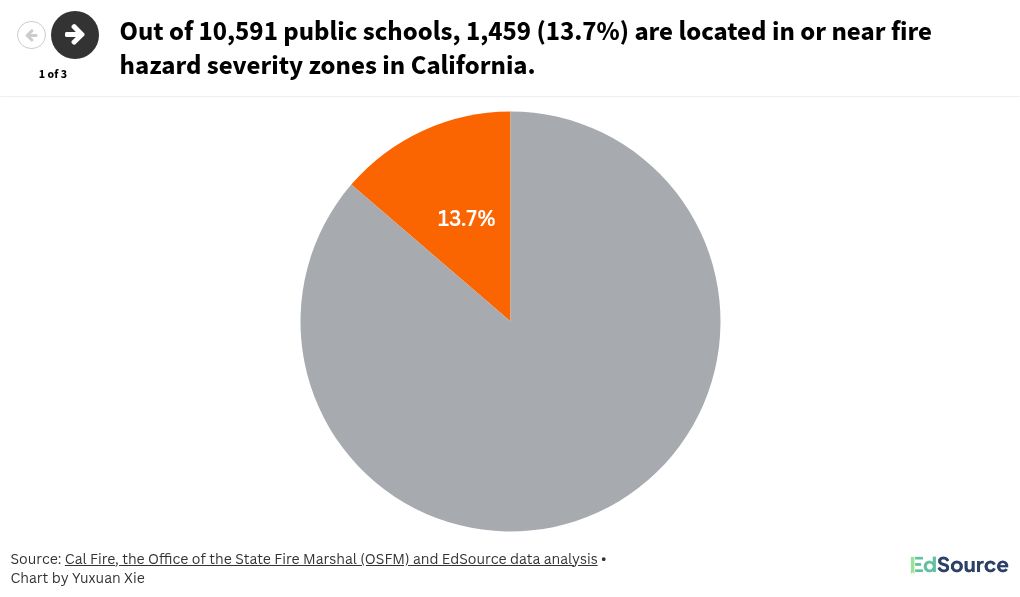
Beyond these high and very high-risk areas, an even larger percentage of schools, around 13.7%, are situated in or adjacent to broader Fire Hazard Severity Zones.
This classification, determined by factors influencing long-term wildfire behavior over decades, highlights a widespread vulnerability across the state.
The implications are far-reaching, affecting both rural and urban communities from the north to the south.
It's important to distinguish between hazard and risk; while hazard zones identify areas prone to fire, risk assessment considers the likelihood of a fire igniting under specific conditions.
The concentration of students in these high-risk zones is particularly pronounced in Southern California, where dense urban populations intersect with fire-prone landscapes.
This demographic concentration, coupled with increasing development in the wildland-urban interface – areas where human settlements meet undeveloped wildlands – amplifies the challenge.
Rising housing costs in metropolitan areas have historically driven development into these more fire-susceptible regions, making them both more feasible and desirable for expansion.
This pattern underscores the complex interplay between land development, population growth, and environmental vulnerability.
Understanding Fire Hazard Severity Zones
The Office of the State Fire Marshal (OSFM) categorizes Fire Hazard Severity Zones into three tiers: Moderate, High, and Very High.This classification is based on a comprehensive analysis of elements that contribute to wildfire intensity and spread.
Key factors include: * **Fuel Load:** The amount and type of combustible vegetation present. * **Slope:** Steeper slopes can accelerate fire movement uphill. * **Fire Weather:** Conditions such as low humidity and high temperatures that promote ignition and spread. * **Wind Patterns:** Prevailing winds that can fan flames and carry embers.
It is crucial to reiterate that this classification primarily reflects the *hazard* – the inherent potential for wildfire behavior over a 30-50 year outlook.
It does not, however, account for mitigation efforts like building hardening or fuel reduction programs that can significantly alter the actual *risk* of a fire occurring or spreading.
This distinction is vital for developing targeted and effective safety strategies.
Proactive Measures: Hardening Campuses and Enhancing Resilience
In the face of increasingly frequent and severe wildfires, a critical strategy for schools is the "hardening" of their campuses.This process involves making school structures and their surrounding environments more resistant to fire damage.
Experts emphasize that opportunities for rebuilding or significant renovations present ideal moments to integrate these resilience measures.
Physical Infrastructure Enhancements
Campus hardening encompasses a range of physical improvements designed to minimize fire vulnerability.This can include: * **Non-Combustible Materials:** Utilizing fire-resistant materials for roofing, siding, and other structural components.
This is particularly important for new construction and major upgrades. * **Dual-Pane Windows:** Installing dual-pane windows can act as a barrier against embers, preventing them from entering buildings and igniting interior materials. * **Defensible Space:** Maintaining a clear perimeter around school buildings by removing or managing flammable vegetation.
This involves regular landscaping maintenance, trimming trees, and ensuring that foliage is kept green and less susceptible to ignition. * **Clustered Campus Design:** For new developments or significant campus redesigns, adopting a "clustered campus" approach can be beneficial.
This involves grouping buildings together with fire breaks – areas with reduced vegetation or non-combustible surfaces – between them.
This strategy can help contain a fire if it breaches the initial perimeter.
Internal Environmental Controls
Beyond the exterior, ensuring healthy indoor air quality is paramount, especially during and after wildfire events. * **Advanced Air Filtration:** Schools should be equipped with high-efficiency air filtration systems.These systems are crucial for removing smoke particles and other airborne debris that can be stirred up during and after a fire, protecting students and staff from respiratory issues. * **Post-Fire Air Quality Management:** Even after a fire has passed, cleanup operations can generate significant dust and debris.
Robust filtration systems are essential during these periods, particularly if students are able to return to school while surrounding areas are still being cleared.
Funding for Safety Improvements
Financial resources are essential for implementing these hardening measures.In California, initiatives like Proposition 2, passed by voters, have authorized funding for disaster assistance, including fire safety improvements.
School facility projects funded by such propositions must adhere to stringent building code requirements, including those related to structural safety, fire life safety, and accessibility, as reviewed by the Division of the State Architect.
While building codes set a baseline, local school districts have discretion in design and material choices beyond these requirements, often making them eligible expenditures for safety-related funding.
The Crucial Role of Communication and Planning
While physical hardening addresses the structural vulnerability of schools, effective communication and strategic planning are equally vital for ensuring the safety and well-being of students, staff, and the wider community during wildfire emergencies.Developing Comprehensive Safety Plans
School districts must develop robust safety plans that go beyond immediate fire response.These plans should address a range of scenarios, including: * **Evacuation Protocols:** Clear and well-rehearsed procedures for evacuating students and staff from school grounds when a threat is imminent. * **Air Quality Triggers:** Establishing guidelines for when outdoor activities should be moved indoors or when school closures might be necessary due to poor air quality, even if there is no immediate fire threat to the campus itself. * **Communication Channels:** Identifying and establishing reliable methods for communicating critical information to parents, guardians, and the community.
This includes pre-determining how alerts will be disseminated, what information will be shared, and who will be responsible for communication.
Many educational agencies are actively developing and refining these plans.
Resources and templates are often made available by county offices of education and emergency services to assist local districts in customizing their safety protocols to meet their specific needs and local conditions.
Training and Preparedness Exercises
Effective planning is only as good as its execution, which necessitates regular training and preparedness exercises.Local educational agencies should collaborate with fire departments, emergency management agencies, and organizations like the American Red Cross to conduct drills and simulations.
These exercises help to: * **Familiarize Staff:** Ensure that teachers, administrators, and support staff are well-versed in their roles and responsibilities during an emergency. * **Test Communication Systems:** Verify the effectiveness of communication channels and protocols. * **Identify Gaps:** Uncover potential weaknesses in plans and procedures that can be addressed before a real emergency occurs.
Effective Communication During Emergencies
During a wildfire, clear, timely, and accurate communication can be a matter of life and death.This is particularly true for the reunification of students with their families.
In instances where schools are located in or near fire-prone areas, the potential for rapid fire spread can create chaotic evacuation scenarios. * **Parent-Guardian Communication:** Establishing a consistent and reliable system for informing parents about school status, evacuation procedures, and reunification points is essential.
This might involve emergency alert systems, dedicated hotlines, or official social media channels. * **Community Awareness:** Beyond immediate school communications, fostering broader community awareness about fire risks and preparedness measures can enhance collective safety. * **Information Dissemination:** During events like the Eaton Fire, reports indicated confusion and delays in receiving evacuation notices.
This underscores the critical need for proactive and widespread information dissemination from official sources, ensuring that residents, including school communities, are informed in a timely manner.
Relying on community networks for information can be unreliable and lead to dangerous situations.
Lessons Learned from Past Events
The destruction of schools in past wildfires, such as the Camp Fire and more recent events in Los Angeles County, serves as a stark reminder of the potential impact on educational infrastructure.The loss of facilities and the disruption to student learning highlight the urgency of investing in preventative measures.
Furthermore, the psychological impact on students and communities following such events necessitates support systems, often referred to as "psychological first aid," to help them recover and rebuild.
By learning from these experiences, educational leaders can better prioritize and implement strategies that protect both the physical and emotional well-being of their school communities.
Conclusion
The presence of thousands of California students attending schools in high fire danger zones presents a significant and ongoing challenge.The data unequivocally shows that a substantial portion of our educational institutions are situated in areas with a heightened risk of wildfire.
This reality demands a proactive and multi-faceted approach to safety.
The concept of "hardening" school campuses—making them physically more resilient to fire—is a critical component of this strategy, involving the use of fire-resistant materials, effective landscaping, and thoughtful architectural design.
Equally vital is the development of comprehensive safety plans, robust communication protocols, and regular preparedness training.
These elements are not merely procedural; they are essential for safeguarding lives and minimizing disruption.
By understanding the nature of fire hazard severity zones, investing in infrastructure resilience, and prioritizing clear and consistent communication, California schools can better navigate the increasing threat of wildfires.
Mentofy is committed to providing the educational resources and insights necessary for communities to address these critical issues and build a safer future for all learners.






 Explore AI Teaching Tools
Comments (0)
Please login to comment
No comments yet
Be the first to comment on this article