
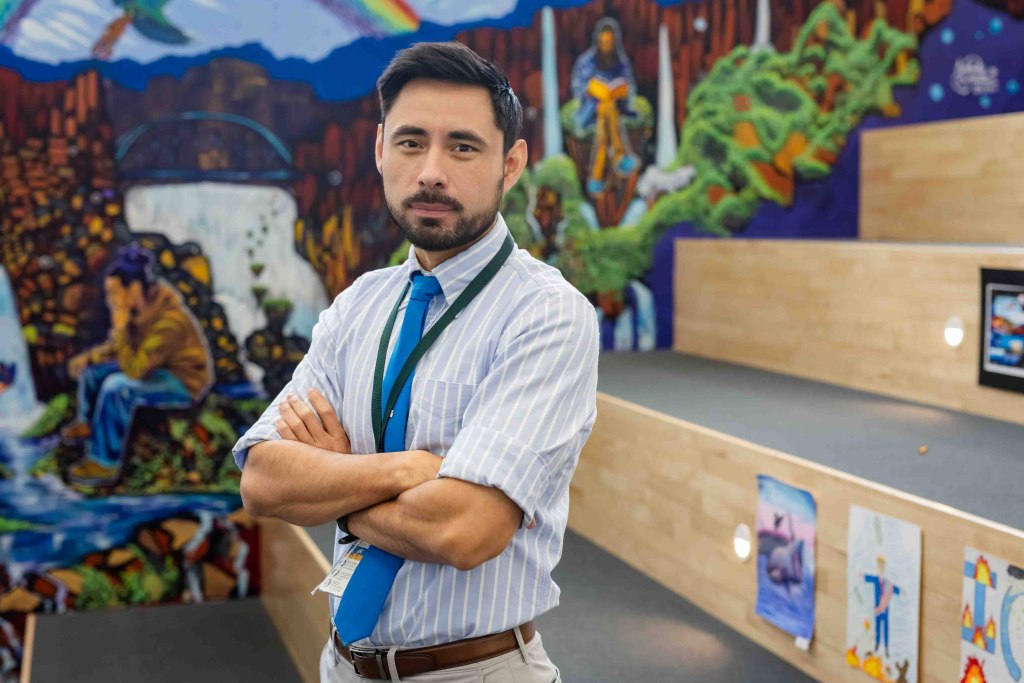
Winooski Schools Defy Threats, Stand Firmly for Immigrant Students
In a climate of escalating national tension, a small Vermont school district has become a beacon of unwavering support for its immigrant families, even in the face of severe threats. The Winooski School District, nestled along the Winooski River, is not just educating students; it's actively defending their right to feel safe and valued, demonstrating a commitment that has drawn both admiration and intense scrutiny.
A Classroom Where Safety is the First Lesson
The day begins not with a textbook, but with a vital question: "Do you feel safe in school? Why or why not?" For the students in this multilingual learner class at Winooski High School, whose families represent a rich tapestry of cultures and languages including Arabic, Nepali, Spanish, and Somali, this question is more than an academic exercise. It's a direct reflection of the security they feel, a security hard-won in an era where federal policies have often sowed fear.
Their responses echo a profound sense of reassurance. "I feel safe in school because I saw the school doors are locked every time," one student shared, their voice carrying the weight of understanding. Another added, "And I heard ICE is not here." The sentiment was unanimous: "If ICE comes to school, they are not allowed to go in."
This palpable sense of safety is a direct result of the district's proactive stance. While many educational institutions have retreated into silence, fearing repercussions from federal immigration policies, Winooski, under the leadership of Superintendent Wilmer Chavarria, has chosen a different path. They have become a vocal advocate for their students and families, refusing to be intimidated.
A Sanctuary Policy Forged in Resilience
Winooski's commitment to its diverse student body is not new, but it has been tested rigorously. Last year, the district made history by becoming the first in Vermont to adopt a sanctuary policy. This policy explicitly aims to shield students from immigration enforcement actions while they are within the school's walls.
This bold move came after Superintendent Chavarria himself experienced the sharp edge of federal immigration enforcement. While returning from visiting family in Nicaragua, he was detained for several hours at a Houston airport. This personal experience likely fueled his resolve to protect his students and their families.
The district's dedication extends beyond policy. Months after enacting the sanctuary policy, Chavarria refused to sign a federal document that would have affirmed compliance with a ban on diversity, equity, and inclusion (DEI) efforts in schools. This act of defiance underscored his belief in the importance of inclusive practices, even when facing potential federal pressure.
The Winooski Community: A Microcosm of Diversity
Winooski, a town covering a mere 1.5 square miles, is a striking anomaly in Vermont, a state known for its predominantly white population. Here, nearly 60 percent of students are people of color, and over a third are English language learners. A significant 71 percent of students live in poverty, highlighting the district's vital role in supporting vulnerable populations.
For decades, Winooski has been a welcoming community for refugees fleeing conflict from countries like Bhutan, Somalia, Bosnia, and Syria. This long-standing tradition of resettlement has shaped the district's identity, making it one of the most diverse in the nation. However, recent federal policies have drastically reduced refugee admissions, impacting the flow of new families to Vermont.
Superintendent Chavarria, a naturalized citizen born in Nicaragua, deeply understands the challenges faced by many Winooski students. His own journey, learning English in high school, mirrors the experiences of many he now serves. This shared background has fostered a strong connection between him and the community, earning him widespread support.
"Wilmer has been a brave voice in a time in our country where that’s being punished," shared Robin Merritt, a parent of three students in the district. "I can’t speak for everybody, but most of the public is pretty proud of his leadership."
Beyond Policy: Tangible Support for Families
The sanctuary schools policy is more than just a document; it translates into concrete actions. It clearly outlines that school staff will not share student data with immigration officials and restricts agents' access to campus without a signed judicial warrant. This clear guidance provides a crucial layer of protection for students and staff alike.
The impact of this policy has resonated deeply within the community. At an emotional district meeting, dozens of teachers, students, and residents spoke in favor of the policy, emphasizing the need for the district to stand by them. "I want to know the district has my back," stated one staff member, articulating a sentiment shared by many.
Nicole Mace, the board president, initially harbored concerns about the policy potentially making Winooski a target. However, she has since come to understand its profound significance. "The risk is around us no matter what," Mace reflected, "and for the district to take a very clear and unwavering position of support for our families and students couldn’t be done with little tweaks in the policy or putting our heads down and hoping that we could just ride this out."
Organizations like the National Immigration Law Center advocate for such policies nationwide, viewing them as essential components of school safety planning, akin to emergency preparedness for natural disasters. "You want to be able to show that you support all families, including immigrant families, that they ideally should participate and not be afraid of coming to school," said Ignacia Rodriguez Kmec, policy counsel at the organization.
Research supports this view. A 2022 study indicated that children from families with mixed citizenship status performed better academically and reported fewer issues with teachers and peers when attending schools with "safe zone" policies that restricted immigration enforcement on campus.
Caitlin MacLeod-Bluver, an English and history teacher at Winooski High and a recipient of the state's Teacher of the Year award, has witnessed this impact firsthand. "When kids feel seen and heard and valued in our district and community, it shows up in the work they’re doing," she observed.
Facing Down Hate: The Somali Flag Incident
The district's commitment to its values was put to a severe test in December. Following President Trump's derogatory remarks about Somalis, Superintendent Chavarria made the decision to raise the Somali flag alongside the U.S. and Vermont flags outside the high school. This act of solidarity was intended to show support for the Somali students, who constitute about 9 percent of the school's population.
The response was immediate and alarming. A video of the flag went viral on right-wing social media, triggering a barrage of death threats and racist messages. The district was forced to temporarily take down its website and social media accounts and unplug school phones due to the overwhelming volume of threats, many of which were subsequently turned over to state and federal authorities.
Despite the intense backlash and personal threats against him, Chavarria and his staff refused to back down. The Somali flag remained flying for an entire week, a powerful symbol of the district's unwavering support for its Somali students.
Chavarria believes that a more unified public stance from school leaders nationwide could mitigate such targeted attacks. "It does feel like we are alone in an ocean," he admitted, describing the experience as "very, very scary. It is draining. It is demoralizing."
The Ripple Effect: Fear and Resilience Beyond School Walls
The challenges faced by Winooski extend beyond the school grounds. In November, a second-grader and his mother were detained by federal agents conducting immigration enforcement. After weeks in a detention center, they were forced to leave the country. Teachers, including Erin Hurley, who taught the young boy, made efforts to support him, but their pleas to send schoolwork were denied.
Hurley recounted the mother's harrowing calls, describing the child's distress due to inadequate food, water, and medical care at the detention center. Ultimately, the family chose to self-deport, a decision that deeply affected the school community.
In response to such incidents, teachers like MacLeod-Bluver have volunteered to provide transportation for students worried about immigration enforcement. The district has also established a "Know Your Rights" resource table, offering materials in multiple languages to help families navigate interactions with immigration agents and understand their constitutional protections.
The sanctuary policy, while a crucial shield within school, cannot fully protect families from actions taken outside its jurisdiction. Yet, its existence provides a vital sense of security and empowers families to seek support.
A Model for the Future: State-Wide Impact
The advocacy of Winooski and Superintendent Chavarria has not gone unnoticed. Following their lead, the Vermont Legislature passed a law modeled after Winooski's sanctuary policy, requiring all schools in the state to establish immigration enforcement protocols. This legislative action, set to take effect next year, signifies a broader recognition of the need to protect immigrant students and families across Vermont.
A high school student, whose family are Nepali immigrants, expressed her appreciation for the district's communication during a recent immigration enforcement event in a neighboring town. She highlighted how the sanctuary policy makes her and her mother feel safe at school and hopes other districts, regardless of their student demographics, will adopt similar measures. "Even if they don’t have a lot of students or staff of color, I think it’s really good to make it a sanctuary school, still," she stated. "Because there might be one or two students that it would be really helpful."
Back in Winooski High School's multilingual learners class, the focus shifts from the complexities of immigration to the wonders of space exploration, as students engage with images from the far side of the moon. For a brief moment, their minds are transported light-years away, a testament to the power of education to inspire and transcend challenges. Yet, the reality of their lives, and the district's commitment to safeguarding their futures, remains ever-present.





 Explore AI Teaching Tools
Comments (0)
Please login to comment
No comments yet
Be the first to comment on this article