
Beyond the Grade: Navigating the Elite Art School Admissions Maze
For aspiring artists and designers, the path to the world's most prestigious art schools often feels less like a direct university application and more like a carefully orchestrated performance. While academic transcripts still hold sway, the true currency for admission at top-tier institutions lies not solely in your grade point average, but in the compelling narrative woven through your portfolio, the originality of your ideas, and the depth of your personal statement.
The Shifting Landscape of Admissions
Gone are the days when a stellar report card was the sole determinant of acceptance. Today's leading art and design programs are increasingly seeking a holistic understanding of applicants. This means while your academic performance is a factor, it's often the creative output and personal vision that truly set candidates apart.
This shift acknowledges that artistic talent and innovative thinking don't always manifest in traditional academic metrics. The ability to conceptualize, problem-solve creatively, and communicate a unique perspective are paramount. Understanding the specific expectations of each institution is key to crafting a successful application.
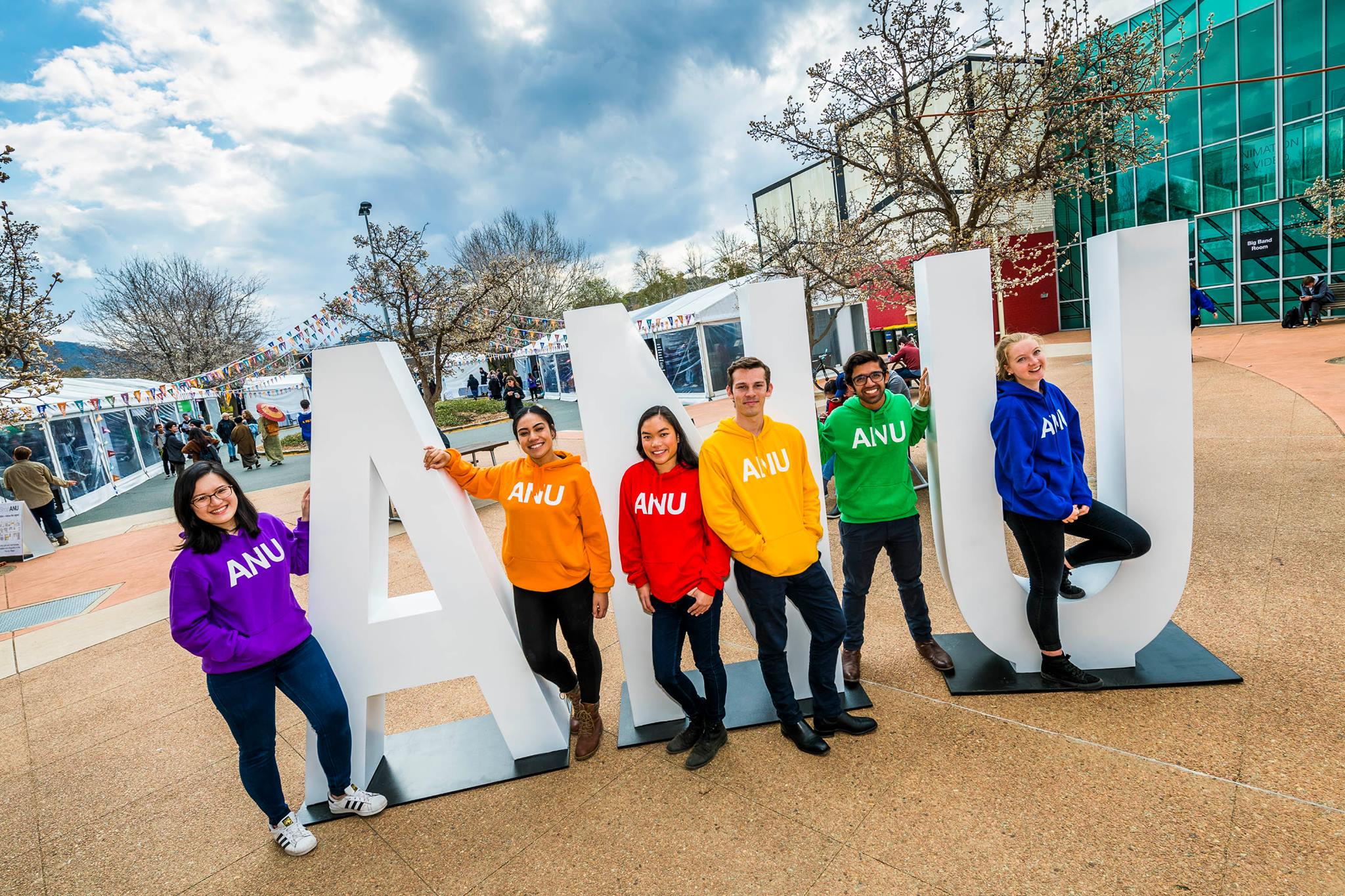
Australia: A Unique Approach at ANU
The Australian National University (ANU) stands out in the global rankings for its Art & Design programs. Notably, it's the only Australian university to feature in the QS World University Rankings by Subject for this field.
Academic Benchmarks at ANU
For international students pursuing undergraduate degrees, ANU assesses applications based on recognized secondary or post-secondary qualifications. Intriguingly, ANU is an outlier among top art schools, as it does not mandate a portfolio or personal statement for admission.
For those with GCE A Levels, the requirement is a minimum of 80 points, calculated from the best three subjects at grade 13 and the best four subjects at grade 14. All A Level exams should ideally be taken within the same academic year, with a minor exception for one subject from an adjacent year.
International Baccalaureate (IB) graduates need to achieve a minimum of 30 points. Scholastic Aptitude Test (SAT) applicants are required to score at least 1170 out of 1600 to meet ANU's entrance rank of 80. Evidence of completing Year 11 and/or Year 12 is also necessary.
English Language Proficiency
All students applying to ANU must demonstrate English language proficiency. Accepted scores include an IELTS Academic/IELTS UKVI Academic of 6.5 overall, or a TOEFL iBT score of 81 overall.
Hong Kong: PolyU's Emphasis on Creative Expression
The Hong Kong Polytechnic University (PolyU), ranked 22nd globally for Art & Design, offers a singular undergraduate degree: the BA (Hons) in Design. Students can later specialize in areas such as advertising, environmental design, or interior design.
Academic Prerequisites at PolyU
For GCE A Level holders, a Grade B or above in three GCE A Level or International A Level subjects is required. IB graduates must achieve a total of 32 points or above out of 45.
SAT graduates need a High School Diploma with an average of 80% or above, alongside a SAT Total Score of 1190 or above out of 1600, or an ACT Composite Score of 24 or above out of 36. Alternatively, a Grade 3 or above in two Advanced Placement (AP) subjects is accepted. If five AP classes have been taken, the requirement remains a High School Diploma with an 80% average and a Grade of 3 or above in those five AP subjects.
English Language Flexibility
PolyU offers flexibility in English language requirements. Students may not need to submit TOEFL or IELTS scores if they have achieved a Grade C or Grade 4 (or above) in English, English Language, or English Literature for IGCSE/GCSE. A Grade E or above in English, English Language, or English Literature for A Levels is also acceptable. Furthermore, a score of 590 or above in Evidence-based Reading and Writing for the SAT can fulfill this requirement.
The Crucial Portfolio at PolyU
All applicants must submit a portfolio. For those with an art background, a creative portfolio showcasing two-dimensional works (collages, drawings, paintings, illustrations, photography, storyboards, visual diaries) and three-dimensional works (crafts, installations, mixed media, models, prototypes, sculptures – presented via photography) is expected. Multimedia submissions, including apps, websites, animations, or videos, are also welcomed, often via links or QR codes.
Relevant elective subjects that strengthen an application include visual arts, design, applied technology, and art and design-related fields like dance, film, or theatre.
For applicants without a formal art background but with a passion for design, a "maker portfolio" is required. This should highlight creative concepts, personal insights, research, scriptwriting, storytelling, creative coding, and models or prototypes. Related projects in community engagement, entrepreneurship, STEM/STEAM, design and technology, applied mathematics, applied physics, or app design are also valuable. Electives in STEM-related fields, tourism, hospitality, history, geography, business, economics, ICT, and languages can also be beneficial.
Singapore: NTU's Holistic Creative Assessment
Nanyang Technological University (NTU) in Singapore, ranked 19th for Art & Design, offers a Bachelor of Fine Arts program with specializations in animation and game art, cinematic arts, communication design and photographic practice, or transversal design: object and interaction.
Academic Foundations at NTU
International applicants are expected to demonstrate a good mathematics grade at the junior high school level and a good grade in English at the senior high school level. IB graduates need to show proficiency in mathematics at the standard level and a good grade in English at the standard level.
NTU's Multi-faceted Admissions Package
NTU requires four key components for its admissions assessment. Firstly, a portfolio is essential, comprising 15-20 pages of two- and three-dimensional works in a single PDF document, or time-based works such as video, audio, interactive multimedia, or game/screenplay submissions (with a maximum of 4 minutes per entry and up to three entries).
Secondly, an introductory video, lasting between 60 and 120 seconds, is required. Applicants should look directly at the camera, avoid edits or filters, and find a quiet, well-lit location. The video should cover who they are, their creative aspirations, why they wish to pursue creative arts, and one proud achievement.
Thirdly, a creative project responding to the theme of "boredom" is needed. This can be a one-minute video/film or animation, five to 10 photographic images, a one-minute media piece, five 3D objects or spaces, or an illustration piece.
Finally, an observational drawing from direct observation of a chosen space, using non-digital materials, is also part of the assessment.
United States: The New School's Essay-Driven Approach
Located in New York City and ranked 3rd globally for Art & Design, The New School has a distinct application process that places significant emphasis on written expression and personal reflection.
Academic Pathways at The New School
While specific grade requirements are not explicitly detailed, A Level students must have completed or be in the process of completing three subjects. IB students can apply with either the IB Diploma Program (DP) or the IB Career-related Programme (CP).
Essays and Recommendations as Pillars
Beyond academic transcripts, The New School requires two essays. The first prompts applicants to identify a social issue or system they would focus on for change during their studies. The second asks about the specific academic programs or community aspects of The New School that attracted their application, with a focus on the chosen college and program.
Two letters of recommendation, one from a school counselor and another from a teacher, are also mandatory. For all Bachelor of Fine Arts programs, a visual portfolio is crucial, typically consisting of eight to 12 slides showcasing work in drawing, painting, sculpture, fashion design, animation, performance, graphic design, or sketchbook pages.
United Kingdom: UAL's Foundation and Portfolio Emphasis
The University of the Arts London (UAL), ranked 2nd globally for Art & Design, has specific entry requirements for its Bachelor of Fine Arts programs, often beginning with a foundation year.
Foundation and Core Qualifications
Entry typically requires passing an International Foundation equivalent of a Foundation Diploma in Art and Design (Level 3 or 4). Additionally, three GCSE passes at grade 4 or above (equivalent to A*–C) are necessary. UAL accepts a wide range of qualifications beyond these, including A Levels, T Levels, BTEC Extended Diplomas, UAL Extended Diplomas, IB Diplomas, and equivalent international qualifications.
The Personal Statement and Digital Portfolio
A comprehensive personal statement is a key component, requiring applicants to answer three questions: why they wish to study the chosen course, how their qualifications have prepared them, and what extracurricular experiences have been undertaken and why they are beneficial. This statement can be up to 4,000 words.
One or two academic references from a teacher, adviser, or professional who can attest to the applicant's academic capabilities are also required. A digital portfolio is mandatory, with specific requirements varying by program. Applicants should check individual program websites. This portfolio should include work from three to five projects, encompassing drawings, sketchbook pages, research, video, or 3D objects.
Depending on the specific program, applicants may also need to complete a written or video task, further demonstrating their suitability and creative potential.







 Explore AI Teaching Tools
Comments (0)
Please login to comment
No comments yet
Be the first to comment on this article