
The Hidden Calendar Shift: How 'Teacher Days' Are Quietly Shrinking Student School Time
While the spotlight often shines on the four-day school week, a more subtle yet pervasive trend is reshaping the traditional school calendar. Across the nation, districts are increasingly carving out student-free weekdays, even while maintaining the facade of a five-day schedule. This fragmentation of instructional time, often masked by terms like "professional development" or "teacher workdays," is creating significant disruptions for families and potentially widening educational disparities.
The Stealthy Reduction of Instructional Days
The debate around school time has largely fixated on the more visible shift to four-day weeks, a model adopted by hundreds of districts. These changes are openly acknowledged, debated by parents, and scrutinized by researchers. However, a quieter policy is at play: the steady accumulation of student-free weekdays within calendars still officially designated as five-day weeks.
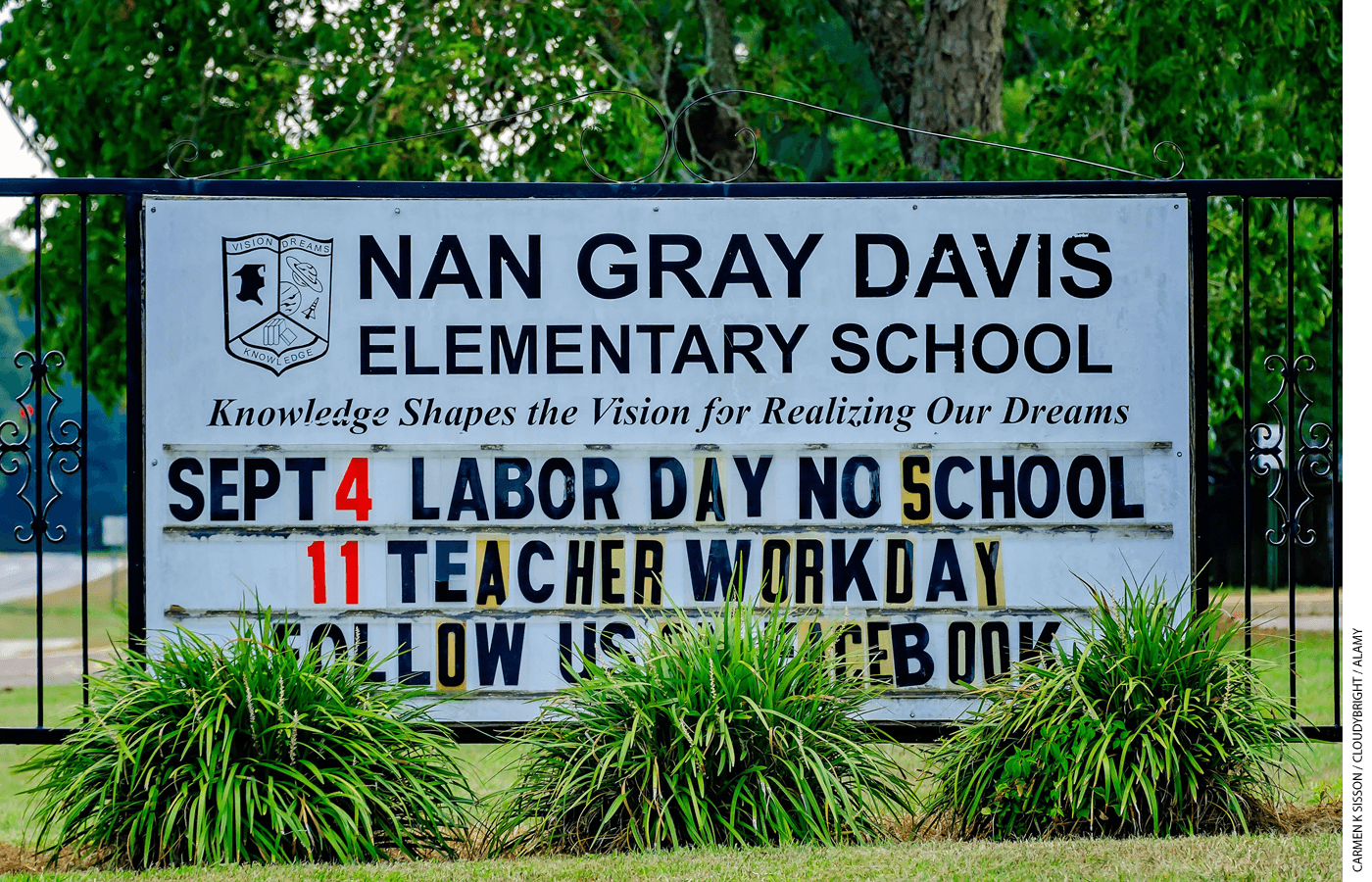
These "teacher workdays," "professional development days," or "clerical days" all translate to the same reality for parents: a day their child is not receiving instruction and requires alternative care. Unlike the robust public discourse surrounding four-day weeks, this gradual erosion of regular school access has flown largely under the radar, despite its significant implications.
Time in School: A Critical Factor in Student Achievement
Research consistently underscores the importance of instructional time for student learning. A comprehensive review of 74 rigorous studies revealed that additional time in school generally correlates with improved student achievement. Disparities in this instructional time, whether due to formal calendar changes or the accumulation of student-free days, represent an overlooked form of educational inequality.
The typical American public school operates for approximately 179 days and 1,231 hours annually. However, the variation is substantial. Students attending schools with the highest amount of annual time receive nearly 200 more hours of instruction than those at the lower end—a difference equivalent to more than two full years of schooling over a K-12 career. This disparity isn't solely about the length of the school day or the adoption of a four-day week; it also stems from the less visible, but impactful, scheduling of student-free weekdays.
Fragmented Weeks Become the New Norm
Concerns about excessive weekday closures are not isolated incidents. In Fairfax County, Virginia, parents voiced strong objections when the district introduced eight early-release days for elementary students, intended for professional development and planning. When combined with existing holidays and other staff-development days, students were slated to experience full, five-day instructional weeks less than half the time.
This situation in Fairfax County mirrors a broader trend: families increasingly perceive the school week as fragmented, even in districts that officially operate on a five-day schedule. The predictability of a consistent school week is becoming a luxury rather than a standard.
A Case Study in North Carolina
North Carolina law mandates that districts provide either 185 instructional days or 1,025 instructional hours, spanning at least nine calendar months. The hours-based option offers districts flexibility, allowing them to schedule fewer than 185 school days as long as the hourly requirement is met.
Consider Wake County Public School System, a massive district serving a significant student population. Its traditional school calendar for the 2026–27 academic year schedules 177 student attendance days, alongside 17 teacher workdays. A portion of these workdays occur before the academic year begins and after it concludes, but a substantial 10 days interrupt the core instructional term, resulting in schools being closed to students on multiple Mondays, Tuesdays, and a Wednesday.
This scheduling is a deliberate choice. When Wake County shifted from 180 to 177 student days in 2019–20, district leaders cited the need for more comprehensive teacher workdays to support planning, collaboration, and grading, while still adhering to the state's minimum instructional hours. This decision, driven by teacher input, raises questions about whether the benefits to teacher practice outweigh the reduction in students' regular access to school and the disruption to family routines.
Notably, three of Wake's in-term teacher workdays coincide with major religious observances: Yom Kippur, Eid al-Fitr, and Eid al-Adha. While school calendars in diverse communities may reasonably accommodate significant religious events, this overlap does not account for the broader pattern of repeated student-free weekdays. The families of Wake County Public School System deserve a clear explanation for this policy choice.
Comparing District Calendar Practices
To contextualize Wake County's approach, a comparison with the calendars of the five largest school districts nationwide reveals significant differences in the use of student-free weekdays during the instructional term. While terminology varies—"teacher workday," "professional development day," "pupil-free day"—the underlying policy of setting aside full weekdays for staff purposes remains consistent across these categories.
Wake County's 177 instructional days are comparable to those in districts like New York City and Chicago. However, Wake stands out in the number of full weekdays during the instructional term when students are absent for staff-focused activities. This measure highlights a key difference in how instructional continuity is prioritized.
Ironically, Wake County itself emphasizes to families the importance of consistent attendance, stating that daily school attendance builds "strong habits, relationships, and learning momentum." The district's launch of an Attendance Task Force and its planned community campaign to promote regular attendance are commendable. Yet, the district's own calendar design appears to contradict this message by intentionally fragmenting the instructional week.
The Unseen Costs of Calendar Fragmentation
While professional development is undoubtedly crucial for school quality, the allocation and scheduling of student-free days warrant closer examination. A significant majority of educators report that their schools utilize full-day in-service days, and many prefer this format for professional growth. However, the sheer number of these days, their placement within the calendar, and their justification remain open questions.
Seventeen teacher workdays represent a policy choice with tangible trade-offs. The potential benefits to teacher practice must be weighed against the loss of instructional continuity for students and the disruption to family schedules. Key questions arise: What specific activities occur on these workdays? How much time is dedicated to mandatory training, collaborative planning, grading, or parent communication? What evidence supports the claim that closing schools for 10 weekdays during the instructional term yields benefits that justify the lost continuity and family disruption? And why does Wake County require substantially more such days than other large school systems?
The Financial and Logistical Burden on Families
The impact of these calendar decisions on families is far from abstract. In many areas, the cost of childcare on a single school-free weekday can be substantial, amounting to over $130 per child for a full school day. For families with multiple children, this expense can exceed $1,300 per child annually, a significant financial strain that many cannot afford.
Consequently, parents are forced to make difficult choices: missing work shifts, using scarce paid leave, relying on extended family, trading favors with neighbors, or seeking out expensive one-day camps. Families with younger children or those with special needs often face even more limited options.
An informal support network has emerged to bridge the gap between school calendars and work schedules. Online platforms facilitate the sharing of information about camps and programs, while providers actively market services for these scattered weekdays. While these arrangements offer practical solutions for individual families, their necessity underscores the broader consequences of fragmented school access.
The familiar refrain, "School is not childcare," holds true. School is a vital institution that provides far more than custodial services. Its predictable operation is a public good, enabling children to establish routines, parents to maintain employment, and families to organize their lives around a stable foundation. A calendar that repeatedly excludes students from school on ordinary weekdays is not merely an administrative convenience; it is a significant policy decision impacting education, family life, and the labor market, and it deserves greater public input.
Addressing the Erosion of Instructional Time
This moment is particularly critical for examining the role of time in education. In North Carolina, chronic absenteeism rates remain significantly elevated compared to pre-pandemic levels, with a substantial portion of students missing 10 percent of the school year. State leaders rightly emphasize the detrimental effects of chronic absence on student learning and the urgent need to re-establish consistent attendance habits.
Academically, North Carolina students are still lagging behind pre-pandemic performance levels in both math and reading. While an individual teacher workday is distinct from a student's decision to be absent, Wake County's own arguments about attendance highlight the cumulative value of regular school days—fostering habits, relationships, and learning momentum.
If these factors are deemed essential when families plan vacations, they should hold equal importance when school districts design their calendars. The cumulative loss and fragmentation of regular school access are rarely treated as a direct policy outcome. We meticulously track districts with formal four-day weeks and monitor chronic absenteeism rates, but the less visible practice of scheduling student-free weekdays within traditional calendars receives far less attention.
States should implement systems to compile and report comparable data on the number of full weekdays districts close to students for staff-related purposes, along with cross-district comparisons. Researchers, too, should delve into this quieter form of calendar fragmentation and its multifaceted implications for students and families.
The five-day school week represents a commitment to consistent access to instruction, teachers, routines, meals, peers, and opportunity. Yet, in Wake County's 2026–27 calendar, students will experience only two uninterrupted five-day instructional weeks in each of four months. This inconsistency should prompt a critical question for education policymakers nationwide: How much student learning is being lost, one ordinary weekday at a time, through district policies that intentionally disrupt instruction?






 Explore AI Teaching Tools
Comments (0)
Please login to comment
No comments yet
Be the first to comment on this article