
The landscape of education is in constant flux, but few areas demand as much innovative support as special education. Teachers dedicated to serving students with diverse learning needs face unique challenges, from tailoring instruction for individual IEPs to managing extensive administrative loads. Enter Artificial Intelligence (AI) – a transformative force that is rapidly reshaping what's possible in the special education classroom. This article explores the most impactful AI tools currently empowering special education teachers, offering a glimpse into a future where personalized learning is not just an aspiration, but a daily reality.
The Evolving Landscape of Special Education and AI
Special education, by its very nature, is a field defined by personalization. Every student has a unique set of strengths, challenges, and learning styles, encapsulated in an Individualized Education Program (IEP). For teachers, this translates into an immense workload: crafting bespoke lesson plans, differentiating materials, conducting frequent assessments, tracking progress meticulously, and managing significant administrative duties. Recent surveys of K-12 educators highlight the strain, with over 60% of special education teachers reporting excessive paperwork as a primary driver of burnout, and a staggering 45% considering leaving the profession within five years due to workload pressures. This challenging environment underscores the urgent need for tools that can amplify teacher effectiveness and support student success.
The advent of sophisticated AI technologies offers a beacon of hope. What was once the exclusive domain of science fiction is now providing tangible solutions for real-world classrooms. AI is not merely automating tasks; it's enabling levels of personalization and insight previously unimaginable. From generative AI that can instantly adapt content to a student's reading level, to predictive analytics that identify learning gaps before they become significant obstacles, AI is becoming an indispensable co-pilot for special education teachers. It promises to free up valuable teacher time, allowing educators to focus on the human connection and nuanced instructional strategies that only a dedicated teacher can provide.
"AI is rapidly moving beyond novelty to become a foundational technology in special education, enabling unprecedented levels of personalization and administrative efficiency that directly impact student outcomes and teacher well-being."
This shift isn't without its complexities. Educators must navigate the ethical considerations of data privacy, algorithmic bias, and the potential for over-reliance on technology. However, the benefits, when thoughtfully implemented, are profound. Forward-thinking districts and individual teachers are already leveraging AI to create more inclusive, effective, and sustainable learning environments. The focus is on intelligent augmentation – using AI to enhance human capabilities, not replace them. In this context, understanding the specific applications and emerging trends in AI for special education is paramount for any educator aiming to stay ahead of the curve.
Hyper-Personalization and Adaptive Learning Paths
One of AI's most revolutionary contributions to special education is its ability to facilitate hyper-personalization. Traditional classrooms, even with dedicated special education support, often struggle to provide truly individualized learning experiences for every student, every day. The sheer volume of differentiation required is humanly impossible to sustain consistently. AI, however, thrives on analyzing data and adapting content dynamically.
Studies suggest that AI-driven adaptive learning platforms can increase student engagement by up to 25% and improve learning outcomes by an average of 15% for students with diverse needs. These tools work by continuously assessing a student's progress, identifying areas of mastery and difficulty, and then adjusting the learning path in real-time. This includes varying the complexity of tasks, offering different modalities (visual, auditory, kinesthetic), and providing targeted interventions precisely when and where they are needed.
Generative AI, in particular, is a game-changer for content differentiation. A special education teacher can input a core lesson plan or a piece of text and, within seconds, ask an AI to rewrite it at multiple reading levels, simplify vocabulary, create visual summaries, or even translate it into a different language. This capability drastically reduces the time teachers spend manually adapting materials, allowing them to focus on the instructional delivery and student interaction.
For example, if a teacher is preparing a science lesson on ecosystems, an AI tool can generate versions of the same content tailored for students with specific learning disabilities – perhaps a version with larger fonts and fewer words per page for a student with visual processing challenges, or an audio-narrated version with interactive diagrams for a student with dyslexia. This level of instant, on-demand differentiation ensures that every student can access the curriculum in a way that best supports their learning profile.
Mentofy is at the forefront of this trend with its **AI Lesson Planner**. This innovative feature allows teachers to input learning objectives and instantly generate comprehensive lesson plans, which can then be adapted for various student needs. For instance, a teacher can specify an IEP goal related to reading comprehension and watch as the Mentofy AI Lesson Planner reconfigures the lesson, suggesting alternative texts, providing vocabulary supports, and integrating interactive elements suitable for that student. Furthermore, Mentofy's Adaptive Quiz Engine can personalize assessments, adjusting question difficulty and format based on individual student responses, ensuring accurate measurement of understanding without causing undue frustration. This immediate customization is a powerful demonstration of how AI can scale personalization in ways that empower both educators and learners.
Streamlined Administrative Tasks and IEP Management
The administrative burden placed on special education teachers is well-documented and often cited as a major contributor to stress and burnout. From drafting IEPs and progress reports to meticulous data collection and communication logs, the paperwork can feel endless. AI is emerging as a powerful ally in alleviating these non-instructional demands, freeing up teachers to do what they do best: teach.
AI-powered tools can significantly streamline the creation and management of IEPs. While the human element of understanding a student's unique needs and collaborating with parents remains paramount, AI can assist in drafting initial goal statements based on student data, suggesting measurable objectives, and ensuring compliance with regulatory guidelines. Imagine an AI tool that, given a student's assessment results and general academic profile, can suggest a range of appropriate, measurable, achievable, relevant, and time-bound (SMART) goals for an IEP draft. This doesn't replace the teacher's expertise but provides a robust starting point, saving hours of formulation.
Beyond IEP drafting, AI excels at automating data collection and report generation. Special education teachers are required to track progress against numerous goals for each student. Manually compiling this data, analyzing it, and then writing individualized progress reports is incredibly time-consuming. AI systems can automatically collect data from various learning activities, assessments, and even classroom observations (when input by the teacher), synthesize it, and generate comprehensive, data-informed progress reports with a few clicks. This not only saves time but also ensures consistency and accuracy in reporting.
A recent poll of special education administrators indicated that districts implementing AI-assisted administrative tools reported a 30% reduction in teacher administrative hours, allowing more time for direct student interaction and professional development. Tools like MagicSchool and Curipod have started to scratch the surface of these capabilities, offering AI-generated lesson ideas and differentiated content. However, specialized platforms are taking this further.
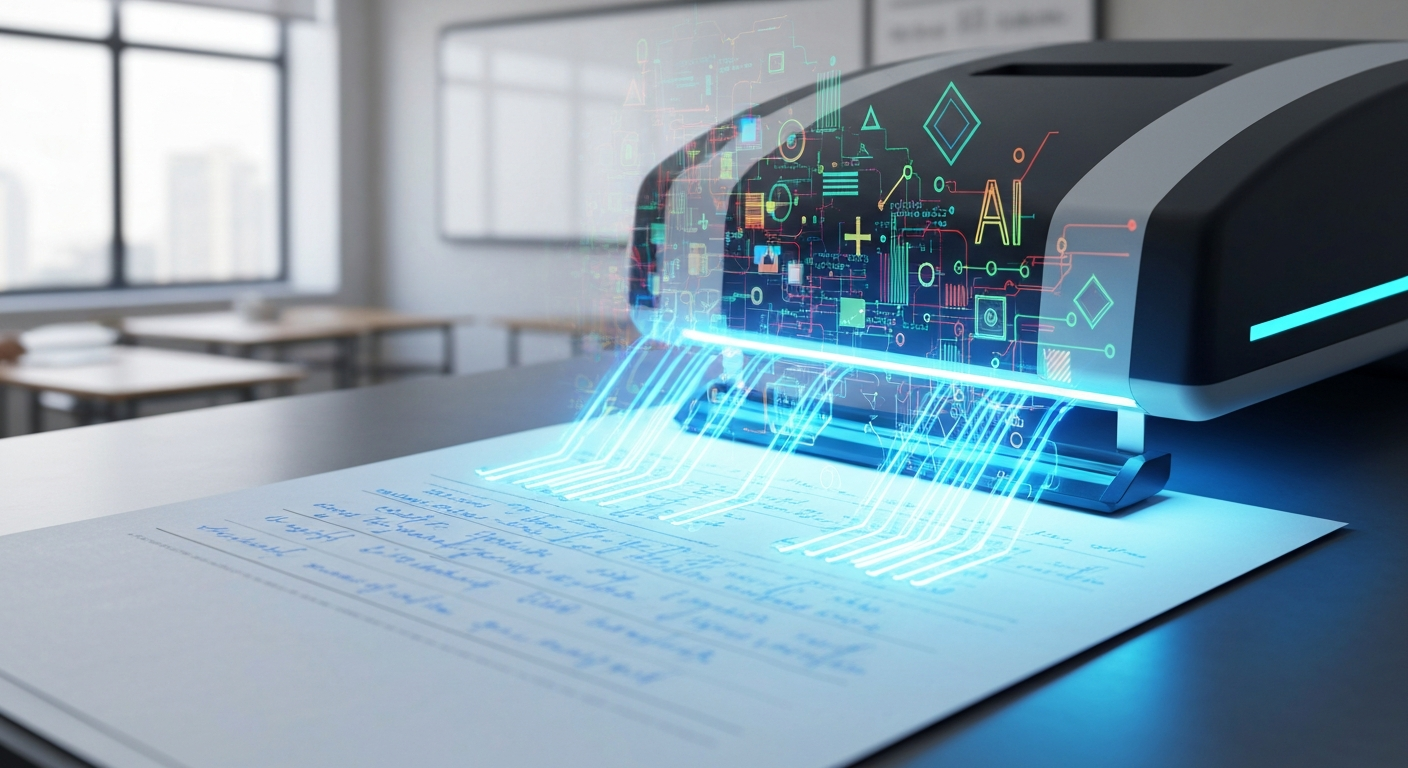
Mentofy offers significant advancements in this area with its **Vision AI Evaluator** and integrated progress tracking. The Vision AI Evaluator not only grades handwritten answer sheets instantly, removing hours from a teacher's weekend, but critically, it also compiles performance data for individual students and entire classes. This data seamlessly feeds into Mentofy's AI analytics, allowing teachers to generate detailed progress reports aligned with IEP goals. This capability transforms the tedious task of data entry and report writing into an efficient, automated process, providing teachers with actionable insights without the administrative overhead. By automating the grading and data aggregation for various assessments, from quizzes to longer assignments, Mentofy empowers teachers to spend less time on paperwork and more time on instruction.
Enhanced Accessibility and Assistive Technologies
Accessibility is a cornerstone of special education, ensuring that all students, regardless of their disability, have equitable access to learning opportunities. AI is profoundly enhancing accessibility by powering a new generation of assistive technologies that are more sophisticated, personalized, and seamlessly integrated into the learning environment.
One of the most impactful applications is in real-time communication and content consumption. AI-powered text-to-speech (TTS) and speech-to-text (STT) technologies have become incredibly advanced. Students with visual impairments or reading disabilities can have digital text instantly converted into natural-sounding speech, while students with motor impairments can dictate their assignments rather than typing. Real-time captioning, driven by AI, can provide instant transcripts for videos, live lectures, and classroom discussions, benefiting students with hearing impairments or those who process information better visually. This level of on-demand support removes significant barriers to participation and comprehension.
Beyond basic TTS/STT, AI is enabling more intelligent accessibility features. Predictive text and grammar correction tools assist students with writing difficulties, reducing frustration and improving the quality of their written work. AI can also analyze content and suggest visual supports, simplifying complex concepts for students with cognitive disabilities or those who are visual learners. For instance, an AI could automatically generate an infographic or a concept map from a block of text, making the information more digestible.
The integration of AI into MentofyCove classroom games exemplifies this trend. MentofyCove's interactive platform includes AI-driven accessibility overlays and features designed to accommodate diverse needs. These include customizable font sizes and color contrasts, adjustable reading speeds for text, and optional audio descriptions for visual elements in games like word searches or trivia. Imagine a student with a visual impairment engaging in a MentofyCove classroom games like a live quiz, where AI provides detailed audio descriptions of questions and answer choices, ensuring full participation. These features ensure that educational games are not just engaging but also inclusive, breaking down barriers that might prevent some students from participating fully. This commitment to universal design, augmented by AI, ensures that every student can access and enjoy learning activities, fostering a sense of belonging and achievement.
Data-Driven Insights for Intervention and Support
Effective special education relies heavily on understanding individual student needs and responding with targeted interventions. However, manually identifying patterns in student performance, tracking engagement across multiple activities, and predicting potential learning difficulties can be overwhelming for teachers. AI provides powerful capabilities for data analysis, offering insights that can inform instruction and support strategies.
AI algorithms can process vast amounts of student data – including assessment scores, engagement metrics from digital platforms, time spent on tasks, and even patterns in responses – to identify subtle trends and predict future challenges. For example, an AI might flag a student who consistently struggles with a particular type of math problem across different assignments, suggesting a need for specific reteaching or a different instructional approach. It can also identify students who are disengaging from online activities or showing signs of frustration, prompting timely teacher intervention.
This predictive analytics capability is particularly valuable for early intervention. By identifying students at risk of falling behind before they experience significant setbacks, teachers can implement proactive support strategies. This shifts the paradigm from reactive problem-solving to proactive, preventative measures, leading to better long-term outcomes for students with special needs.
Furthermore, AI can assist in the complex task of student grouping. Creating effective small groups for differentiated instruction requires careful consideration of individual student strengths, weaknesses, learning styles, and social dynamics. Manually optimizing these groups for specific learning objectives is a time-consuming puzzle. AI tools can analyze student data to suggest optimal groupings that maximize peer support, facilitate targeted instruction, and balance diverse needs within each group. This ensures that every minute of small-group instruction is as impactful as possible.
Mentofy's **MentofyGroups AI** is specifically designed to leverage these data-driven insights. This feature analyzes individual student learning profiles, performance data from assessments, and even IEP targets to suggest optimal small-group configurations for collaborative learning or targeted intervention. For example, if a teacher is preparing for a lesson on fractions, MentofyGroups AI can identify students struggling with specific fraction concepts and group them together for direct instruction, while simultaneously creating peer-tutoring groups for students who have mastered the basics. This intelligent grouping maximizes the effectiveness of differentiated instruction, ensuring that every student receives the right support at the right time. The Mentofy AI Analytics Dashboard provides teachers with a comprehensive overview of student progress, highlighting areas of concern and celebrating achievements, all powered by intelligent data processing.
How Forward-Thinking Educators Are Responding
The integration of AI into special education is not just about technology; it's about a paradigm shift in teaching practice. Forward-thinking educators are not viewing AI as a replacement for human connection or pedagogical expertise, but rather as an incredibly powerful co-pilot. They are embracing AI to augment their capabilities, offload repetitive tasks, and unlock new possibilities for personalized instruction.
These educators are characterized by several key approaches:
Strategic Adoption: They are not simply using AI for the sake of it, but thoughtfully integrating tools that address specific pain points and enhance learning outcomes. This involves evaluating AI solutions based on their alignment with IEP goals, ease of use, data security, and proven impact.
Focus on Human Connection: By automating administrative tasks and content differentiation, teachers are intentionally reclaiming time to focus on the invaluable human aspects of education – building relationships, providing emotional support, fostering critical thinking, and engaging in deeper instructional conversations. They understand that AI can personalize content, but it cannot personalize empathy or motivation in the same way a human teacher can.
Professional Development and Literacy: Recognizing that AI is a new frontier, these educators are actively seeking professional development opportunities to understand AI's capabilities, limitations, and ethical implications. They are developing "AI literacy" – the ability to effectively and responsibly use AI tools in their practice.
Ethical Considerations at the Forefront: They are vigilant about data privacy, algorithmic bias, and ensuring that AI tools are used equitably and transparently. Discussions around how student data is collected, stored, and used by AI are ongoing and critical to responsible implementation.
Leveraging AI for Diagnostic Insight: Beyond just differentiation, these teachers are using AI-driven analytics to gain deeper insights into student learning patterns, identifying misconceptions, and tailoring interventions with greater precision. This data-informed approach allows for more targeted and effective support.
Many educators are already using versatile tools like Canva for creating visual aids, Google Classroom for digital organization, and platforms like Kahoot or Quizizz for engaging assessments. The next step involves integrating more specialized AI tools that go beyond general utility to offer tailored support for special education needs. This often means combining the capabilities of general education tools with the deep personalization offered by platforms built with AI at their core.
For instance, a teacher might use Mentofy's AI Lesson Planner to generate differentiated content, then use MentofyBoards to present it interactively, leveraging real-time student responses to inform subsequent instruction. They might then use MentofyGroups to form collaborative teams for a project, ensuring each student's needs are met within the group dynamic. This holistic approach, where AI handles the heavy lifting of personalization and administration, allows the teacher to be more present, more responsive, and more impactful in the classroom.
Mentofy's Role in Empowering Special Education
The integration of AI into special education is not merely an incremental improvement; it represents a fundamental shift in how we can support teachers and students. By leveraging AI, we can move beyond the limitations of one-size-fits-all education and truly embrace individualized learning paths that cater to the unique needs of every student. The administrative burdens that have historically plagued special education teachers can be significantly reduced, allowing them to redirect their energy from paperwork to pedagogy and student connection.
Mentofy is committed to being a leader in this transformative journey, providing innovative, AI-powered solutions designed to empower special education teachers and unlock the full potential of every learner. Our suite of tools, from the **AI Lesson Planner** and **Vision AI Evaluator** to **MentofyGroups AI** and accessible MentofyCove classroom games, are built with the specific challenges and opportunities of special education in mind. We believe that by giving teachers intelligent tools that handle differentiation, streamline administration, and provide actionable insights, we can foster more inclusive, effective, and joyful learning environments.
The future of special education is bright, illuminated by the promise of AI. It's a future where personalized learning is scalable, where administrative tasks are minimized, and where teachers can dedicate their expertise to the art of teaching, knowing they have a powerful AI partner by their side. Mentofy is proud to be at the forefront of this revolution, helping educators build that future, one student at a time.
See these trends in action — try Mentofy free for teachers today.




 Explore AI Teaching Tools
Comments (0)
Please login to comment
No comments yet
Be the first to comment on this article