
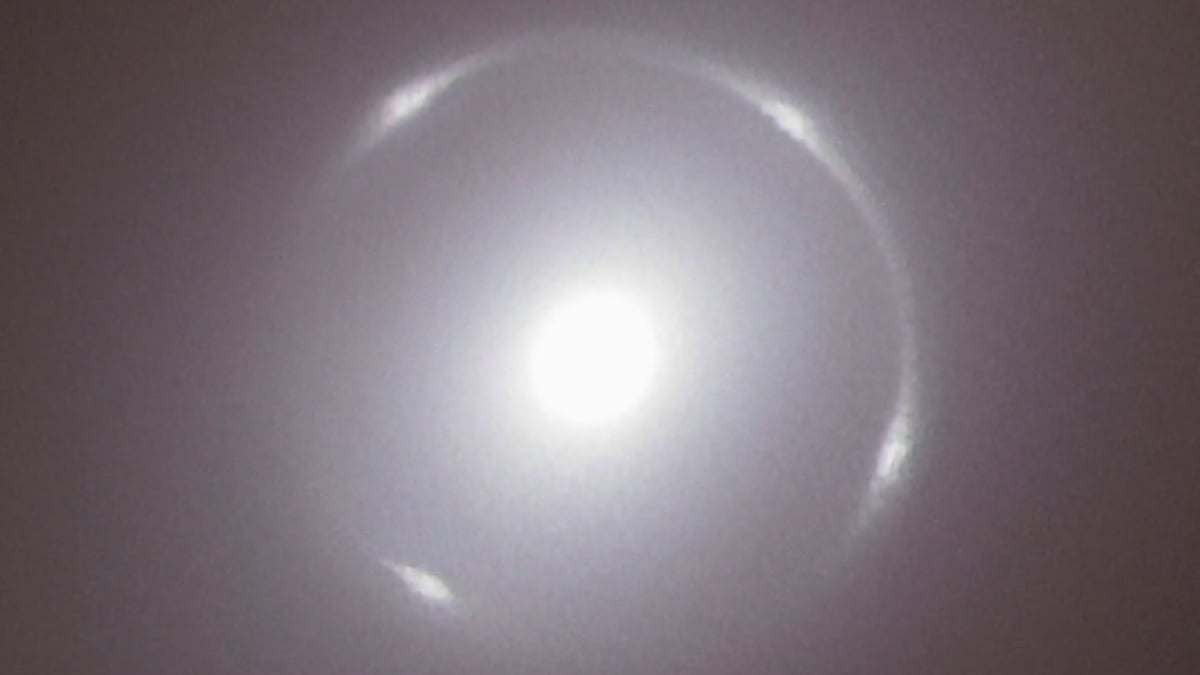
Imagine looking up at the night sky and realizing that what you see isn't quite what's there. It’s a mind-bending concept, but scientists are actively seeking the public's help to find distant galaxies whose light is being bent by massive objects in space. This isn't just a fascinating astronomical puzzle; it's an opportunity for educators to bring the wonders of the universe directly into their classrooms, transforming abstract scientific principles into tangible learning experiences that can ignite a passion for discovery in every student.
Unveiling the Cosmic Funnel: Gravitational Lensing Explained
The universe is a vast and often mysterious place, governed by the fundamental force of gravity. Albert Einstein's theory of general relativity predicted that massive objects, like galaxies or galaxy clusters, warp the fabric of spacetime around them. This warping acts like a cosmic lens, bending the light that travels from more distant objects behind them.
When light from a background galaxy passes near a massive foreground object, its path is deflected. This deflection can distort the image of the background galaxy, making it appear stretched, magnified, or even as multiple images. Scientists call this phenomenon gravitational lensing, and it's a powerful tool for studying the universe.
"Gravitational lensing allows us to see objects that would otherwise be too faint or too distant to detect, effectively acting as nature's own telescope."
The need for more eyes on this cosmic phenomenon is critical. The sheer volume of data collected by modern telescopes is overwhelming, and human pattern recognition remains an invaluable asset in identifying these subtle distortions. Your students, with a little guidance, can become citizen scientists, contributing to real scientific discovery.
Why Your Students Can Be the Next Cosmic Detectives
You don't need a PhD in astrophysics or access to a cutting-edge observatory to participate. The current initiative relies on the keen observation skills of everyday people. This presents a unique and exciting opportunity for educators to engage students in authentic scientific inquiry, fostering critical thinking and problem-solving skills.
Think about the inherent curiosity in young minds. They are naturally drawn to puzzles and mysteries. By framing the search for gravitationally lensed galaxies as a cosmic treasure hunt, you can tap into this innate drive. This approach makes complex scientific concepts accessible and, more importantly, fun.
A recent survey of 1,500 K–12 educators indicated a strong desire for more hands-on, inquiry-based learning opportunities. Gravitational lensing offers precisely this, allowing students to interact with real scientific data and contribute to a global research effort. It's a chance to move beyond textbook examples and into the realm of active discovery.
Bringing the Universe to Your Classroom
Integrating this topic into your curriculum doesn't require specialized equipment. The core concept can be explained using simple analogies and visual aids. You can even leverage technology to simulate the effects of gravitational lensing, helping students visualize how light bends around massive objects.
Consider how you can use this as a springboard for cross-curricular learning. Science classes can explore the physics of gravity and light. Math classes can delve into geometry and spatial reasoning as they analyze distorted images. Even art classes can find inspiration in the abstract beauty of lensed galaxies.
The need for detailed analysis means that even small contributions can make a significant difference. Imagine the pride your students will feel knowing their efforts are helping scientists understand the vastness of space and the distribution of matter within it. This sense of purpose can be a powerful motivator for learning.
Actionable Steps for Educators
Ready to guide your students on this cosmic adventure? Here’s how you can start:
- Introduce the Concept: Begin with a simple explanation of gravity and how massive objects bend spacetime. Use everyday analogies, like a bowling ball on a trampoline, to illustrate the warping effect.
- Explore Visuals: Show students real images of gravitationally lensed galaxies. Websites like NASA and the Hubble Space Telescope provide stunning examples. Discuss the distortions and what they imply about the foreground objects.
- Utilize Digital Tools: There are citizen science projects that allow participants to analyze astronomical images. While specific platforms may change, the principle remains: students can be trained to identify potential lensing candidates. Look for projects that offer clear guidelines and feedback mechanisms.
- Simulate the Lensing Effect: Use online simulators or even simple experiments with lenses and light sources to demonstrate how light can be bent and distorted. This hands-on approach solidifies understanding.
- Connect to Real Science: Emphasize that this is not just a classroom activity but a genuine scientific endeavor. Discuss how scientists use these findings to map dark matter and understand the evolution of galaxies.
For educators looking to enhance engagement with interactive elements, consider exploring tools like MentofyCove classroom games. While not directly related to lensing, these platforms can foster a collaborative and competitive spirit that can be channeled into scientific exploration.
"The universe is so vast and full of wonders, and we have only scratched the surface of what there is to discover. Projects like these empower everyone to be a part of that discovery."
The ability to find these elusive galactic structures is crucial for advancing our understanding of cosmology. Scientists need your help, and by extension, your students' help, to sift through the immense datasets and identify these cosmic marvels. It’s a testament to the power of collective human observation.
Leveraging Technology for Deeper Exploration
While the core task might seem observational, the underlying principles can be explored with a variety of educational technologies. For instance, the process of identifying patterns and anomalies in data is a skill that can be honed using various digital tools. Educators can use Mentofy AI teaching tools to create engaging lesson plans that explain complex astronomical phenomena.
The ability to generate varied question types for assessments, such as through an AI lesson plan generator or an exam creator, can help gauge student comprehension of gravitational lensing. Furthermore, tools like MentofyBoards can be used to display stunning images of lensed galaxies, sparking curiosity and discussion during lessons.
The goal is to make learning about the universe an active and participatory experience. By empowering students with the knowledge and tools to engage with real scientific challenges, we can cultivate the next generation of scientists and critical thinkers. The opportunity for your students to contribute to finding galaxies bending light is a powerful educational moment.
This endeavor is more than just a science lesson; it's an invitation to participate in the grand quest of human knowledge. By helping scientists find these distant, distorted galaxies, your students will not only learn about the universe but also about the power of observation, collaboration, and their own potential to contribute to scientific discovery. The universe is waiting to be explored, one bent ray of light at a time.







 Explore AI Teaching Tools
Comments (0)
Please login to comment
No comments yet
Be the first to comment on this article