
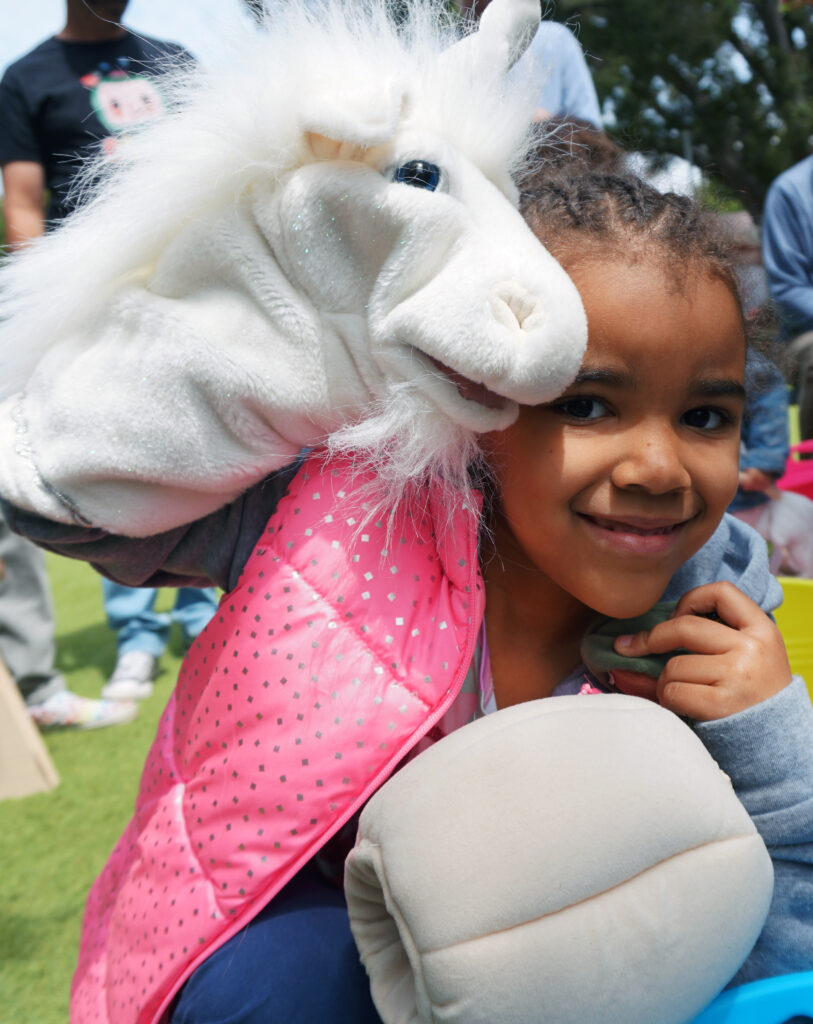
Unleash Imagination: The Power of Puppetry in Early Childhood Education
Discover how the magical world of puppets transcends simple entertainment, offering profound developmental benefits for young children.
At Mentofy, we believe in harnessing creative tools to foster essential skills, and puppetry stands out as a uniquely engaging and effective method for nurturing young minds.
This article explores the multifaceted advantages of introducing children to the art of puppetry, from boosting social-emotional growth to igniting a lifelong love for learning.
The Enchanting Realm of Puppetry for Children
For generations, puppets have captivated the imaginations of children, transforming ordinary moments into extraordinary adventures.
Far beyond a mere pastime, puppetry serves as a powerful educational tool, offering a rich tapestry of learning opportunities for every child.
When a child engages with a puppet, they step into a world where creativity knows no bounds, and where learning happens organically through play and interaction.
This immersive experience is particularly vital in today's world, where fostering imagination and emotional intelligence is paramount.
The tactile nature of puppets invites children to explore and interact directly, making learning a sensory experience.
Whether it's a soft, cuddly creature or a more intricate marionette, the physical connection with a puppet encourages a child to imbue it with personality and life.
This act of bringing a puppet to life is a fundamental step in developing empathy and understanding different perspectives.
Studies consistently show that children who engage with puppetry exhibit enhanced creativity and problem-solving abilities.
They learn to think critically as they devise stories and scenarios for their puppet characters, developing narrative skills and a deeper understanding of cause and effect.
The magic of puppetry lies in its ability to act as a bridge between a child's inner world and external expression.
For many children, especially those who may be shy or hesitant to express themselves directly, a puppet can become a safe and empowering voice.
They can project their thoughts, feelings, and even fears onto the puppet, allowing them to explore these emotions in a non-threatening environment.
This externalization is a crucial aspect of social-emotional learning, helping children to process complex feelings and develop coping mechanisms.
The simple act of handing a child a puppet can unlock their potential for self-expression and build their confidence.
The Transformative Impact of Puppets on Child Development
Research indicates that introducing children to puppetry at an early age yields significant developmental advantages.
These benefits extend across cognitive, social, and emotional domains, making it an invaluable component of early childhood education.
The interactive nature of puppetry encourages children to actively participate in their learning journey, rather than passively receiving information.
- Cognitive Growth: Puppetry stimulates critical thinking, memory recall, and language development as children create narratives and dialogue for their puppet characters.
- Social Skills: Through collaborative puppet play, children learn to share, negotiate, and work together, fostering teamwork and empathy.
- Emotional Intelligence: Puppets provide a safe outlet for children to express feelings, explore different emotions, and develop self-awareness.
- Creativity and Imagination: The open-ended nature of puppetry encourages children to invent stories, characters, and scenarios, nurturing their imaginative capacities.
- Fine Motor Skills: Manipulating puppets, especially those with strings or complex movements, helps refine children's dexterity and hand-eye coordination.
Puppetry as a Catalyst for Social-Emotional Learning
In an era where social-emotional learning (SEL) is recognized as a cornerstone of holistic child development, puppetry emerges as an exceptionally effective and engaging medium.
The ability of a puppet to act as a proxy allows children to externalize their emotions, making it easier for them to process challenging situations, confront fears, and explore their feelings through metaphor.
This process of externalization is not just about expressing emotions; it's about understanding them.
When a child uses a puppet to act out a scenario, they are essentially rehearsing real-life interactions in a safe, controlled environment.
For instance, if a child’s puppet "bites" another, a skilled educator might prompt a discussion about why the puppet might have done that – perhaps it was hungry or angry.
This gentle inquiry opens a dialogue, guiding the child to consider the motivations and consequences behind actions, fostering empathy and problem-solving skills.
This approach empowers the child to lead the narrative, reinforcing their agency and self-worth.
Furthermore, puppetry can significantly break down communication barriers, especially for children who struggle with direct interaction.
The puppet becomes a conduit for their personality, making it easier for them to communicate with peers and adults.
This can be particularly beneficial in group settings, where the shared experience of puppet play encourages children to connect with each other on a deeper level.
The presence of a puppet can transform a potentially intimidating social situation into an opportunity for connection and mutual understanding.
This is especially true when adults, such as grandparents or educators, participate in puppet play with children, creating nurturing and bonding experiences that slow down time and foster meaningful intergenerational connections.
Empowering Children Through Expressive Play
The pandemic highlighted the critical need for children to regain lost formative experiences, and the arts, particularly puppetry, offer an effortless pathway to boost social-emotional learning.
The make-believe games that children are naturally drawn to are amplified through puppetry, allowing them to explore their world and their feelings in imaginative ways.
teachers have observed a decline in imagination and pretend play in classrooms, and puppets are an excellent tool to cultivate these essential skills.
Puppets serve as a conduit for personality, making communication between children more fluid and natural.
They help children to express themselves and to communicate with each other, breaking down barriers and fostering a sense of connection.
This is not just about superficial interaction; it's about enabling children to communicate on a deeper level, externalizing their inner world and making it accessible for understanding and processing.
The magic of puppetry lies in its ability to make the intangible tangible, allowing children to grapple with complex emotions and situations through the safe and playful medium of their puppet characters.
The Educational Advantages of Engaging with Puppets
The benefits of puppetry in education are extensive, touching upon a wide array of developmental milestones.
Beyond the immediate joy and engagement, the structured yet open-ended nature of puppet activities provides a fertile ground for learning.
Children naturally suspend their disbelief when interacting with puppets, readily imbuing simple objects with life and personality.
This inherent ability to engage with fantasy is a powerful asset in the learning process.
When children are given a puppet, they are invited to project their own ideas, characters, and circumstances onto the fabric or material.
This act of projection transforms the puppet into something magical, allowing children to explore different roles and perspectives.
Whether the puppet is realistic or abstract, it serves as a direct conduit to the child's imagination, encouraging them to create their own narratives and adventures.
This process is not just about entertainment; it's about active participation in constructing meaning and understanding the world around them.
The versatility of puppets means they can be used to explore a vast range of themes and stories, from classic fables to contemporary issues.
This adaptability makes them an ideal tool for educators seeking to introduce complex concepts in an accessible and engaging manner.
For example, stories about friendship, sharing, or overcoming challenges can be brought to life through puppet shows, making the lessons more relatable and memorable for young learners.
The interactive nature of these performances ensures that children are not just passive observers but active participants in the learning experience.
Fostering Imagination and Storytelling Skills
Puppetry is a powerful engine for nurturing a child's imagination and their ability to craft compelling stories.
When a child takes hold of a puppet, they are handed the reins to a world of infinite possibilities.
They become the storyteller, the director, and the actor, all rolled into one.
This empowers them to weave their own unique tales, developing narrative structure, character development, and plot progression organically.
Consider a scenario where a child is given a puppet and encouraged to create a story.
They might decide the puppet is a brave knight on a quest, a curious explorer discovering new lands, or a friendly creature helping others.
In each instance, the child is actively constructing a narrative, making choices about the character's motivations, actions, and the challenges they face.
This process hones their creative thinking and their ability to organize thoughts into a coherent sequence.
They learn that their ideas have value and that they have the power to bring them to life.
The act of storytelling through puppets also enhances language development.
Children are encouraged to use descriptive language, varied vocabulary, and expressive tones to bring their characters to life.
They learn to articulate their thoughts and feelings, expanding their communication skills.
Moreover, the collaborative aspect of puppet play, where children might create stories together, teaches them the importance of listening, sharing ideas, and building upon each other's contributions.
This fosters a sense of community and shared creativity, where every child’s voice is valued.
The Long-Term Impact of Early Puppet Exposure
Introducing children to puppetry at a young age can have a profound and lasting impact on their development, shaping their approach to learning and their engagement with the world throughout their lives.
The skills cultivated through early exposure to puppets – creativity, communication, empathy, and problem-solving – are foundational for success in all areas of life, from academic pursuits to personal relationships.
Children who have had rich experiences with puppetry often develop a greater capacity for abstract thinking and a more nuanced understanding of complex social dynamics.
They learn to see situations from multiple perspectives, a skill that is invaluable in navigating the complexities of human interaction.
The confidence gained from expressing themselves through a puppet can translate into greater self-assurance in other aspects of their lives, encouraging them to take on new challenges and to voice their opinions more readily.
Moreover, the imaginative capacity nurtured through puppetry can foster a lifelong love of learning and a curiosity about the world.
Children who are encouraged to "make believe" are more likely to approach new information with an open mind and a desire to explore.
They understand that learning is not just about memorizing facts but about engaging with ideas, asking questions, and discovering new possibilities.
This intrinsic motivation is a powerful driver of academic achievement and personal growth.
Making Puppetry Accessible for Every Child
At Mentofy, we are committed to making enriching educational experiences accessible to children everywhere.
We believe that the power of puppetry should not be limited to specific locations or programs.
Therefore, we advocate for integrating puppetry into diverse learning environments, from classrooms and homes to community centers and online platforms.
Creating opportunities for children to engage with puppets can be as simple as providing them with readily available materials and encouraging their imaginative play.
Simple sock puppets, paper bag puppets, or even shadow puppets can be powerful tools for learning and expression.
The key is to foster an environment where children feel safe and encouraged to explore their creativity without fear of judgment.
Educators and parents can play a crucial role by facilitating these experiences, asking open-ended questions, and celebrating the unique stories that each child creates.
Mentofy aims to provide resources and guidance that empower educators and parents to harness the full potential of puppetry in their teaching and parenting practices.
By understanding the profound educational benefits, we can collectively ensure that every child has the opportunity to experience the magic of puppets and unlock their full developmental potential.
Conclusion
Puppetry is far more than just a playful activity for children; it is a dynamic and powerful educational tool that fosters critical developmental skills.
From enhancing social-emotional intelligence and boosting creativity to improving communication and nurturing imagination, the benefits of engaging with puppets are extensive and long-lasting.
By embracing puppetry, we provide children with a unique avenue for self-expression, empathy, and imaginative exploration, setting them on a path towards lifelong learning and personal growth.
Mentofy champions the integration of such transformative educational practices to empower every child to reach their full potential.







 Explore AI Teaching Tools
Comments (0)
Please login to comment
No comments yet
Be the first to comment on this article