
Beyond the Report Card: How One Urban School is Rewriting the Rules of Student Success Through Emotional Intelligence
In the relentless pursuit of academic achievement, a critical dimension of student well-being is often overlooked: their emotional landscape. While schools routinely administer assessments to gauge academic prowess, a groundbreaking initiative at a historic urban institution suggests a powerful parallel approach is not only possible but profoundly impactful. This small school, nestled in the heart of a bustling metropolis, is demonstrating that tending to a student's heart is the essential first step to unlocking their mind.
A New Kind of Assessment: Listening to the Inner Voice
For over 150 years, the Benedictine monks of St. Benedict’s Preparatory in Newark, New Jersey, have navigated the complex terrain of educating young minds. Now, this venerable institution, widely recognized as one of the most successful inner-city educational movements, offers a compelling blueprint for how to reach troubled teens before their emotional struggles derail their academic futures. The secret lies in a deceptively simple yet powerful tool: an emotional health intake form.
This customized assessment, originally inspired by a now-out-of-print adolescent checklist, is administered to every entering student. St. Benedict’s continually updates its form to reflect contemporary challenges, recently incorporating questions about the profound isolation experienced during pandemic-induced school closures. Students are asked to identify which of over 200 potential "problems" resonate with them, ranging from peer conflict and family discord to more serious issues like a family member's incarceration.
Ivan Lamourt, St. Benedict’s associate headmaster and a certified school psychologist, emphasizes the cost-effectiveness and immense value of this practice. He explains that the assessment process is remarkably inexpensive, costing little more than the checklist itself. Yet, it yields invaluable insights into the emotional state of each student, providing "real-time data of the kids who are in front of us." This data, Lamourt asserts, challenges educators to "grow to meet the needs of those kids," embodying the school's motivational mantra: it is futile to engage a student's intellect without first addressing their emotional core.
From Crisis to Community: The Evolution of St. Benedict's
Founded in 1868, St. Benedict’s Prep was once a steadfast pillar in a community grappling with poverty. However, as Newark's demographic landscape shifted, the school faced declining enrollment, culminating in a vote by the majority of monks in 1972 to close its doors. Yet, a dedicated few remained, driven by a vision to redefine what a preparatory school could be.
These determined educators extended the academic year to eleven months, implemented a stringent honor code, and elevated brotherhood and empathy to paramount importance. While upholding rigorous academic standards, they progressively integrated experiential learning, including a mandatory week-long hike on the Appalachian Trail for all freshmen. Crucially, they made a deliberate pivot, prioritizing emotional counseling over an over-reliance on standardized testing.
The school reopened the following year with a modest 89 students, a number easily manageable for a single counselor. Over the ensuing decades, St. Benedict’s experienced remarkable growth. It expanded to include elementary and middle school divisions and, since 2020, a girls' preparatory division. Today, the student body comprises approximately 1000 individuals across all divisions, with the majority identifying as Black or Latino. The school boasts an impressive daily attendance rate of around 95 percent, and nearly every graduate continues their education at the college level.
A Holistic Support System: Counseling Beyond the Classroom
A significant portion of St. Benedict’s students hail from disadvantaged or challenging family backgrounds. To address these complex needs, the school has established a dedicated counseling center on its premises. This center is staffed by a team of two qualified psychologists, several psychiatrists, and licensed school counselors, further supported by interns from neighboring colleges.
Lamourt and his team leverage the emotional intake forms much like administrators use academic evaluations. This allows them to swiftly identify students requiring immediate intervention and those who can be placed on a continuously updated watch list. Beyond these initial assessments, any student exhibiting signs of emotional distress throughout the academic year can be referred for one-on-one therapy or to the school's distinctive group counseling sessions.
These group sessions represent a highly effective utilization of the school's guidance budget. As a private institution, St. Benedict’s can offer these group sessions without requiring prior parental consent, a significant advantage in addressing sensitive student issues. Each weekday is dedicated to different groups and themes, fostering a safe space for exploration and healing.
The Power of Peer Connection: Specialized Group Counseling
Examples of these specialized groups include the "Blue Man Group," which provides a forum for discussing depression, and "Women of Wisdom," designed to address the unique coming-of-age challenges faced by young women. The "Unknown Sons" group, in particular, delves into the complexities of growing up in families where parents are physically or emotionally absent.
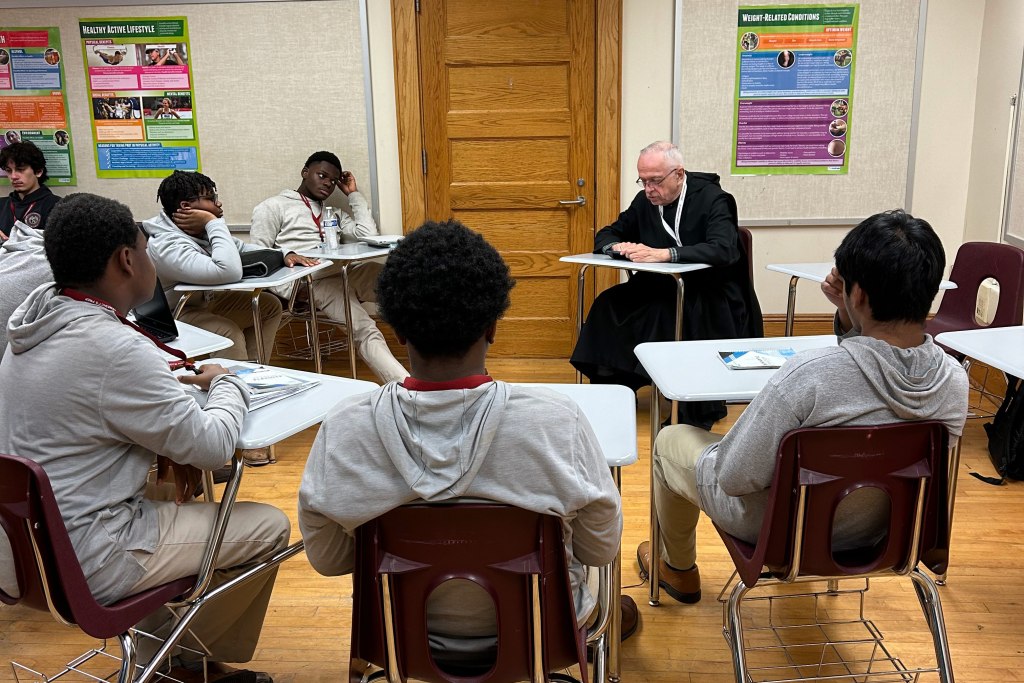
During a typical weekday morning assembly, while the rest of the student body gathers, up to two dozen students may participate in these 30-minute group sessions. These groups uniquely blend younger students with upperclassmen, creating an environment where older students mentor younger ones in navigating intensely personal issues. This is particularly crucial for urban youth, especially boys, who often lack safe avenues to discuss such matters outside of this structured setting.
During one observed "Unknown Sons" session, the discussion centered on the painful experience of being compared to others. The students' responses were deeply emotional, revealing raw feelings of anger, resentment, and jealousy. A senior student bravely took the lead, guiding a younger peer to articulate the profound hurt caused by his mother’s comparison of him to his father, whom she deeply disliked for abandoning the family. Several other students shared similar experiences, highlighting how such comparisons negatively impacted their self-perception.
Bridging the Gap: Adapting the Model for Broader Impact
While administrators and parents in many school systems remain primarily focused on academic metrics, and the establishment of a fully staffed counseling center like St. Benedict’s is often beyond the financial reach of most public schools, the emotional assessment component is far more accessible. Furthermore, group sessions offer an efficient method to vastly expand the reach of counseling services while simultaneously dismantling the stigma often associated with seeking mental health support.
Navigating the regulatory frameworks within public school districts can present significant hurdles to implementing the St. Benedict’s model wholesale. However, smaller-scale adaptations are entirely feasible. Incorporating an abbreviated emotional checklist into freshman orientation or piloting an "Unknown Sons" style group are practical steps that can be taken.
The success of this small school in a large city offers a powerful testament to the transformative potential of prioritizing emotional well-being. By proactively addressing the emotional needs of students, even through incremental changes, educational institutions can foster environments that lead to profound and lasting gains in their academic and personal lives. St. Benedict's demonstrates that when we invest in a student's emotional health, we are, in essence, investing in their entire future.





 Explore AI Teaching Tools
Comments (0)
Please login to comment
No comments yet
Be the first to comment on this article