
Federal Funding Freeze Threatens Lifeline for Migrant Students' Education
In the heart of California's agricultural belt, a vital educational initiative designed to support the children of hardworking farmworkers faces an uncertain future. These programs, often operating during the crucial summer months, provide essential academic reinforcement and enrichment, helping students bridge learning gaps created by frequent moves. Now, federal funding cuts loom, sparking a legal battle and raising alarms about the potential loss of a program that many describe as transformative.
Bridging the Gaps: A Summer of Learning and Discovery
Imagine a group of high school students engrossed in extracting DNA from clover, crafting jewelry from algae, and shaping intricate ceramic bowls. This isn't just an art class; it's part of a Migrant Education Student Academy in Monterey County, a testament to the innovative approaches used to bolster academic skills. These programs, funded federally, are designed to catch students up in English, math, and science as their families follow agricultural work across different regions.
Fourteen-year-old Omar Flores highlights the unique opportunities these programs offer, citing classes like ceramics and bioengineering, where he collaborates with university students. "I like how we get to build with clay, and we get to express our feelings with clay," Omar shared. "I like BioJam too because we further our knowledge and look in microscopes. I’ve learned a lot about genes and how we can modify genes."
Educators and research studies alike point to the significant impact of these Migrant Education Programs on boosting students' academic performance and paving the way for higher education and future careers. However, the very existence of these programs is now under threat.
A Program Under Fire: The Federal Funding Stalemate
President Donald Trump's administration has proposed eliminating or significantly reducing federal funding for several educational initiatives, including the nearly 60-year-old Migrant Education Program. This move has prompted California to file a lawsuit against the federal government, challenging the withholding of approximately $121 million in funds designated for migrant education within the state.
The administration's rationale, as outlined in budget proposals, suggests that these programs are not cost-effective and may inadvertently encourage ineligible individuals to access higher education, diverting resources from American students. However, a significant portion of students served by these programs are U.S. citizens whose families are integral to the nation's agricultural sector.
The Migrant Education Program, established decades ago, serves students aged 3 to 21 whose parents are employed in agriculture, fishing, dairy, or logging industries. Eligibility is based on a family's relocation for work within the past three years, irrespective of immigration status.
The Devastating Impact of Funding Loss
In California alone, the 2023-24 academic year saw 77,382 students and young adults eligible for Migrant Education Program services. Monterey County, a hub for agricultural activity, serves one of the largest migrant student populations, with 10,078 eligible individuals during the same period. The county received around $14 million in federal funding last year to support these students.
Beyond academic instruction, these programs often provide crucial support services, including health and dental care. San Diego County, for instance, partners with a university to bring a mobile dental clinic directly to migrant students, offering essential treatments. While many programs, like those in Monterey County, are striving to continue through the summer, their long-term viability remains precarious.
"The support system for the migratory students will not be there," stated Constantino Silva, senior director of migrant education in Monterey County. "Hopefully, there’s enough caring people who will still keep these students on their radar, right? But I’m afraid the students will fall through the cracks. I’m worried that only a few will continue to thrive as opposed to many."
A Personal Connection: From Migrant Student to Advocate
Constantino Silva's own journey underscores the profound impact of the Migrant Education Program. As a former migrant student himself, he attributes his academic success and subsequent college education to the program's support. His family moved from Mexico to Monterey County when he was six, following his father's seasonal work.
"It made a huge difference for me," Silva reflected. "By the time I got to high school, I was taking college prep courses, right? I could speak and write in English on a very high level. And my math was great too. So I was propelled into college prep, and then I went to college, and I really credit that to the additional support that I received through the migrant program."
Nurturing Foundational Skills: Early Literacy and Cultural Enrichment
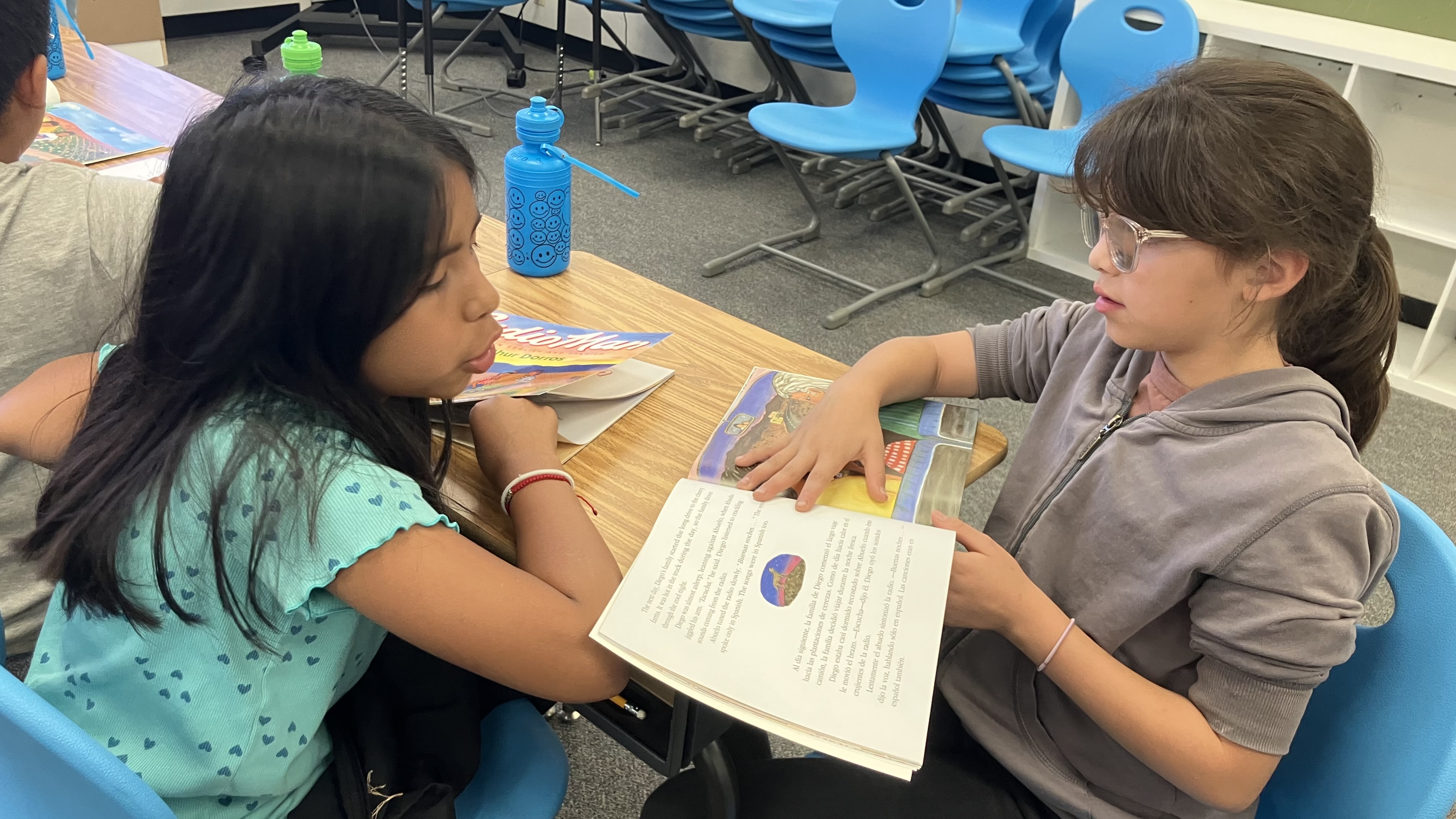
In classrooms across Monterey County, the dedication to migrant students is palpable. At Santa Lucia Elementary in King City, first and second graders are diligently learning foundational English phonics, mastering the sounds letters make together. Sentences like "They load the boat" and "Goats like to roam" are practiced with enthusiasm.
In another room, third and fourth graders are immersed in cultural learning, practicing traditional dances taught by a visiting instructor from Mexico. Handcrafted piñatas hang from the ceiling, adding a vibrant touch to the learning environment. Fifth graders engage with "Radio Man," a book that resonates with their own experiences as children of migrant farmworkers.
Daleysa, 10, shared her excitement about reading a book that mirrors her family's annual migration from Yuma, Arizona, to King City for work. "I like it a lot because it’s about a boy who moves to different places to get different fruits and vegetables," she explained. "And it’s kind of like how we do it, but we only go to two different places."
Oliver, also 10, whose parents work in the lettuce fields, noted the program's effectiveness in improving his English and math skills. "I learned a little bit more words here," he said, emphasizing how the program benefits peers who are not yet fluent in English. "It helps them a little bit more than the normal school, because the normal school doesn’t really tell you to repeat those words."
Filling the Gaps: The Teacher's Perspective
Keyla Robles, a teacher in the King City summer program, brings a deeply personal understanding to her role. Having been a migrant student herself, she experienced firsthand the challenges of frequent moves and the resulting academic disparities. Her father's seasonal work meant her family was often on the move, making consistent schooling and English language acquisition difficult.
"I experienced that big gap," Robles stated. "It took me years to pass the ELPAC, for example, because I wasn’t having that support that I know that migrant ed gives our students." The ELPAC, or English Language Proficiency Assessments for California, is a critical test for English language learners.
Now, Robles is dedicated to preventing her students from facing similar obstacles. "It’s basic phonics, phonemic awareness that as they’re progressing from grade level to grade level, they just go over their head. They never actually get that understanding of basic letter sounds, basic addition, subtraction," she observed.
Robles' own career aspirations have been directly impacted by the funding freeze. She applied for a full-time migrant resource teacher position with the Monterey County Office of Education, only to have the job put on hold. "It’s really disappointing for me," she expressed. "Because I feel like I have such a big impact on the students."
Setting Students on a Path to Success
At Chalone Peaks Middle School, students in the summer Migrant Education Program's STEM class enthusiastically described their hands-on learning experiences. They built hand-cranked light bulbs and assembled palm-sized radios, activities that go beyond typical classroom reviews.
"The Migrant Education Program is different from regular school because it teaches you a lot more," said 12-year-old Evelyn, who navigates the seasonal migration between Yuma, Arizona, and King City annually. "In school, you mostly review stuff. Here in the STEM class, they teach you real science, and you actually do stuff for yourself." Evelyn plans to keep the radio she built, a tangible reminder of her learning.
The program also extends its reach to higher education aspirations. High school students have participated in summer programs at universities, including the University of California, Santa Cruz, and California State University, Fresno. Karla Caliz, a Migrant Education Program coordinator, believes these experiences significantly increase the likelihood of students pursuing college degrees.
"Many of our students will narrate how it’s life-changing for them," Caliz stated. "We do believe that without programs like these, we would have students who would not be able to access the information or the process to enter [college]." This sentiment is echoed by Jose Perez, a migrant resource teacher for the King City Union School District.
Perez emphasizes the summer program's role in preparing students for the academic year, especially those with limited prior formal education. "Sometimes we have students who haven’t had any formal education, so they don’t know about social expectations, and this is a good way to teach them norms in the United States," he explained. Without this support, Perez worries these students might be misunderstood in traditional school settings.
The potential loss of the Migrant Education Program weighs heavily on educators like Perez. "It hurts, Perez said, to know the program could end. "In my experience in this community, even the district itself, they rely on me a lot. I don’t see these students having the chances without the migrant education support." The future of these critical educational pathways hangs in the balance, with profound implications for thousands of students and their families.






 Explore AI Teaching Tools
Comments (0)
Please login to comment
No comments yet
Be the first to comment on this article