
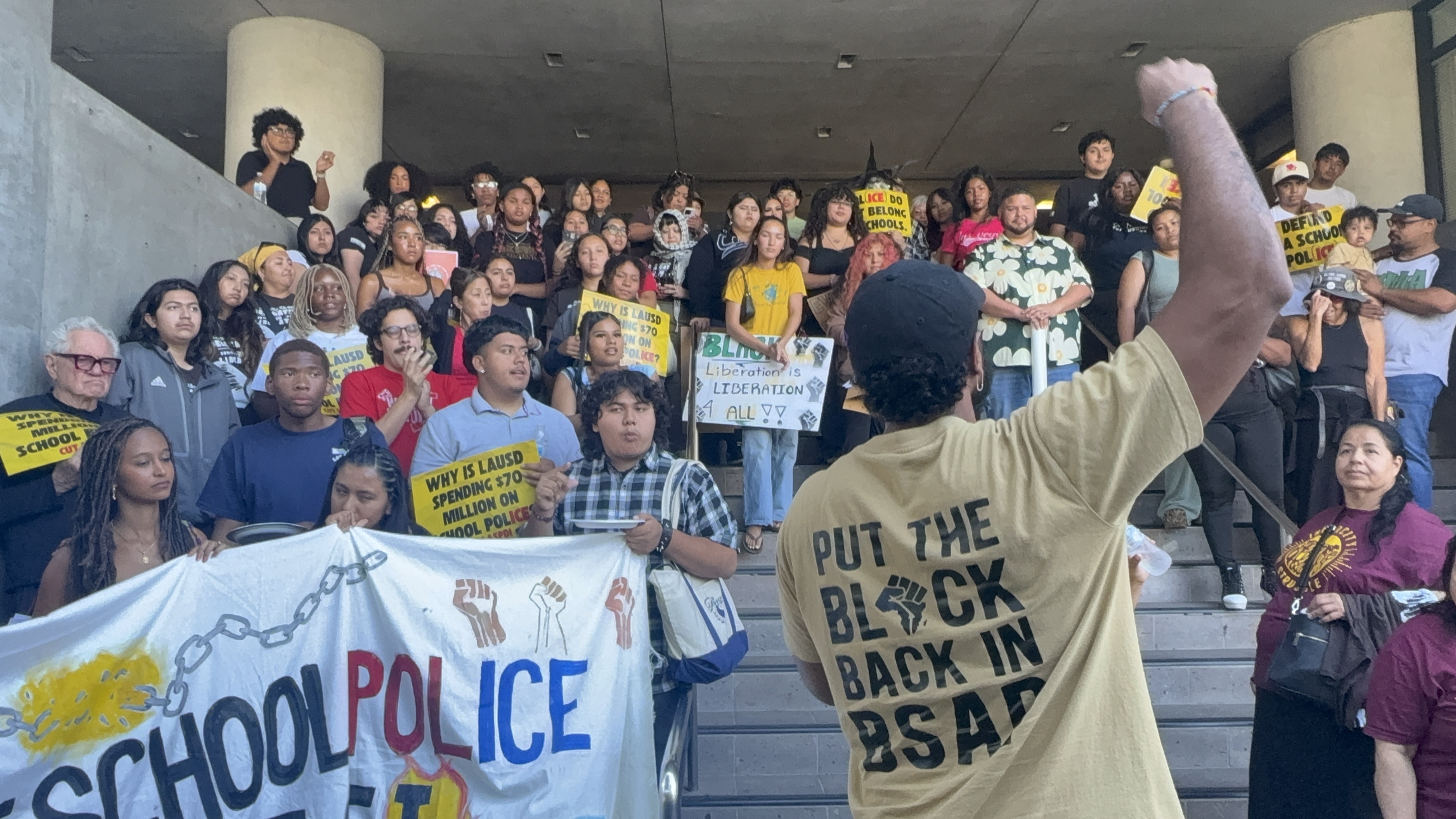
LAUSD Board Shields Black Student Achievement Plan from Deep Cuts, But Equity Index Faces Uncertain Future
In a significant late-stage maneuver, the Los Angeles Unified school board has largely protected its flagship Black Student Achievement Plan (BSAP) from proposed deep funding reductions. However, the district’s broader Student Equity Needs Index (SENI) is still slated for hundreds of millions of dollars in cuts over the coming years, raising concerns about the long-term commitment to equitable resource allocation in the nation's second-largest school district.
A Hard-Fought Victory for Black Student Achievement
The recent school board meeting saw two crucial amendments that offered a reprieve for BSAP, a program established in 2021 to provide targeted support and resources to schools serving a substantial portion of the district’s Black students. Advocates and students had voiced strong opposition to the initial proposals, which would have drastically reduced BSAP’s budget, potentially by as much as 86% by the 2027-28 academic year.
Board members Kelly Gonez and Karla Griego championed amendments that aimed to preserve the integrity of the BSAP. The first amendment, introduced by Gonez, successfully restored $50 million for the 2027-28 fiscal year. This restoration was achieved through a series of strategic adjustments, including further reductions in central office positions, a decrease in the Los Angeles School Police Department budget, and the elimination of a student metro pass program.
A subsequent amendment is expected in September, which could restore an additional $25 million, bringing the BSAP’s budget for 2027-28 to a more robust $100 million. This revised plan emphasizes a commitment to prioritizing the restoration of BSAP and SENI programs with any additional revenue, ensuring that funding is directed to schools with the most pressing needs.
Griego’s second amendment took a more decisive step, removing BSAP entirely from the fiscal stabilization plan for the 2028-29 fiscal year. This move draws $175 million from a trust dedicated to post-employment benefits, offering a more secure financial footing for the program in that year. The sentiment behind these actions was clear: to prevent programs vital to Black students from being the first casualties of budget shortfalls.
The Shadow of Cuts Looms Over the Student Equity Needs Index
While the Black Student Achievement Plan received a significant boost, the outlook for the Student Equity Needs Index (SENI) remains considerably more precarious. SENI, a program initiated in 2014, utilizes a comprehensive set of academic and social indicators to distribute additional funding to schools based on a sliding scale of need. It is designed to address systemic disparities by directing resources to the most underserved student populations.
Despite the board’s efforts to protect equity-focused initiatives, SENI is still projected to face substantial cuts. Under the current fiscal stabilization plan, SENI could lose approximately $400 million in 2027-28 and an additional $500 million in 2028-29. These reductions could have a profound impact, potentially leading to the elimination of around 4,500 full-time equivalent positions across the district.
These challenging financial realities are not unique to Los Angeles Unified. Districts across California are grappling with significant fiscal pressures. The expiration of COVID-19 relief funds, escalating operational costs, and declining student enrollment have created a perfect storm. Furthermore, the district must now accommodate the financial demands of recently ratified labor contracts, which are estimated to cost an additional $1.2 billion annually.
The district is anticipating a substantial deficit, with projections of $1.3 billion for the 2027-28 school year and a staggering $3.6 billion for the 2028-29 school year. Interim Superintendent Andres Chait acknowledged these fiscal challenges, stating that the district must carefully balance its aspirations for students with the responsibility of ensuring financial stability. He emphasized that the commitment to students remains unwavering, even amidst these difficult decisions.
Understanding the Impact: BSAP and SENI in Context
It is important to note that both BSAP and SENI represent a relatively small fraction of Los Angeles Unified's overall budget, which exceeds $18 billion. For the 2026-27 academic year, within the district's $7.35 billion unrestricted general fund, SENI accounts for 8.2% ($601 million), while BSAP represents 1.7% ($125 million).
The Black Student Achievement Plan, established in 2021, is designed to channel additional staff and resources to schools that collectively serve approximately one-third of the district’s Black students. These resources often include crucial support staff such as counselors and restorative justice practitioners, as well as funding for cultural enrichment activities and educational trips to historically Black colleges and universities.
Mariyah Williams, a recent graduate, shared how BSAP was instrumental in her academic journey. She highlighted the invaluable support of having Black adults on campus who understood her experiences and served as vital resources. The program’s impact is evident in district data, which shows a rise in A-G completion rates among Black students from 40% to 53.7% since BSAP's inception. Access to mental and socio-emotional health support has also seen a significant increase, alongside greater parental engagement and participation in extracurricular activities.
Christian Flagg, director of youth organizing at Community Coalition, underscored the transformative power of such programs. He stated that providing loving, caring educators and staff committed to building relationships and affirming students' culture can lead to a fundamentally different and more positive school experience, ultimately yielding improved outcomes.
The Black Student Achievement Plan has faced its share of challenges, including past legal and political scrutiny. In 2023, a complaint was filed alleging that BSAP violated civil rights legislation. In response, the district adjusted its eligibility criteria to consider factors beyond race. Despite these hurdles, the program’s budget saw an increase to $175 million for the 2025-26 academic year, reflecting its perceived value.
The Broader Implications for Equity
The proposed cuts to SENI, which were not altered by the recent amendments, have drawn significant concern from advocates who fear for the program’s long-term viability. Day Son, senior manager of K-12 policy at Catalyst California, a key developer of SENI, expressed alarm that a district often recognized for its commitment to equity might significantly curtail such a foundational program.
For over a decade, SENI has employed a multifaceted approach, analyzing academic performance alongside community factors like the prevalence of gun violence, to identify and support schools with the most profound needs. The funding allocated through SENI can translate into the hiring of numerous additional staff members, including counselors, restorative justice educators, and community outreach specialists. It also supports vital programs like career technology and the procurement of essential school supplies.
Research indicates that SENI has been effective in improving English language arts outcomes for socioeconomically disadvantaged students and English learners. An analysis by Catalyst California suggests that the proposed cuts would disproportionately impact the very students SENI was designed to serve. Approximately 30% of English learners attend schools identified as highest-need by SENI, and Black and Latinx students are also projected to be heavily affected.
The current fiscal climate forces a difficult conversation about the true meaning of equity. As Son poignantly asked, "If we can only do equity in times of abundance and we can't do equity when it's times of margin, when it's hard, then what is equity? What does that mean to even commit and prioritize equity?" The decisions made in the coming months will reveal much about the district's capacity and willingness to uphold its commitment to equitable opportunities for all students, especially when faced with significant financial constraints.







 Explore AI Teaching Tools
Comments (0)
Please login to comment
No comments yet
Be the first to comment on this article