
A Year of Ash and Resilience: How California Schools Are Rebuilding After Devastating Fires
One year ago, the skies over Southern California turned an ominous orange, and flames consumed homes, businesses, and the very fabric of community life. The devastating fires that swept through the region left a trail of destruction, displacing tens of thousands and claiming dozens of lives. For the school communities caught in the path of this inferno, the impact has been profound, extending far beyond the physical damage to campuses. Yet, amidst the ashes, a story of remarkable resilience, unwavering support for students, and a determined push toward rebuilding is unfolding.
Scars on the Landscape, Scars on the Soul
The fires were not selective. They ravaged neighborhoods, leaving behind skeletal remains of what were once cherished homes and community hubs. For many students, the trauma was immediate and deeply personal. Imagine a child watching their school, a place of learning and social connection, engulfed in flames. This was the stark reality for thousands of students across Los Angeles Unified and Pasadena Unified school districts.
The scale of the disaster was staggering. Over 100,000 individuals were forced from their homes, and more than 16,000 structures were reduced to rubble. Within the educational sphere, eight school campuses across these two unified districts bore the brunt of the fire's fury, forcing a sudden and disruptive halt to education for a significant portion of the state's student population.
Debra Duardo, Los Angeles County Superintendent of Schools, reflected on the past year, stating, "The school communities devastated by the January 2025 wildfires have demonstrated extraordinary resilience and strength. While the fires tragically claimed lives, destroyed homes, and disrupted the sense of security and daily routine that students depend on, we have come together to rebuild, support each other and heal."
The Long Road to Reconstruction
The physical rebuilding process is a monumental undertaking, a visible testament to the community's resolve. In the Los Angeles Unified School District, significant progress is being made on rebuilding three critical campuses: Marquez Charter Elementary, Palisades Charter Elementary, and Palisades Charter High School. These schools, once reduced to ruins, are slowly but surely rising from the ashes.
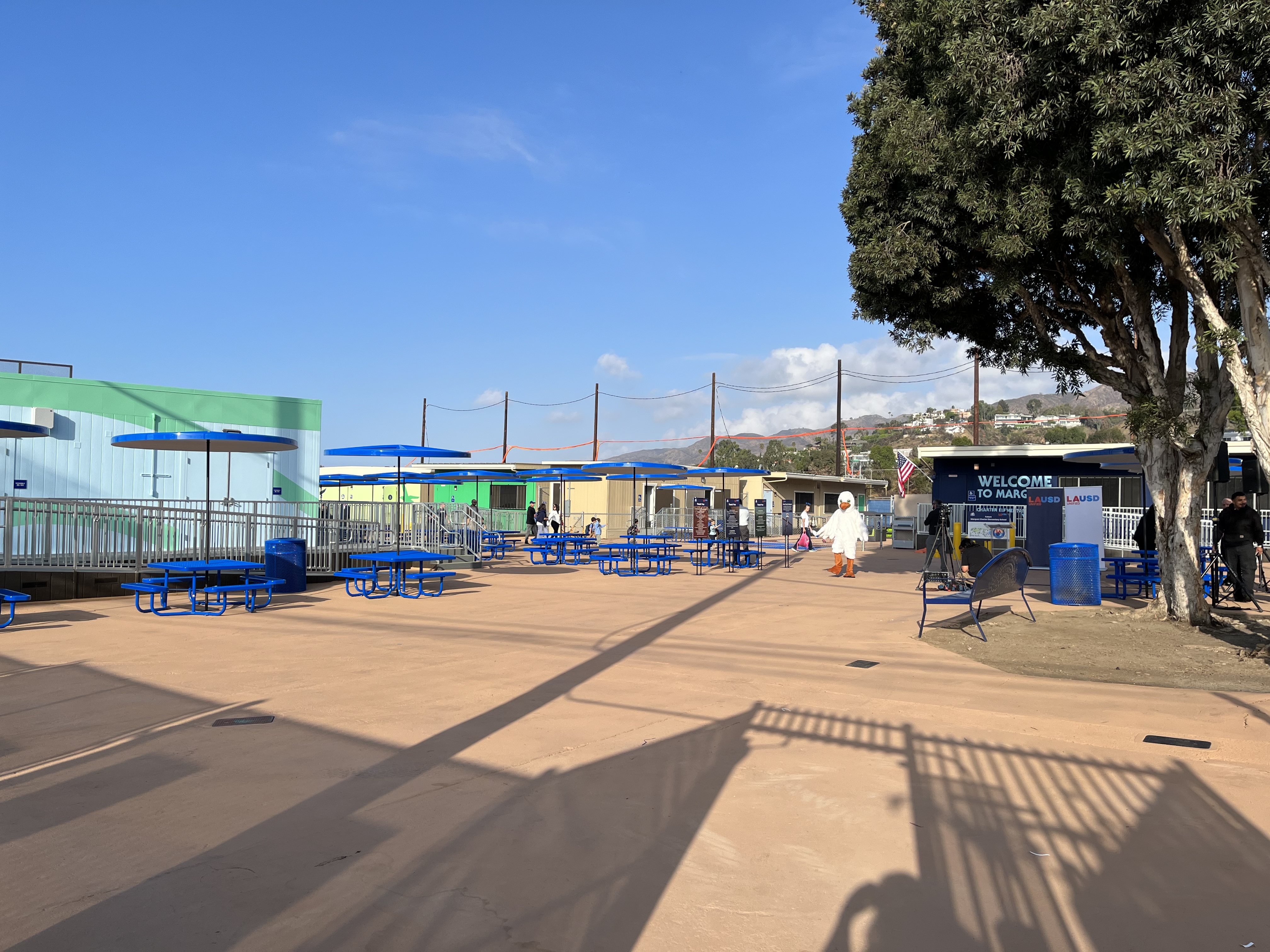
Marquez Charter Elementary, for instance, welcomed students back to a new, temporary campus in September, a remarkable feat achieved just nine months after the fire. While their permanent campus is slated for completion by 2028, costing an estimated $207 million, the return to a semblance of normalcy was a crucial step for its 130 students, a number significantly reduced from its pre-fire enrollment of 310.
Similarly, nearly 3,000 students at Palisades Charter High School are now attending classes in portable classrooms on their original site, a welcome change after a year spent in a renovated commercial building. The rebuilding of their campus is projected to cost $267 million, with an expected opening by the end of 2029. These rebuilding efforts are significantly bolstered by a $600 million reconstruction budget, largely funded by a voter-approved construction bond from 2024.
The story in the Pasadena Unified School District, however, is complicated by pre-existing financial challenges. While five of their campuses were impacted by the fire, including Eliot Arts Magnet and Franklin Elementary, the district's recovery is further strained by years of fiscal difficulties. A $900 million bond measure passed in 2024 offers a lifeline, but the district has had to implement significant budget cuts, including $24.5 million for the upcoming year, impacting staffing across the board.
These cuts, totaling $30.5 million in reductions, have led to the layoff of approximately 40 teachers and other essential school personnel, some of whom were themselves victims of the fires. This financial strain adds another layer of complexity to an already arduous recovery process, highlighting the interconnectedness of community well-being and the stability of its educational institutions.
Compounded Losses: The Invisible Scars
Beyond the physical destruction of school buildings, the fires inflicted deeper, more insidious wounds, particularly on the most vulnerable students. For those in the foster care system or who experienced sudden homelessness, the displacement was not just a change of address but a profound disruption of their support networks and sense of security.
In the Altadena area, approximately 225 children and youth in foster care were directly impacted by one of the major fires. The UCLA Pritzker Center reported that within three months, 36 of these students had relocated an average of 16 miles away, creating significant hurdles for maintaining educational continuity and accessing vital services. Taylor Dudley, executive director of the center, expressed concern that as schools stabilize, some of these crucial support systems might begin to falter.
"If a student’s home is now safe to return to, the child might be reenrolled at the school they attended before the fire," Dudley noted. "A transition of this nature raises many questions for a foster student, who may not have a constant advocate by their side: Who will ensure all their credits will transfer from their previous school? Will their transportation plan be upheld? Will their individualized education plan (IEP) transfer in full, with all services continuing?"
The challenge is compounded for students who were already experiencing homelessness before the fires or who lost their homes in the blaze. In Pasadena Unified, nearly 300 homeless students were enrolled by October of the 2024-25 school year. In Los Angeles Unified, that number soared to approximately 10,800. The state's efforts to streamline enrollment by temporarily waiving documentation requirements provided a critical lifeline, but the emotional toll on these families, who often found themselves in need for the first time, was immense.
"Some families who were suddenly homeless after the fires 'were having a hard time because they’ve never seen themselves as being the ones in need'," explained Jennifer Kottke, the homeless liaison for the Los Angeles County Office of Education. "They’re the ones who provided for those who were in need." Many initially hesitated to accept basic necessities, believing others were more deserving.
Adding to this cumulative trauma, some students in fire-affected zones faced the added stress of immigration raids in the late spring. This confluence of crises, as described by Lisa Fortuna, chair of the Department of Psychiatry and Neurosciences at the University of California, Riverside, created a pervasive sense of threat and instability, impacting students' fundamental sense of safety and security.
Navigating the New Normal: Emotional Aftershocks
While schools quickly implemented surge counseling and psychological support services in the immediate aftermath of the fires, the emotional fallout continues to reverberate. Even a routine fire drill can trigger anxiety and resurface feelings of loss for students who have experienced such profound trauma. Gabriela Gualano, a teacher librarian at Paul Revere Charter Middle School, shared the delicate balance educators must strike.
"We had to definitely front-load to the kids: 'Hey, this is what's happening. It's just a drill. We know you've done this before. The district just wants to make sure that we're able to do this in a timely manner, so we're going to get through it,'" Gualano recounted. Some students have developed a dark sense of humor as a coping mechanism, while others prefer to avoid the topic altogether, a stark reminder of the deep emotional scars left by the fires.
The anniversary of the fires, January 7th, is being marked in various ways across the affected districts. Pasadena Unified schools will observe a moment of silence, a solemn acknowledgment of the losses endured. In Los Angeles Unified, some campuses may opt for quieter, more healing activities like planting a tree or organizing reflective walks, prioritizing activities that foster emotional recovery.
For some, like retired first-grade teacher Wendy Connor from Marquez Charter Elementary, the priority remains maintaining a sense of normalcy. "It's been a collaborative, iterative process," said LAUSD school board member Nick Melvoin. "I think we've done a lot of right by our students, which is most important, but always, always more to do." The focus remains steadfast on the permanent rebuilding efforts.
Teachers, too, are grappling with intangible losses that cannot be replaced. Connor described the poignant memory of her classroom before the fire – the organized chaos of student work, the carefully curated art project samples. "It's not things that you can turn to the district and say, 'Will you buy me this?'" she lamented. The emotional toll on educators, who are often the steady anchors for their students, is a critical, though often overlooked, aspect of the recovery.
For Tanya Reyes, a teacher and mother who lost her Altadena home, the past year has been a profound lesson in the slow, humbling process of healing. Moving multiple times with her three daughters, from friends' homes to a new rental, has been a journey of adaptation. The loss of cherished belongings, like a daughter's stuffed tigress, and even a beloved pet, has been compounded by the physical and emotional strain of rebuilding a life while continuing to educate and support young minds. Reyes' experience underscores the deep, personal grief that underlies the collective recovery, a reminder that even as campuses are rebuilt, the human spirit requires time, patience, and profound care to mend.






 Explore AI Teaching Tools
Comments (0)
Please login to comment
No comments yet
Be the first to comment on this article