
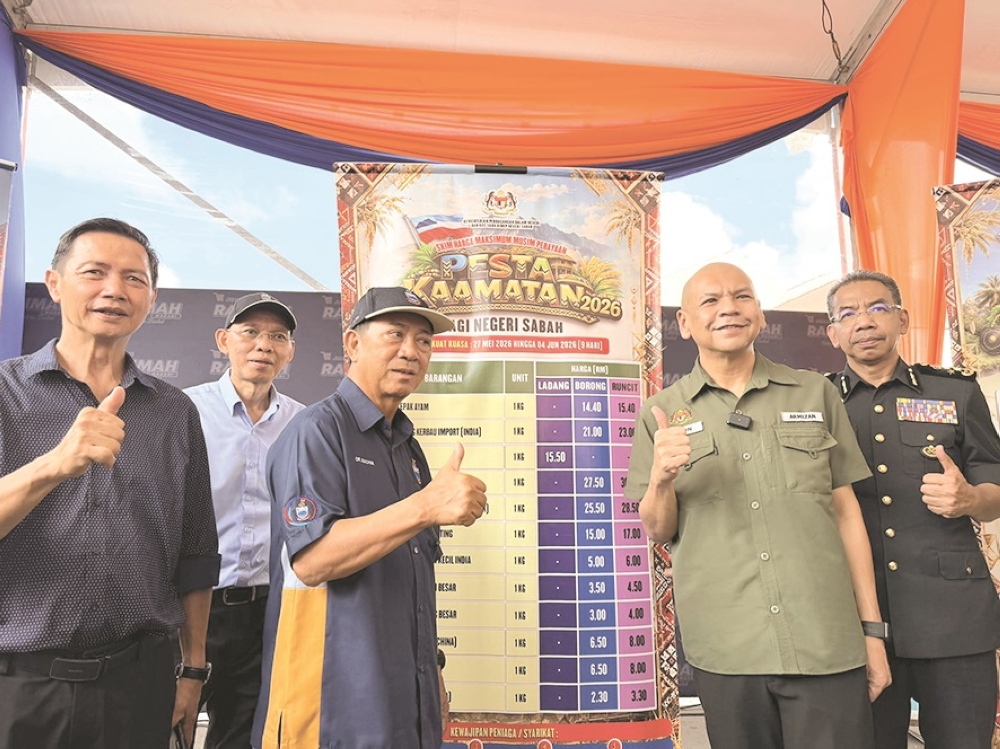
Festive Price Controls Unveiled: Safeguarding Budgets for Kaamatan and Gawai Celebrations
As vibrant celebrations approach, a crucial government initiative is set to ensure that essential goods remain accessible and affordable for consumers in Sabah, Sarawak, and Labuan. The Festive Season Maximum Price Scheme, a cornerstone of consumer protection, is being rolled out to cover the upcoming Kaamatan and Gawai festivals, aiming to prevent price gouging and ensure stable supply chains.Ensuring Affordability During Peak Celebrations
From May 27th to June 4th, a carefully curated list of 17 essential items will fall under strict price controls. This nine-day initiative is designed to provide a crucial buffer for consumers during a period of heightened demand, allowing families to celebrate without the added burden of inflated prices. The Ministry of Domestic Trade and Cost of Living is spearheading this effort, emphasizing a commitment to stable prices and ample availability of necessary goods.
Minister Datuk Armizan Mohd Ali highlighted the dual benefit of the scheme. "Consumers will be able to purchase essential goods at reasonable prices," he stated, "while traders will not be burdened with an excessively long enforcement period." This balanced approach aims to foster a fair market environment for both buyers and sellers.
Expanding the Scope of Controlled Items
This year marks an expansion in the number of controlled goods, increasing from 10 to 12 items. Notably, the list now includes imported old ginger and potatoes sourced from China, reflecting a broader effort to monitor and manage the price of key ingredients. This strategic addition aims to address potential price fluctuations in these specific items.
Controlled Goods in Sabah
For Sabah, the comprehensive list of controlled items includes a range of popular products. Consumers can expect price stability for:
- Live pigs
- Pork (meat and fat)
- Pork belly
- Imported buffalo meat from India
- Chicken wings
- Curly dried chillies
- Small Indian onions
- Garlic from China
- Large yellow onions
- Large red onions
- Imported old ginger
- Potatoes from China
Labuan's Focused Approach
In Labuan, the scheme will encompass 11 controlled items, with live pigs being the sole exclusion from the Sabah list. This tailored approach ensures that the most relevant goods for the local market are prioritized under the price control measures.
Price Trends and Stability
An analysis comparing the current implementation with previous years reveals a positive trend towards price stability in both Sabah and Labuan. A significant observation is that six goods have recorded price reductions across both regions. In Sabah, three items have maintained their previous prices, while two new goods have been introduced to the controlled list.
Labuan mirrors this trend of stability, with two items holding steady in price. The addition of two new items to its controlled list further refines the scheme's effectiveness in addressing local market dynamics.
Sarawak's Gawai Day Preparations
The Gawai Day Festive Season Maximum Price Scheme in Sarawak will feature 12 controlled items, an increase from the 11 items monitored last year. The inclusion of imported buffalo meat from India is a key addition to this year's list, aiming to ensure consistent availability and pricing.
Gawai Day Controlled Items
The specific items under price control for Sarawak's Gawai Day celebrations include:
- Live pigs
- Pork (meat and fat)
- Pork belly
- Imported buffalo meat
- Live old chicken
- Chicken wings
- Imported round cabbage
- Garlic from China
- Curly dried chillies
- Whole coconuts
- Grated coconut
- Coconut milk
Minister Armizan noted that an analysis of these items indicates a favorable market performance. Five items have seen price reductions compared to the previous year, while three have maintained their existing price points, suggesting a generally controlled and predictable market for these essential festive goods.
The Mechanism of Price Control
The determination of which goods are controlled and their maximum prices is a collaborative process. It involves extensive discussions with the Ministry of Agriculture and Food Security and key industry stakeholders. This ensures that the set prices are both fair to consumers and sustainable for producers and traders.
The enforcement of this scheme is anchored by the Price Control and Anti-Profiteering Act 2011. This legislation grants authorities the power to establish maximum prices for selected goods. Consumers can easily access the maximum prices set under this scheme via the KPDN website, promoting transparency and informed purchasing decisions.
Ensuring Compliance and Penalties
To ensure adherence to the price control measures, KPDN enforcement officers will be actively present in various market settings. These include public markets, farmers' markets, tamu markets, and shopping centers where festive essentials are commonly sold. Their presence will serve as a deterrent and a point of contact for consumer queries.
Traders are reminded of their obligation to clearly label controlled-price goods with distinctive pink labels. Compliance with these regulations is paramount. Individuals found selling controlled goods above the stipulated maximum price face significant penalties, including fines of up to RM100,000, imprisonment for up to three years, or both.
Companies found in violation are subject to even steeper fines, potentially reaching RM500,000. Furthermore, failure to display the required pink price tags can result in fines of up to RM10,000 for individuals and up to RM20,000 for companies, underscoring the seriousness of these regulatory requirements.
Sustained Efforts for Cost of Living Management
The Ministry remains committed to ongoing collaboration with the Ministry of Agriculture and Food Security and industry players. This partnership is crucial for guaranteeing an adequate supply of goods throughout the festive periods and beyond. Proactive measures are in place to address any emerging issues related to prices and supply.
Intervention measures under the Inter-Ministerial Technical Committee on Price and Supply Stabilisation will continue to be a key strategy. This committee works diligently to tackle challenges associated with prices, supply, and the broader cost of living. Beyond the Festive Season Maximum Price Scheme, KPDN is actively implementing various cost-of-living initiatives, such as the Program Jualan Rahmah Madani and the Program Servis Ihsan Madani@Petronas AutoExpert, demonstrating a comprehensive approach to consumer welfare.







 Explore AI Teaching Tools
Comments (0)
Please login to comment
No comments yet
Be the first to comment on this article