
The California Career Passport: Unlocking Your Professional Future Through Verified Learning
Navigating the job market can feel like an uphill battle, with valuable skills and experiences often overlooked by potential employers.
Imagine a world where your entire learning journey, from college courses to on-the-job training, is recognized and validated, opening doors to better career opportunities.
California is pioneering such a future with its innovative "Career Passport," a digital learning and employment record designed to bridge the gap between education and the workforce, offering a powerful new tool for every Californian's professional growth.
Bridging the Skills Gap: The Need for a Verified Learning Record
Many individuals, like Travon Reed, a dedicated housing navigator in South Los Angeles, find themselves in a frustrating situation after completing their education.
Despite acquiring crucial knowledge and skills through rigorous college courses at institutions like East Los Angeles College, employers often fail to acknowledge this prior learning.
Reed's experience highlighted a common challenge: graduates often have to repeat foundational training upon entering the workforce, essentially proving they possess skills already learned in college.
This disconnect means valuable educational investments aren't always translating into immediate career advancement or recognition, leading to underemployment and a feeling of being undervalued.
The traditional job application process, which relies heavily on resumes and transcripts, often fails to capture the full spectrum of an individual's capabilities.
Requesting official documentation from various institutions can be time-consuming, costly, and cumbersome.
Furthermore, employers frequently express dissatisfaction with the candidate pool, citing a misalignment between the skills applicants possess and the specific needs of open positions.
This creates a dual problem: job seekers struggle to find suitable roles and receive feedback, while employers face difficulties in identifying qualified candidates.
Research indicates that this inefficiency impacts not only individual careers but also the broader economic landscape, hindering productivity and innovation.
Introducing the California Career Passport: A Digital Credential for All
In response to these challenges, California is investing in a groundbreaking initiative: the Career Passport.
This ambitious, multiyear project aims to create a comprehensive virtual platform that consolidates an individual's entire learning and employment history into a secure, digital portfolio.
Think of it as a dynamic, verifiable resume that automatically updates as you acquire new skills, complete courses, or earn certifications.
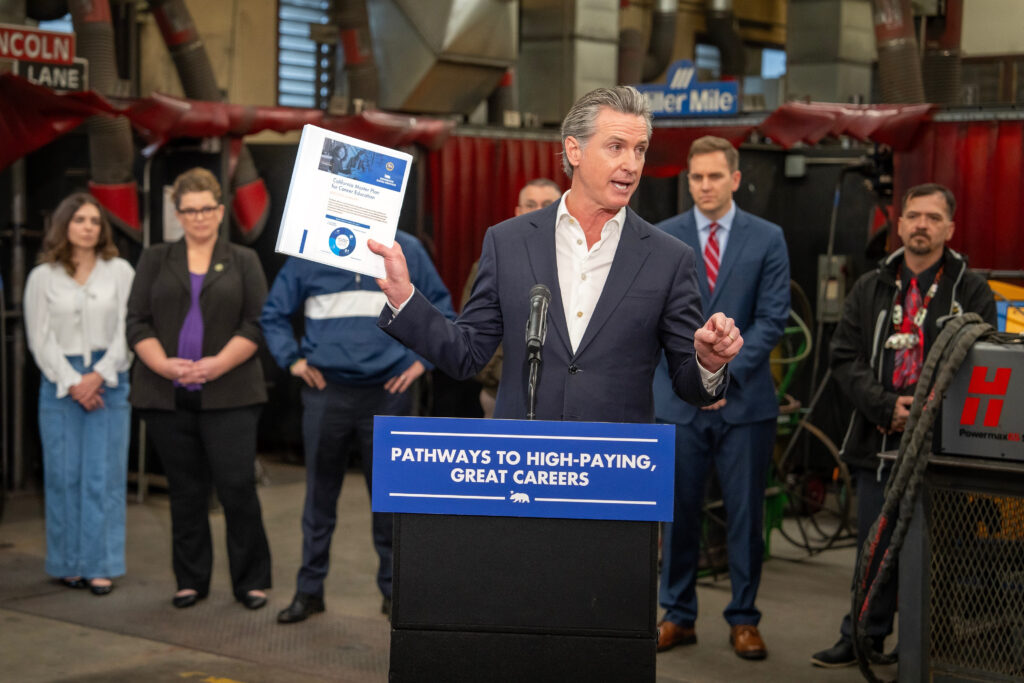
The vision, as articulated by Governor Gavin Newsom, is to create a "passport" where all developed skills and life experiences are recognized and can be leveraged by the private sector to advance career trajectories and future prospects.
The Career Passport is designed to be inclusive, encompassing a wide range of learning experiences.
This includes formal education from K-12 institutions and colleges, vocational training, apprenticeships, military service, and even valuable skills gained through volunteer work or personal projects.
By centralizing and validating these diverse experiences, the platform seeks to provide a more holistic and accurate representation of an individual's capabilities to potential employers.
This initiative aligns with the broader goals of California's Master Plan for Career Education, which emphasizes seamless transitions between educational pathways and fulfilling careers.
Key Features and Benefits of the Career Passport
The California Career Passport is more than just a digital document; it's a system designed to empower individuals and streamline the hiring process.
Its core features are built around validation, accessibility, and comprehensive skill representation.
Verified Learning and Skill Recognition
One of the most significant aspects of the Career Passport is its emphasis on validation.
Information within the digital portfolio will be authenticated by the educational institutions and employers where the learning occurred.
This ensures that the skills and credentials listed are genuine and reliable, addressing employer concerns about inflated resumes and the authenticity of candidate claims.
For individuals, this means their hard-earned knowledge is not just listed but actively vouched for, providing a significant advantage in the job market.
Seamless Transcript and Credential Sharing
A major hurdle in the current system is the difficulty in transferring academic records and professional certifications.
The Career Passport initiative is closely linked to efforts to enhance California's eTranscript system, making the sharing of student transcripts and other credentials seamless and, ideally, free of charge.
This reduces administrative burdens for job seekers and ensures that relevant educational achievements are easily accessible to employers.
Holistic Representation of Skills
The platform moves beyond traditional academic metrics like grades and credits.
It aims to capture granular skills, such as "trauma-informed care" or "motivational interviewing," which are highly valued by employers but often not explicitly detailed on a standard college transcript.
This is particularly beneficial for individuals who have acquired significant skills through non-traditional pathways or who may be just short of completing a degree.
Research suggests that many Californians over 25 have attended college but not earned a degree; the Career Passport could provide them with a powerful way to showcase their acquired competencies.
Inclusivity and Broad Application
Unlike some localized or industry-specific initiatives, California's Career Passport is designed for the entire state.
This broad scope ensures that all Californians, regardless of their background or location, can benefit from the platform.
The goal is to create a unified system that supports diverse workforces, from the agricultural hubs of the Central Valley to the tech-centric environment of Silicon Valley.
This inclusive approach is crucial for maximizing the impact on the state's economy and ensuring equitable access to opportunities.
The Technology and Infrastructure Behind the Passport
Building a system as comprehensive as the Career Passport is a complex undertaking that requires robust technological infrastructure and collaborative efforts across various sectors.
The state has committed significant funding to lay the groundwork for this digital ecosystem.
State Investment and Leadership
The proposed 2025-26 budget earmarks substantial one-time funding to develop the necessary infrastructure for the Career Passport.
This investment underscores the state's commitment to modernizing career education and employment pathways.
The California Community Colleges system is taking the lead in this development, working in collaboration with a diverse task force.
This group includes representatives from the California Department of Education, all three state higher education systems, various state agencies like the Labor & Workforce Development Agency, and employers from across different industries.
Learning Employment Records (LERs)
At the heart of the Career Passport is the concept of Learning Employment Records (LERs).
These digital records are designed to be interoperable and secure, allowing for the verifiable exchange of learning and employment data.
The development of LERs is a critical component, ensuring that the data captured is accurate, standardized, and easily understood by both educational institutions and employers.
This technology aims to create a trusted source of information about an individual's skills and qualifications.
Collaboration and Data Integration
The success of the Career Passport hinges on effective collaboration between K-12 schools, colleges, workforce development boards, community organizations, and employers.
The task force's inclusive approach, bringing together diverse stakeholders, is crucial for identifying potential challenges and ensuring the platform meets the needs of all users.
This collaborative spirit is essential for overcoming the inherent complexities of integrating data from disparate systems and fostering a shared understanding of what constitutes valuable learning and skills.
Addressing Challenges and Ensuring Success
While the vision for the Career Passport is compelling, its successful implementation will require careful consideration of potential obstacles and a commitment to ongoing refinement.
Advocates acknowledge that creating such a system is not a simple task.
The Complexity of Standardization
One of the primary challenges is standardizing the way skills and learning experiences are described and validated across a vast and diverse state like California.
Different industries and educational institutions may use varying terminology or have different criteria for assessing proficiency.
Developing common frameworks and protocols for LERs will be essential to ensure consistency and interoperability.
This requires ongoing dialogue and agreement among all participating entities.
Employer Adoption and Trust
The ultimate success of the Career Passport depends on widespread adoption by employers.
They need to trust the validity of the information presented in the digital portfolios and see the value in using this new system for recruitment.
This will require clear communication about the benefits, robust security measures to prevent fraud, and potentially incentives for early adopters.
As Wilson Finch, vice president of initiatives at the Council for Adult and Experiential Learning (CAEL), noted, "If this was easy to do, people would’ve done it a long time ago." Gaining employer buy-in is paramount.
Equity and Access
Ensuring equitable access to the Career Passport for all Californians is a critical consideration.
This includes providing digital literacy support for individuals who may not be tech-savvy and ensuring that the platform is accessible to those with disabilities.
The goal is to empower everyone, not just those already well-versed in digital tools.
The state's commitment to expanding Credit for Prior Learning, which allows college credit for work or life experiences, is a positive step towards broader recognition of diverse learning pathways.
Learning from Other States and Initiatives
California is not the first to explore the concept of learning and employment records.
Several other states and metropolitan areas have piloted or implemented similar initiatives, providing valuable lessons and insights that can inform the Career Passport's development.
Pioneering Efforts Across the Nation
Cities like Pittsburgh and Dallas-Fort Worth have seen localized efforts to create digital skills portfolios.
In Colorado, community colleges have taken a leading role in developing pathways for verified learning.
Alabama piloted its version, known as Talent Triad, focusing on high-demand sectors like health and advanced manufacturing.
These examples demonstrate the growing national momentum behind LERs and offer practical models for California to adapt and build upon.
Leveraging Best Practices
Mike Simmons, associate executive director of business development and strategic partnerships for the American Association of Collegiate Registrars and Admissions Officers, suggests that California can learn from these existing efforts.
By studying the successes and challenges faced by other states, California can avoid common pitfalls and accelerate its own implementation.
This approach of "not having to figure out the potholes" can save time and resources, leading to a more effective and efficient rollout of the Career Passport.
The Future of Career Education and Employment
The California Career Passport represents a significant step forward in how we perceive and value learning and professional development.
By creating a unified, verifiable system for tracking skills and experiences, the state is poised to transform the job hunting process for millions of its residents.
For individuals like Travon Reed, the Career Passport offers the promise of recognition for their educational achievements, potentially saving them time and money in the long run.
It empowers job seekers by providing a comprehensive and credible way to showcase their qualifications to employers.
For employers, it offers a more efficient and reliable method for identifying candidates who possess the precise skills needed for their open positions, leading to better hiring decisions and a more productive workforce.
This initiative has the potential to create a more dynamic and responsive labor market, benefiting both individuals and the state's economy.
The journey to a fully realized Career Passport will undoubtedly involve ongoing collaboration, technological advancement, and a shared commitment to redefining career education for the 21st century.
Conclusion
The California Career Passport is a visionary initiative designed to revolutionize how learning and employment are recognized and valued.
By creating a secure, digital platform for verified skills and experiences, it aims to empower job seekers, streamline hiring for employers, and foster a more dynamic and equitable career landscape across California.
This ambitious project, backed by significant state investment and collaborative efforts, has the potential to unlock new opportunities and redefine professional pathways for all Californians, making the pursuit of a fulfilling career more accessible and transparent than ever before.







 Explore AI Teaching Tools
Comments (0)
Please login to comment
No comments yet
Be the first to comment on this article