
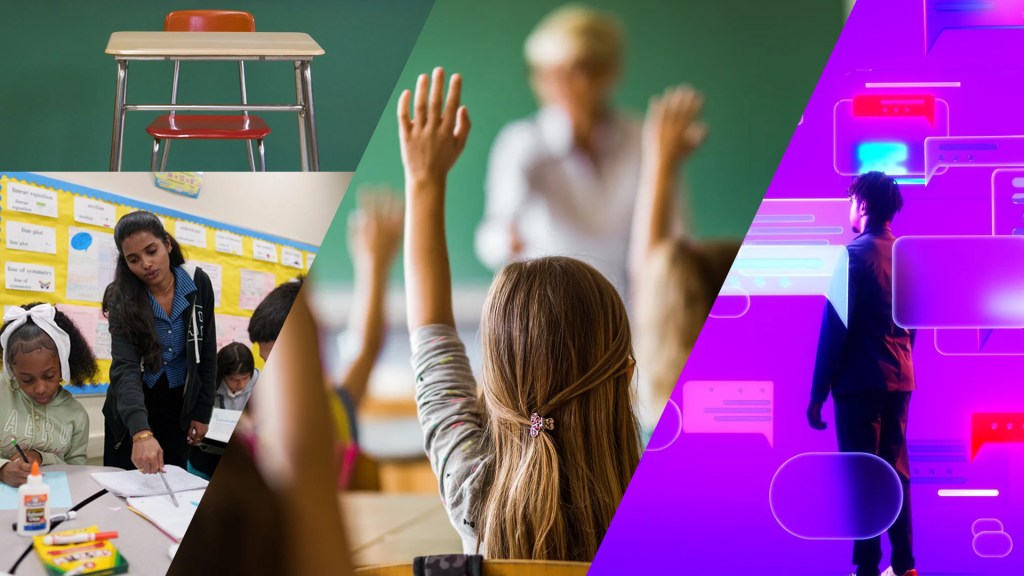
2025's Educational Breakthroughs: 10 Resonant Insights Shaping the Future of Learning
The landscape of education is in constant flux, with new research and pedagogical approaches emerging to meet the evolving needs of students worldwide.In 2025, a year marked by significant shifts and deep dives into what truly impacts learning, several key stories and research findings captured the attention of educators, students, and policymakers alike.
This article explores ten pivotal insights that have resonated across the global learning community, offering clarity and direction for the future of education.
We delve into critical areas such as special education, reading comprehension, the impact of technology, and the effectiveness of various learning interventions, providing actionable knowledge for anyone invested in educational advancement.
The Evolving Discourse on Special Education Inclusion
A significant point of discussion in 2025 revolved around the efficacy of special education inclusion.While the principle of integrating students with disabilities into general education classrooms is widely embraced, new analyses have prompted a re-evaluation of the evidence supporting its academic benefits.
Challenging the Assumptions of Inclusion
Extensive reviews of decades of research have raised questions about the inherent academic advantages of placing all students with disabilities in mainstream classrooms.
Studies indicate that the observed positive outcomes are often influenced by "selection bias." This means that students with less severe disabilities, who are more likely to be placed in general education settings, naturally tend to show better academic results compared to those with more significant needs.
This nuanced perspective doesn't negate the social and emotional benefits of inclusion but calls for a more data-driven approach to ensure that academic progress is not inadvertently compromised for certain student populations.
The research prompts a critical look at how we define and measure success within inclusive environments.
Enhancing Reading Comprehension: Beyond Phonics
While the focus on foundational reading skills like phonics has gained momentum, research in 2025 highlighted a persistent challenge: helping students truly understand what they read.The emphasis is shifting towards strategies that build deeper comprehension.
Bridging the Gap in Reading Comprehension Instruction
New studies reveal that many educators dedicate limited classroom time to explicit reading comprehension strategies.
This is a critical area, as mastering phonics alone does not guarantee a student's ability to grasp complex texts.
The research underscores the importance of teaching students how to identify main ideas, infer meaning, and synthesize information.
Furthermore, building robust background knowledge is identified as a cornerstone for comprehension, enabling students to connect new information with existing understanding.
This area of education research is vital for ensuring that students develop into confident and capable readers across all subjects.
The Dual Impact of Cellphone Restrictions in Schools
The implementation of cellphone bans in educational settings has yielded mixed results, presenting both academic benefits and unintended social consequences that require careful consideration.Academic Gains and Disproportionate Consequences
Analysis of school districts that enacted classroom cellphone restrictions in 2023 indicated a correlation with modest improvements in reading and math test scores.
This suggests that reducing distractions can indeed foster a more focused learning environment.
However, this shift has also been linked to a concerning rise in suspensions, particularly among Black students.
This highlights a critical equity issue that educational institutions must address.
Understanding how technology use is tracked and managed, often through private data collection, also emerged as a significant point of interest, raising questions about privacy and fairness.
This research provides valuable insights for policymakers navigating the complex relationship between technology and student behavior.
The Reality of Large-Scale Tutoring Interventions
Following the widespread adoption of tutoring programs as a post-pandemic intervention, research in 2025 offered a sobering assessment of their effectiveness, revealing the logistical and systemic challenges that hindered optimal outcomes.Unpacking the Challenges of Scaled Tutoring
Despite overwhelming evidence supporting the efficacy of tutoring for student achievement, large-scale implementation efforts have fallen short of expectations.
Studies indicate that logistical hurdles, such as ensuring consistent quality, adequate training for tutors, and sufficient session frequency, significantly impacted the overall success of these programs.
The research points to the inherent difficulty in replicating the controlled conditions of successful small-scale studies in real-world educational settings.
This self-reflective analysis by proponents of tutoring offers crucial lessons for future educational reform initiatives, emphasizing the need for meticulous planning and resource allocation to achieve desired results for students.
The Neuroscience of Note-Taking: Pen vs.
Keyboard A fundamental question about effective learning strategies—whether to type or write notes—was revisited in 2025, with neuroscience research offering compelling, albeit sometimes contested, insights.
Debating the Cognitive Benefits of Note-Taking Methods
New findings in neuroscience have reignited the debate about the optimal method for taking notes.
While typing offers speed and efficiency, research suggests that the physical act of handwriting may engage the brain more deeply, leading to better retention and understanding.
The process of summarizing and paraphrasing by hand can foster more critical thinking and encoding of information.
This area of education research is particularly relevant for students at all levels, offering practical guidance on how to optimize their study habits.
Understanding these cognitive processes can significantly enhance the learning experience for students.
Artificial Intelligence and the Erosion of Critical Thinking
The rapid integration of AI tools into academic life has presented both opportunities and significant challenges, with studies in 2025 highlighting concerns about students offloading critical thinking and essential learning tasks to chatbots.AI's Double-Edged Sword in Student Learning
Research indicates that a growing number of university students are utilizing AI chatbots in ways that bypass the development of crucial cognitive skills.
The ease of access to sophisticated AI tools can tempt students to rely on them for tasks that are designed to foster critical thinking, problem-solving, and analytical abilities.
While AI can be a powerful tool for research and idea generation, its misuse can undermine the core objectives of education.
This trend necessitates a proactive approach from educators and institutions to guide students in the ethical and effective use of AI, ensuring that technology serves as a supplement to, rather than a substitute for, genuine learning.
This is a critical area for future education research.
The Unintended Consequences of Universal Preschool Policies
The ambitious goal of providing universal preschool access, while intended to promote equity, has in some instances led to unforeseen economic disruptions within the childcare sector.Equity Promises and Economic Realities in Childcare
A significant study from California in 2025 illuminated the complex interplay between public policy and market dynamics.
While universal preschool initiatives aim to equalize educational opportunities for all children, the implementation can inadvertently lead to the closure of numerous private childcare centers, particularly in urban areas.
This outcome can disproportionately affect low-income families who rely on these services.
The research serves as a crucial lesson for policymakers, emphasizing the need for comprehensive planning that considers the broader economic ecosystem of early childhood education.
Understanding these dynamics is vital for effective education policy development.
Rethinking the "Just-Right" Book Approach in Reading Instruction
A prominent reading expert challenged the long-held belief in tailoring reading materials to a student's precise reading level, arguing that this approach might be hindering overall reading achievement.Challenging the Status Quo in Reading Intervention
In a new book, researcher Timothy Shanahan proposed a counter-intuitive manifesto regarding reading instruction.
He argues that consistently providing students with texts that are perceived as "just-right"—meaning they are easy and require minimal effort—may inadvertently limit their exposure to challenging vocabulary and complex sentence structures.
This, in turn, can impede their progress in developing advanced reading skills.
The research suggests that a balanced approach, incorporating texts that stretch students' abilities, is essential for fostering robust reading achievement.
This perspective offers a valuable new lens through which to view reading education for students.
The Pervasive Challenge of Chronic Absenteeism
Chronic absenteeism has emerged as a critical issue in American schools, impacting students across all socioeconomic strata and demanding urgent attention and innovative solutions.Understanding and Addressing the Rise in School Absence
Research in 2025 revealed a concerning trend: chronic absenteeism is no longer confined to low-income or at-risk student populations.
Even students from high-income families are exhibiting higher rates of absence.
This phenomenon is arguably one of the most significant problems facing education today, as consistent school attendance is fundamental to academic success and social-emotional development.
The research highlights the need for a multifaceted approach to understanding the root causes of absenteeism and implementing effective strategies to re-engage students.
Exploring successful interventions is crucial for the future of education.
Leveraging AI for Enhanced Writing Skills: A Researcher's Perspective
As AI tools become more sophisticated, educators and students are exploring new ways to utilize them for improving writing abilities, with a focus on critical evaluation and strategic application.AI as a Writing Partner: Opportunities and Cautions
Students can benefit immensely from understanding how to effectively use AI for writing.
One promising approach involves using AI to provide feedback on rough drafts, helping students identify areas for improvement in clarity, structure, and argumentation.
Evidence supports the efficacy of this method.
Another strategy, employing AI to generate model essays, is also worth exploring, provided students critically analyze these examples rather than simply copying them.
This research emphasizes the importance of teaching students to be discerning users of AI, leveraging its capabilities to enhance their own writing skills rather than relying on it as a shortcut.
This is a vital area for students navigating the modern academic landscape.
Conclusion
The educational research and discourse of 2025 have underscored the dynamic and complex nature of learning.
From re-evaluating established practices in special education and reading comprehension to navigating the profound impact of technology like AI and addressing persistent challenges such as chronic absenteeism, these ten resonant insights offer a roadmap for educators, students, and policymakers.
The emphasis on data-driven decision-making, equitable implementation, and critical engagement with new tools is paramount.
As we move forward, embracing these lessons learned will be crucial for fostering a more effective, inclusive, and impactful global education system for all students.
This ongoing exploration of what works in education is vital for shaping a brighter future.






 Explore AI Teaching Tools
Comments (0)
Please login to comment
No comments yet
Be the first to comment on this article