
The Educator's Imperative: Championing Public Education for a Brighter Future
In today's dynamic educational landscape, teachers are increasingly finding that their role extends far beyond the traditional classroom.When students arrive with the weight of societal challenges, educators are called upon to be advocates, innovators, and architects of change.
This article explores the profound connection between teaching and activism, highlighting how educators can leverage their unique position to strengthen public education for all students.
The Evolving Role of the Educator: Beyond the Classroom Walls
The journey of an educator often begins with a deep commitment to student growth and well-being.
However, the realities faced by many students – from systemic inequities to resource limitations – necessitate a broader scope of action.
When educators recognize that their students are carrying burdens that impact their learning, it becomes clear that addressing these external factors is integral to effective teaching.
This realization can transform a teacher's perspective, shifting their focus from solely delivering curriculum to actively shaping the environment in which learning occurs.
The urgency of this moment in education demands that teachers become not just instructors, but also champions for the very systems that support their students.
This evolution is not a chosen path for many, but rather a response to the critical needs of the students they serve.
The realization that students are navigating complex societal structures, often unseen, can be a powerful catalyst.
When these challenges become apparent, the educator's responsibility expands.
It's about acknowledging that a student's ability to learn is intrinsically linked to their broader circumstances.
This understanding propels educators to look beyond the immediate lesson plan and consider the wider implications of educational policies and societal support structures.
The commitment to public education, therefore, becomes an inherent part of the teaching profession itself, a natural extension of the dedication to student success.
Advocacy in Action: Empowering Students and Shaping Policy
The transformation from educator to advocate can be a profound and empowering experience.
It often crystallizes when educators witness firsthand the impact of underfunded or under-supported public education systems on their students.
This can manifest in various ways, from insufficient resources to systemic barriers that disproportionately affect certain student populations.
When educators decide to speak out, they are not merely expressing an opinion; they are providing a vital voice for those who may not have one, or whose voices are not being heard.
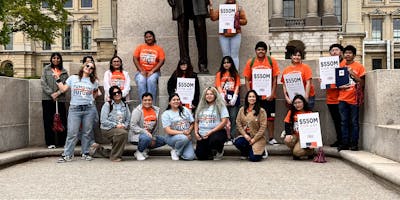
Consider the powerful impact of organized advocacy days, where students and teachers come together to engage with policymakers.
These events, often meticulously planned, go beyond simple field trips.
They represent a deliberate effort to educate students about civic engagement and empower them to articulate their needs and aspirations.
When students are prepared and supported to speak directly with elected officials, they gain invaluable experience in advocacy.
This direct engagement can be a transformative learning opportunity, demonstrating that their voices have power and that they can actively influence the future of their education and communities.
This process, where students actively participate in advocating for their schools, underscores the idea that such engagement should be an integral part of the educational experience, not an extracurricular add-on.
The experience of speaking at such events, often in significant public spaces, can be incredibly galvanizing.
For educators, it's a moment to share their passion and expertise, amplified by the presence and support of their students.
The energy generated when students stand alongside their teachers, holding signs and raising their fists, creates a palpable sense of collective purpose.
This shared moment of solidarity can be deeply moving, reinforcing the belief that they are part of something larger than themselves.
It’s a testament to the power of collective action and the profound impact that educators and students can have when they unite for a common cause.
The Urgency of the Current Educational Climate
The landscape of public education is currently facing unprecedented challenges, making the role of the educator as an advocate more critical than ever.
Studies indicate that vital programs designed to support vulnerable student populations are at risk.
For instance, initiatives that provide essential funding for multilingual learners and students from low-income backgrounds, as well as programs offering free and reduced-price lunches, are sometimes being rerouted.
This redirection can lead to a reduction in transparency and accountability, making it harder for schools to effectively serve those who need it most.
The infrastructure that is intended to protect and nurture public education is, in many instances, being systematically weakened.
This erosion is often driven by political agendas rather than a genuine focus on student needs.
When educators speak about activism, they are not referring to a fleeting trend or a mere online movement.
Instead, they are addressing a fundamental necessity.
The safety nets that are meant to catch students and educators are quietly fraying, and it requires an "all-hands-on-deck" approach to mend them.
This is a call to action for everyone involved in education, whether they initially sought this role or not.
In this critical period, educators are uniquely positioned to lead the way forward.
Their deep understanding of the classroom, their direct connection with students, and their lived experiences provide invaluable insights.
Research suggests that teachers possess the innovative spirit and resilience needed to navigate these complex times.
Their commitment to their students fuels their drive to find solutions and create positive change.
This article aims to share practical insights and strategies drawn from the experiences of educators who have embraced activism, contributing to a collective effort to strengthen public education.
From Gathering to "Good Trouble": Building Movements Through Connection
Before any movement gains widespread recognition, it often begins with a quiet but determined gathering of individuals.
These are typically people who are weary from navigating institutions that have promised support but delivered scarcity.
Despite their exhaustion, they show up.
This is precisely why spaces like fellowships, affinity groups, and teacher-led networks are more crucial now than ever.
As federal support diminishes and protective safeguards weaken, these environments become essential havens – like emergency generators when the main power fails.
Within these supportive communities, educators do more than just convene.
They reconnect with their core identity, strategize for impactful action, and offer mutual support.
They refine their thinking, cultivate empathy, and actively dismantle the isolation that schools can sometimes foster.
By coming together with intention, educators reclaim their rightful place as frontline witnesses, caretakers, and truth-tellers.
When educators gather with a shared purpose, activism transforms from a solitary endeavor into a collective, shared experience – a deep breath in and a long exhale out.
This process is not only empowering but also essential for sustaining the energy and commitment required for meaningful change.
Having participated in various fellowships and affinity groups, the transformative power of community on educators' lives is evident.
These networks serve as powerful conduits, opening doors, facilitating opportunities to speak, and inviting educators into spaces where their voices might otherwise be overlooked.
Many of these initiatives even provide financial support for travel and speaking engagements, recognizing that lived experience is not merely anecdotal but a profound form of expertise.
The impact is deeply restorative, healing, liberating, and life-affirming.
This is how enduring movements are built: not through the efforts of isolated individuals, but through the dedicated work of educators in collaborative settings, committed to engaging in "good trouble," as famously urged by the late U.S.
Representative John Lewis.
Stepping into the Arena: Amplifying Teacher Voices
Eventually, the crucial work that begins in these supportive spaces cannot remain confined to the classroom.
Educators are called to step into broader arenas – conferences, panels, workshops, webinars, podcasts, and policy discussions.
This engagement is not about performance; it's about driving progress.
It's not about seeking permission; it's about influencing decisions that profoundly impact students' lives, decisions often made far from the realities of the classroom.
The sentiment that teachers don't just need a seat at the table, but that they *are* the table, powerfully captures this shift in perspective and agency.
However, speaking out is only one part of the equation.
The other, equally vital half, involves actively building liberated spaces within schools themselves.
These are classrooms where marginalized students can thrive without fear, where multilingual learners are celebrated and affirmed, and where the curriculum serves as a mirror reflecting students' identities rather than a source of exclusion or pain.
These spaces act as living prototypes for the kind of world we aspire to create for our students.
Educators are, in essence, America's most consistent, real-time researchers.
Their lived experiences are invaluable data, and their classrooms are living case studies.
When this truth is carried into the realm of policymaking, the often-vast gap between theoretical constructs and practical reality can be effectively bridged.
At a time when public education is under significant pressure, the authentic voice of the teacher is not a mere luxury; it is the essential leverage for positive change.
Activism on a Budget: Resourcefulness and Innovation
Most educators do not have the backing of large foundations or the support of public relations teams and political consultants.
However, what they possess in abundance is creative innovation and remarkable resourcefulness.
This is the same ingenuity that can transform a modest classroom budget into an entire universe of learning opportunities.
Educators are adept at mobilizing through various channels, including group chats, readily available free online meeting platforms, grassroots partnerships, and digital tools that effectively level the playing field.
Furthermore, educators can actively seek out and apply for grants and fellowships specifically designed for teachers.
These opportunities can unlock doors that might otherwise remain closed within the confines of traditional school structures.
The very title of "teacher" still carries significant moral weight and can be leveraged to gain access to spaces and conversations that might otherwise overlook their contributions.
The ability to create something extraordinary from limited resources is a hallmark of the teaching profession, and this same spirit of making magic with less is directly applicable to the work of activism.
Educators do not wait for ideal conditions; they cannot afford to.
Instead, they create them.
This inherent capability has always resided within them.
As the renowned scholar bell hooks wisely reminded us, liberation is not something passively awaited; it is something actively practiced.
Conclusion
The modern educator's role has expanded to encompass vital advocacy for public education.
This journey, often initiated by a deep concern for students' well-being and the systemic challenges they face, requires educators to step beyond traditional boundaries.
By gathering in supportive networks, amplifying their voices in policy arenas, and leveraging their inherent resourcefulness, teachers can profoundly impact the future of education.
The urgency of the current climate demands this active engagement, transforming the classroom into a launchpad for broader societal change and ensuring that public education remains a powerful force for equity and opportunity for all students.






 Explore AI Teaching Tools
Comments (0)
Please login to comment
No comments yet
Be the first to comment on this article